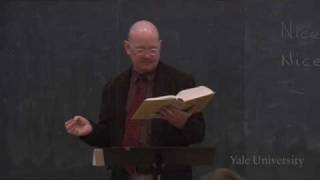
546 views
·
Last viewed: 9 hrs ago
Uploaded: 19 Apr 2013 (13 years ago) · Shared: 10 Nov 2017
Duration: 14:17
Uploaded: 19 Apr 2013 (13 years ago) · Shared: 10 Nov 2017
Duration: 14:17
Youtube Description
I have always thought of the historical Jesus as a homeland Jew within Judaism within the Roman Empire. I have always thought of the historical Paulas a diaspora Jew within Judaism within the Roman Empire. For me, then, within Judaism within the Roman Empire has always been the absolutely necessary matrix rather than the annoyingly unnecessary background for any discussion of earliest Christianity. You can see that three-layer matrix, for example, in the sub-titles to the first and last books above. For the historical Jesus, The Life of a Mediterranean Peasant, emphasizes Rome, Judaism, and Jew. For the historical Paul, How Jesus's
Apostle Opposed Rome's Empire with God's Kingdom, emphasizes Jew, Rome, and Judaism. Whether you start or end with the Roman Empire, the Roman Empire is always there.
John Dominic Crossan
First, Jesus opposes the Kingdom of God to the kingdoms of 'this world.' What 'this world' means will be discussed throughout this book but especially in Chapter 1 whose title, 'Empire and the Barbarism of Civilization,' is my own translation for the 'this world' of Jesus.
Second, Jesus is condemned to death by Roman Pilate, in Roman Judea, in the eastern reaches of the Roman Empire. But he never mentions Rome as such and he never addresses Pilate by name. He opposes something incarnated in but also far greater than Rome or any other empire.
Third, had Jesus stopped after saying that 'my kingdom is not of this world,' as we so often do in quoting him, that 'of' would be utterly ambiguous. 'Not of this world' could mean: never on earth, but always in heaven; not now in present time, but off in imminent or distant future; not a matter of the exterior world, but of the interior life alone. Jesus spoiled all those possible misinterpretations by continuing with this: 'if my kingdom were of this world, then would my servants fight, that I should not be delivered' up to execution. Your soldiers hold me, Pilate, but my companions will not attack you even to save me from death. Your Roman Empire, Pilate, is based on the injustice of violence, but my divine kingdom is based on the justice of non-violence.
Fourth, the crucial difference—and the only one mentioned—between the Kingdom of God and the Kingdom of Rome is Jesus's non-violence and Pilate's violence. But, to return to my first point, the violence of Roman imperialism was but an incarnation at that first-century time and in that Mediterranean place of 'this world,' that is, of the violent normalcy of civilization itself.
Fifth, the most important interpreter of Jesus in the entire New Testament is Pilate. He clearly recognized the difference between Barabbas and Jesus. Barabbas was a violent revolutionary so, as Mark 15:7 put it, ' Barabbas was in prison with the rebels who had committed murder during the insurrection.' Pilate arrested him along with those of his followers he could capture. But Jesus was a non-violent revolutionary so Pilate made no attempt to round up his companions. Both Barabbas and Jesus opposed Roman injustice in the Jewish homeland but Pilate knew exactly and correctly how to calibrate their divergent oppositions.
Sixth, Jesus's response to Pilate did not represent a speaking of truth to power. It was one powerful truth confronting another. It was the powerful truth of non-violent justice confronting the powerful truth of violent injustice.
I emphasize that contrast between Pilate's Kingdom of Rome as violent repression and Jesus's Kingdom of God as non-violent resistance because that juxtaposition is the heart of this present book. It is an attempt to rethink God, the Bible, and empire, Jesus, Christianity, and Rome. Jesus could have told Pilate that Rome's rule was unjust and God's rule was just. That would have been true but it would have avoided the issue of whether God's just rule was to be established by human and/or divine violence. So beneath the problem of empire is the problem of justice but beneath the problem of justice is the problem of violence.
Explore More
John Dominic Crossan Roman JESUS
JESUS
Search Google Search Explore Topics
 Who is John Dominic Crossan?
John Dominic Crossan (born 1934) is an Irish-American New Testament scholar, historian of early Christianity, and former Catholic priest. Dominic Crossan has produced both scholarly and popular works. His research has focused on the historical Jesus, on the anthropology of the Ancient Mediterranean and New Testament worlds and on the application of postmodern hermeneutical approaches to the Bible.
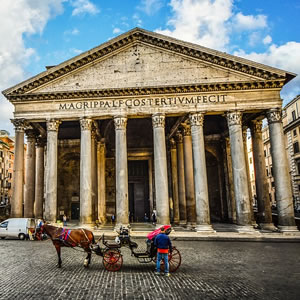 What is Roman?
In historiography, ancient Rome is Roman civilization. From the founding of the city of Rome in the 8th century BC to the collapse of the Western Roman Empire in the 5th century AD, encompassing the Roman Kingdom, Roman Republic and Roman Empire until the fall of the western empire. The civilization began as an Italic settlement in the Italian peninsula, dating from the 8th century BC, that grew into the city of Rome and which subsequently gave its name to the empire over which it ruled and to the widespread civilisation the empire developed. The Roman empire expanded to become one of the largest empires in the ancient world, though still ruled from the city, with an estimated 50 to 90 million inhabitants (roughly 20% of the world's population) and covering 5.0 million square kilometres at its height in AD 117.