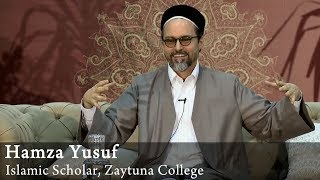
At Nicaea, Serapis Christus finally became Jesus Christ

619 views  ·  Last viewed: 1 day ago
Uploaded: 28 Apr 2009   (17 years ago)  ·  Shared: 01 Aug 2017
Duration: 4:46

Video Description

Explore the fascinating intersections of early history, ancient theology, and comparative religion as this video delves into the historical evolution of faith narratives. Central to Christian tradition, the figure of Prophet Jesus Christ holds profound significance across world religions, including revered roles in both the Bible and Islam. This captivating study examines the historical connections between early religious traditions, tracing themes from ancient Egyptian beliefs like Heru (Horus) to the syncretic veneration of Serapis Christus, culminating in pivotal developments at the First Council of Nicaea.

By analyzing how theological concepts evolved across Jewish, Christian, and Greco-Egyptian contexts, viewers gain valuable insights into scriptural development and the shared heritage of major traditions. Ideal for anyone seeking deeper historical knowledge, engaging spiritual reminders, and an objective look at early Church history, this video offers a respectful exploration into how ancient cultural interactions shaped foundational understandings of faith and divine scripture.

Explore More

  Serapis   Nicaea   JESUS
  Search   Google Search   Explore Topics
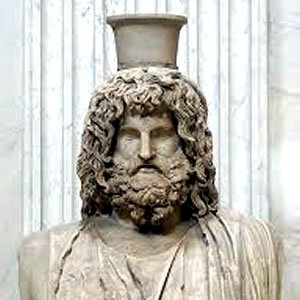
Who was Serapis?
Serapis is a Graeco-Egyptian deity. The cult of Serapis was introduced during the third century BC on the orders of Pharaoh Ptolemy I Soter of the Ptolemaic Kingdom as a means to unify the Greeks and Egyptians in his realm. A serapeum was any temple or religious precinct devoted to Serapis. The cultus of Serapis was spread as a matter of deliberate policy by the Ptolemaic kings, who also built the immense Serapeum of Alexandria. Serapis continued to increase in popularity during the Roman Empire, often replacing Osiris as the consort of Isis in temples outside Egypt. Serapis was depicted as Greek in appearance but with Egyptian trappings, and combined iconography from a great many cults, signifying both abundance and resurrection.
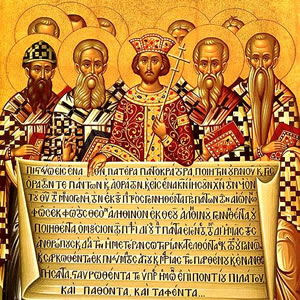
Where is Nicaea?
Nicaea or Nicea was an ancient city in northwestern Anatolia. It is primarily known as the site of the First and Second Councils of Nicaea (the first and seventh Ecumenical councils in the early history of the Christian Church), the Nicene Creed (which comes from the First Council), and as the capital city of the Empire of Nicaea following the Fourth Crusade in 1204, until the recapture of Constantinople by the Byzantines in 1261.

About  |  Q&A  |  Contact Us    •    Terms  |  Privacy  |  Disclaimer  |  Sitemap
Connect:      Facebook  |    Twitter  |    Youtube
MuslimProphets.com is an educational website on the Prophets of God: David, Noah, Abraham, Moses, Jesus and Muhammad, who established the Abrahamic faiths of Judaism, Christianity and Islam.

MuslimProphets.com explores contemporary social themes through Scripture, Evidences, Photo, Video, Maps, Current Affairs, Debate and 'alternative' Views held by Theologians, Apologists, Scholars and Street Preachers.

In accordance with Islamic etiquette, all prophet names should be followed with 'Peace Be Upon Him (PBUH)'. This is omitted to minimise text.

DISCLAIMER
The historical information provided on this website is for educational and informational purposes only.
History is an ongoing interpretation of past events. Historical accounts are shaped by the perspectives, biases, and cultural influences of their time; therefore, no content on this website should be taken as absolute, 100% factual truth. We encourage readers to approach historical narratives with a critical mind.

All website content is available in the public domain. While all information is gathered from sources believed to be reliable, its absolute accuracy cannot be guaranteed.

EXTERNAL LINKS & SEO
External links are provided as a convenience and for informational purposes only. They do not constitute an endorsement or approval of any products, services, or opinions of any organization or individual. Title and text links may be edited for external SEO, internal site structure, and keyword search purposes. We bear no responsibility for the accuracy, legality, or content found on any external website or its subsequent links.

MEDIA & SOURCE ATTRIBUTIONS
Unless otherwise indicated, all images and content are licensed under a Creative Commons Attribution License distributed by Wikipedia, Wikimedia Commons, Pixabay, Unsplash, and similar platforms. While every effort is made to accurately source all media, contact us if you believe your copyright has been infringed so we can address and resolve the matter promptly.

All videos are hosted on and viewable via YouTube servers. Video titles are generated based on the original video title, the overall content theme (including actual dialogue and transcripts), and AI-based recommendations optimized for SEO, keyword density, and internal search functions. Video titles do not represent the views held by the YouTube video uploader, or any associated individual, organisation, or business.

All Torah, Psalms, and Old/New Testament Bible quotes are from the King James Version (KJV) Holy Bible, which is in the public domain.
All Quran quotes are from the Taqi-ud-Din al-Hilali / Muhsin Khan English Quran translation.

CORRECTIONS
If you spot a mistake, error, or omission of information, please contact us so we can review and correct it.