854 views
·
Last viewed: 5 days ago
Uploaded: 02 Sep 2009 (17 years ago) · Shared: 04 May 2017
Duration: 50:29
Uploaded: 02 Sep 2009 (17 years ago) · Shared: 04 May 2017
Duration: 50:29
Youtube Description
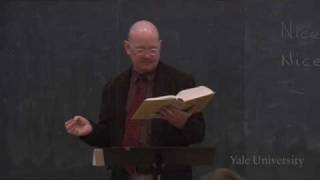
Introduction to New Testament (RLST 152) We have known of the existence of the Gospel of Thomas from ancient writers, but it was only after thediscovery of the Nag Hammadi Codices that the actual text became available. The Gospel of Thomas is basically a collection of sayings, or logia, that sometimes seem similar, perhaps more primitive than sayings found in the canonical Gospels. Sometimes, however, the sayings seem better explained as reflecting a 'Gnostic' understanding of the world. This involves a rejection of the material world and a desire for gnosis, a secret knowledge, in order to escape the world and return to the divine being.
00:00 - Chapter 1. The Nag Hammadi Codices and Thomasine Literature
10:35 - Chapter 2. The Sayings of the Gospel of Thomas
28:15 - Chapter 3. Proto-orthodoxy and 'Gnosticism'
Complete course materials are available at the Open Yale Courses website: http://open.yale.edu/courses
This course was recorded in Spring 2009.
Explore More
Christine Hayes New Testament Dale Martin GospelSearch Google Search Explore Topics
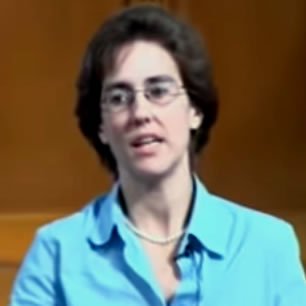 Who is Christine Hayes? (MEMBER OF Yale University)
Christine Hayes is the Robert F and Patricia Ross Weis Professor of Religious Studies at Yale University. She is former Chair of the Department of Religious Studies, and one of the foremost American academics focusing on talmudic-midrashic studies and Classical Judaica. Hayes received her B.A. summa cum laude in The Study of Religion from Harvard University in 1984. She subsequently received an M.A. with distinction from the University of California, Berkeley in 1988 which included a year of graduate work at the Hebrew University of Jerusalem. She received her PhD. in Talmudic and Judaic Studies (Department of Near Eastern Studies) from the University of California, Berkeley in 1993.
 What is New Testament?
The New Testament is the second part of the Christian biblical canon. The first part being the Old Testament, based on the Hebrew Bible. The New Testament discusses the teachings and person of Jesus, as well as events in first-century Christianity. Christians regard both the Old and New Testaments together as sacred scripture. The New Testament (in whole or in part) has frequently accompanied the spread of Christianity around the world. It reflects and serves as a source for Christian theology and morality.
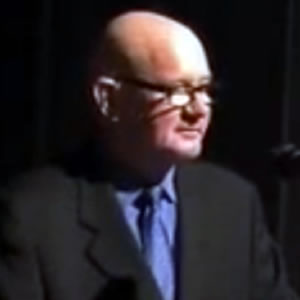 Who is Dale Martin? (MEMBER OF Yale University)
Dale Martin (born 1954) is an American New Testament scholar. He is Woolsey Professor of Religious Studies at Yale University. He has degrees from Abilene Christian University, Princeton Theological Seminary, and Yale. Martin previously taught at Rhodes College and Duke University. Martin was elected a Fellow of the American Academy of Arts and Sciences in 2009.
 What is Gospel?
Gospel is the Old English translation of Greek evangelion, meaning "good news". It originally meant the Christian message itself, but in the 2nd century it came to be used for the books in which the message was set out. The four gospels of the New Testament: Matthew, Mark, Luke and John are the main source of information on the life of Jesus.