869 views
·
Last viewed: 8 hrs ago
Uploaded: 01 Sep 2009 (17 years ago) · Shared: 04 May 2017
Duration: 36:42
Uploaded: 01 Sep 2009 (17 years ago) · Shared: 04 May 2017
Duration: 36:42
Youtube Description:
Introduction to New Testament (RLST 152)
The accounts of Paul's travels in The Acts of the Apostles and Galatians seem to contradict each other at many points. Their descriptions of a meeting in Jerusalem--a major council in Acts versus a small, informal gathering in Galatians--also differ quite a bit. How do we understand these differences? A historical critical reading of these accounts does not force these texts into a harmonious unity or accept them at face value. Instead, a historical critical reading carefully sifts through the details of the texts and asks which of these is more likely to be historically accurate.
00:00 - Chapter 1. Paul's Travels in the Acts of the Apostles
17:49 - Chapter 2. Paul's Travels in Galatians
28:25 - Chapter 3. Which Account Is More Historically Accurate?
Complete course materials are available at the Open Yale Courses website:
This course was recorded in Spring 2009.
Introduction to New Testament (RLST 152)
The accounts of Paul's travels in The Acts of the Apostles and Galatians seem to contradict each other at many points. Their descriptions of a meeting in Jerusalem--a major council in Acts versus a small, informal gathering in Galatians--also differ quite a bit. How do we understand these differences? A historical critical reading of these accounts does not force these texts into a harmonious unity or accept them at face value. Instead, a historical critical reading carefully sifts through the details of the texts and asks which of these is more likely to be historically accurate.
00:00 - Chapter 1. Paul's Travels in the Acts of the Apostles
17:49 - Chapter 2. Paul's Travels in Galatians
28:25 - Chapter 3. Which Account Is More Historically Accurate?
Complete course materials are available at the Open Yale Courses website:
This course was recorded in Spring 2009.
Explore More
Search Google Search Explore Topics New Testament Apostle Paul Dale Martin What is New Testament?
The New Testament is the second part of the Christian biblical canon. The first part being the Old Testament, based on the Hebrew Bible. The New Testament discusses the teachings and person of Jesus, as well as events in first-century Christianity. Christians regard both the Old and New Testaments together as sacred scripture. The New Testament (in whole or in part) has frequently accompanied the spread of Christianity around the world. It reflects and serves as a source for Christian theology and morality.
 Who was Apostle Paul?
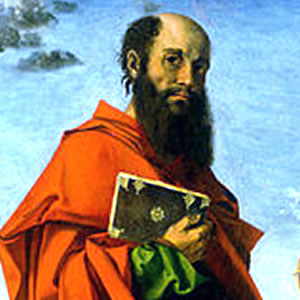
Paul the Apostle (Latin: Paulus), commonly known as Saint Paul and also known by his Jewish name Saul of Tarsus was an apostle (though not one of the Twelve Apostles) who taught the gospel of Christ to the first century world. Paul is generally considered one of the most important figures of the Apostolic Age and in the mid-30s to the mid-50s AD he founded several churches in Asia Minor and Europe. He took advantage of his status as both a Jew and a Roman citizen to minister to both Jewish and Roman audiences. According to writings in the New Testament and prior to his conversion, Paul was dedicated to persecuting the early disciples of Jesus in the area of Jerusalem. In Acts, Paul was traveling on the road from Jerusalem to Damascus on a mission to 'arrest them and bring them back to Jerusalem' when the resurrected Jesus appeared to him in a great light. He was struck blind, but after three days his sight was restored by Ananias of Damascus and Paul began to preach that Jesus of Nazareth is the Jewish Messiah and the Son of God.
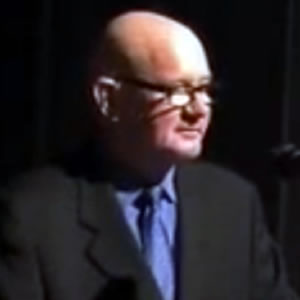 Who is Dale Martin?
Dale Martin (born 1954) is an American New Testament scholar. He is Woolsey Professor of Religious Studies at Yale University. He has degrees from Abilene Christian University, Princeton Theological Seminary, and Yale. Martin previously taught at Rhodes College and Duke University. Martin was elected a Fellow of the American Academy of Arts and Sciences in 2009.