435 views
·
Last viewed: 1 day ago
Uploaded: 04 Nov 2018 (8 years ago) · Shared: 19 Nov 2018
Duration: 9:29
Uploaded: 04 Nov 2018 (8 years ago) · Shared: 19 Nov 2018
Duration: 9:29
Youtube Description
What's Up Heathens! Today we are talking about 3 reasons why I am a mythicist. This is part of my Did Jesus Exist series and I plan on doing a fullset of videos addressing each of the extra-biblical sources for Jesus.
The first reason is Philo of Alexandria. Not only does Philo outline the basic idea of a Jewish Messiah, but he actually uses the name, Jesus. Philo is the perfect example of a first century Jewish Historian that was looking for a messiah figure in the Scriptures. He describes this Messiah as the Logos which the Gospel John directly uses. Philo should definitely cause you to doubt the entire premise of Jesus being original.
Next is the scriptures. There are supposedly 353 prophecies of Jesus in the Old Testament. Philo, Paul, and the author of Mark are prime examples of how Jews were looking to the scriptures for information on the Messiah. Paul stresses he never got his info from humans but rather revelation and scriptures. Mark starts off by quoting 'scriptures.'
Finally, The parallels, mirrors, and allusions in the Bible hurt the idea of historicity. The gospel writers were not writing history, they were writing theology. All the miracles in the Bible are allusions to the prophets of the Old Testament. Several of the stories in the Bible are allusions and parallels to the Old Testament stories. Matthew mirrors the birth narrative of Moses with his birth narrative of Jesus. The very death of Jesus is parallel to Abraham and Isaac.
References:
[1] Firstborn son of Philo ( https://www.iep.utm.edu/philo/#H11 )
[2] On The Confusion of Tongues ( http://www.earlyjewishwritings.com/text/philo/book15.html )
[3] Gospel Fictions ( https://www.amazon.com/Gospel-Fictions-Randel-Helms-ebook/dp/B002I61F3A/ref=sr_1_1?ie=UTF8&qid=1540484484&sr=8-1&keywords=gospel+fictions )
[4] Historicity of Jesus Slides ( https://www.richardcarrier.info/Historicity_of_Jesus.pdf )
[5] Zechariah 6 (Septuagint) ( https://biblehub.com/sep/zechariah/6.htm )
[6] 353 Prophecies ( http://www.accordingtothescriptures.org/prophecy/353prophecies.html )
[7] Niehoff, Maren. “Sociology department at City College of New York”. P. 245 ( https://books.google.com/books?id=nVBDDwAAQBAJ&pg=PA245&lpg=PA245&dq=philo+on+confusion+of+tongues+dating&source=bl&ots=F9rBWD_DdB&sig=PgYJ1GoqAY5YErNNqpMWRTyiEck&hl=en&sa=X&ved=2ahUKEwiawNXhvaLeAhVHwVkKHd1_D2oQ6AEwCXoECAAQAQ#v=onepage&q=philo%20on%20confusion%20of%20tongues%20dating&f=false )
Subscribe to this channel: https://goo.gl/2oZaqY
Become a Patron: http://goo.gl/VRVjxK
Intro by 'Gonna Go For it': https://goo.gl/1Ay1Q3
FOLLOW me on Twitter: https://goo.gl/BbxhWL
LIKE on Facebook: https://goo.gl/3xEibn
FOLLOW on Instagram: https://goo.gl/jakMWx
FOLLOW on Twitch: https://goo.gl/FhVHrG
Explore More
Godless Engineer Philo Myth GOD JESUS
JESUS
Search Google Search Explore Topics
 Who are Godless Engineer?
Godless, Independent thinking Southerner living in North Alabama surviving in the Christian 'wasteland' one day at a time. Born and raised in North Alabama, John Gleason has a Bachelor's Degree in Computer Engineering and a Master's Degree in Software Engineering.
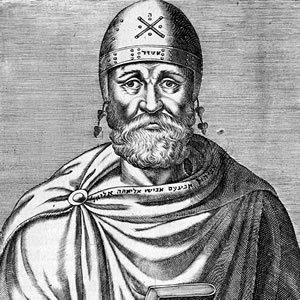 Who was Philo?
Philo of Alexandria (20 BC-50 AD) was a Hellenistic Jewish philosopher who lived in Alexandria, in the Roman province of Egypt. Philo used philosophical allegory to harmonize Jewish scripture, mainly the Torah, with Greek philosophy. His method followed the practices of both Jewish exegesis and Stoic philosophy. His allegorical exegesis was important for some Christian Church Fathers, but he had very little reception history within the Rabbinic Judaism. He adopted allegorical instead of literal interpretations of the Hebrew Bible. Some scholars hold that his concept of the Logos as God's creative principle influenced early Christology.
 What is Myth?
Mythology refers to a collection of sacred, traditional tales from a specific culture that explain natural phenomena, world origins, and cultural values. This often featuring gods, goddesses, and heroes. It serves as a lens for interpreting shared human experiences through stories, rituals, and art. Myth is a genre of folklore consisting primarily of narratives that play a fundamental role in a society. For scholars, this is totally different from the ordinary sense of the term myth, meaning a belief that is not true, as the veracity of a piece of folklore is entirely irrelevant to determining whether it constitutes a myth. Myths are often endorsed by religious and secular authorities, and may be natural or supernatural in character. Many societies group their myths, legends, and history together, considering myths and legends to be factual accounts of their remote past. In particular, creation myths take place in a primordial age when the world had not achieved its later form. Origin myths explain how a society's customs, institutions, and taboos were established and sanctified. National myths are narratives about a nation's past that symbolize the nation's values. There is a complex relationship between recital of myths and the enactment of rituals.
Who is GOD?In monotheism and henotheism, God is conceived as the Supreme Being and principal object of faith. The concept of God as described by theologians commonly includes the attributes of omniscience (infinite knowledge), omnipotence (unlimited power), omnipresence (present everywhere), omnibenevolence (perfect goodness), divine simplicity, and eternal and necessary existence. In theism, God is the creator and sustainer of the universe In deism, God is the creator, but not the sustainer, of the universe Monotheism is the belief in the existence of one God or in the oneness of God In pantheism, God is the universe itself In atheism, God is purported not to exist, while deemed unknown or unknowable within the context of agnosticism.