Uploaded: 16 Mar 2019 (7 years ago) · Shared: 18 Mar 2019
Who is Adnan Rashid?
 Adnan Rashid is a public figure, historian, traveller, poet, author and a philanthropist. He is also a Senior Researcher and Lecturer at the Hittin Institute, London. Rashid has speciality in the history of Islamic civilisation, comparative religion and Quran/Hadith sciences. He also takes a keen interest in lslamic numismatics, ancient manuscripts and antiquities. He has debated many high profile figures in the field of politics, history, Muslim/Christian theology. Rashid has represented Islam and Muslims appearing on a number of radio and TV platforms such as the BBC Asia Netwrok, Press TV, Iqra TV and Islam Channel.
What is Christianity?
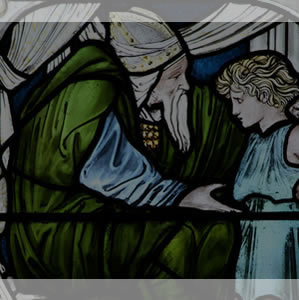 Christianity is a global religion centered on the life and teachings of Jesus Christ, who followers believe is the Son of God. It's a monotheistic faith, meaning Christians believe in one God who exists in three co-equal persons: God the Father, God the Son (Jesus Christ), and the Holy Spirit. Christianity is based on the Bible, with the Old Testament and New Testament serving as sacred texts.
What is Gnostic?
 Gnosticism (from Ancient Greek: gnostikos, "having knowledge") is a modern name for a variety of ancient religious ideas and systems. Originating in Jewish-Christian milieus in the first and second century AD. These systems believed that the material world is created by an emanation of the highest God, trapping the divine spark within the human body.
What is Secular?
 As a philosophy, secularism seeks to interpret life on principles taken solely from the material world, without recourse to religion. In political terms, secularism is the principle of the separation of government institutions and persons mandated to represent the state from religious institution and religious dignitaries (the attainment of such is termed secularity). Under a brief definition, secularism means that governments should remain neutral on the matter of religion and should not enforce nor prohibit the free exercise of religion, leaving religious choice to the liberty of the people.
Secularism draws its intellectual roots from Greek and Roman philosophers such as Zeno of Citium and Marcus Aurelius; from Enlightenment thinkers such as Erasmus, John Locke, Denis Diderot, Voltaire, Baruch Spinoza, James Madison, Thomas Jefferson, and Thomas Paine; and from more recent freethinkers and atheists such as Robert Ingersoll, Bertrand Russell, and Christopher Hitchens. It shifts the focus from religion to other 'temporal' and 'this-worldly' things with emphasis on nature, reason, science, and development.
Video Description (from Youtube)
******************************************
https://m.youtube.com/watch?v=WjcbCbvs0m8&list=PLIXZIV1GalbgnQgAMxdKwKmXGVT150wB1&index=1
******************************************
Video Contains Strong Words, Some Viewers May Find Some Of The Contents Offensive Or Inappropriate.
****THANK YOU FOR WATCHING!!!!****
DISCLAIMER
All videos are shared for educational and information purposes only. All videos are hosted and viewable on Youtube servers. Video titles are generated using the original video title; overall content theme including actual dialogue and speech (Transcript); and A.I-based recommendations with a focus on SEO, keyword density, and internal search functions. The video title does not represent the views held by the Youtube video uploader, or any individual, organisation or business.
If you spot any mistake, omission or give feedback, kindly Contact Us with details
Videos on "Gnostic" (41)
 1:11:06
429
1490659200
1786452327
Why Natural Selection is Inefficient? - Subboor Ahmad vs Agnostic Julian
004266
1
 20:01
20:01
657
1490659200
1786519325
Can you arrive at Morality using Logic? - Subboor Ahmad vs Agnostic James 1/2
001201
2
 20:01
20:01
746
1490659200
1786471615
Can you arrive at Morality using Logic? - Subboor Ahmad vs Agnostic James 2/2
001201
3
 13:09
13:09
301
1490659200
1786242911
I tell my Ego to shut up! - Hamza Myatt vs Agnostic
000789
4
 11:21
11:21
454
1493856000
1786228385
Militant Agnostic, but you don't know? - Hamza Myatt vs Christian
000681
5
 46:40
46:40
794
1496793600
1786509588
The Gospel of Mary Magdalene and Gnostic Spirituality - James Bean
002800
6
 20:01
20:01
700
1504558815
1786271215
God appears, many would still deny Him. So.. who is the Father of Santa Claus? - Mansur Ahmad vs Agnostic Girl 1/5
001201
7
 20:01
20:01
439
1504558822
1786517556
God appears, many would still deny Him. So.. who is the Father of Santa Claus? - Mansur Ahmad vs Agnostic Girl 2/5
001201
8
 20:01
20:01
483
1504558799
1786210184
God appears, many would still deny Him. So.. who is the Father of Santa Claus? - Mansur Ahmad vs Agnostic Girl 3/5
001201
9
 29:36
29:36
833
1504558830
1786514305
God appears, many would still deny Him. So.. who is the Father of Santa Claus? - Mansur Ahmad vs Agnostic Girl 4/5
001776
10
 17:35
17:35
422
1504547196
1786469495
God appears, many would still deny Him. So.. who is the Father of Santa Claus? - Mansur Ahmad vs Agnostic Girl 5/5
001055
11
965
1505863287
1786240577
Do I believe in Darwin Evolution, Human Ape Ancestry or a Religion which teaches God created Man? - Subboor Ahmad vs Agnostic Julian
004266
12
 8:04
8:04
1123
1509201244
1786517096
What is worse, believing the Quran or living in Agnosticism? - Mohammed Hijab vs Atheists 3/3
000484
13
640
1509380061
1786247899
It suited Muhammad to make himself the last Prophet, as it shut down future debate - Hamza Myatt vs Agnostic Robb
004546
14
 22:36
22:36
601
1512437626
1786261467
Dr Justin Barrett of Oxford University proved belief in a God is inherent in all of us - Mohammed Hijab vs Agnostic
001356
15
 0:47
0:47
1088
1530143825
1786474172
Gnostic Christians praise John's Gospel as he writes of a 'Salvation' diety coming to Earth - Bart Ehrman
000047
16
 1:50
1:50
1104
1530143833
1786487887
Early Christians, Ebionites, Marcionites, Gnostics, all had their own Bibles and scripture - Bart Ehrman
000110
17
 3:04
3:04
801
1549453498
1786320332
Trinity (Triune Gods) are found in Gnostic and Kabbalah beliefs dating to Ancient Babylon - approvedofGod
000184
18

1188
1552936991
1786450745
In Numbers 31:18, Child Marriage was encouraged. Today, Christianity is conditioned by liberal, secular values - Adnan Rashid vs Christian & Agnostic
001006
19
 7:48
7:48
889
1563891752
1786468809
In 367 AD, Athanasius decreed the 27 New Testament books. The Nag Hammadi Gnostic gospels declared illegal | ReligionForBreakfast
000468
20
 9:57
9:57
658
1566426678
1786255080
What Did Gnostic Christians Believe? | ReligionForBreakfast
000597
21

1000
1566862429
1786465143
John's Gospel is different from Mark, Matthew and Luke due to emerging Gnostic ideas - Kegan Chandler
000148
22
1:58
970
1566862421
1786512949
2nd century Christians questioned John's Gospel due to Gnosticism - Kegan Chandler
000118
23
704
1566862408
1786493507
Gnostic 'secret knowledge' of God features in Pagan, Christian & Spiritual teachings - Kegan Chandler
000125
24
2:21
731
1566862402
1786319925
Both Gnostic and Trinitarian Christians believe in Jesus' dual nature - Kegan Chandler
000141
25
1:49
792
1566862396
1786254578
John's Gospel is anti-Gnostic. Jesus is made more human-like - Kegan Chandler
000109
26
1:01
827
1566862375
1786412069
John's Gospel wrote a 'multi-level' history to counter Gnostic views on Jesus - Kegan Chandler
000061
27
0:40
969
1566862369
1786406273
Irenaeus (130-202 AD): John's Gospel written to refute Gnosticism - Kegan Chandler
000040
28
1:27
608
1566862363
1786505273
Hermeticism, a pagan form of Gnosticism, believed God is within us all - Kegan Chandler
000087
29
10:06
1737
1566862339
1786501613
John's Gospel parallels Gnostic-Pagan-Hermetic ideas (dualism, oneness/son of God, trinity, Father etc.) to promote his Jewish-Christianity - Kegan Chandler
000606
30
2:10
1325
1566862333
1786514790
John's Gospel depicts 'the right' Jesus; against Judaism, Gnostic-Christianity and Hermetism - Kegan Chandler
000130
31
936
1568332777
1786519767
Early Church Fathers & Gnostic Christianity pointed to dualism in Godhead and Nature - Robert Sullivan IV
000288
32
4:43
895
1568332753
1786381166
Valentinus (100-160 AD, Gnostic Christian) wrote of Monad, the highest, mysterious, unknowable God; rival to Demiurge (Yahweh, God) - Robert Sullivan IV
000283
33
 33:45
33:45
269
1572251627
1786306022
What goes Up, must come Down. Who made this Universal Law? - Hamza Saudi vs Agnostic
002025
34
599
1589124054
1786370194
30 World Leaders pledge in unison 'need to develop Coronavirus Diagnostic, Treatment & Vaccines'
010652
35
 15:12
15:12
367
1664851435
1786365607
Eshmun: Dying & Rising God of Healing (6 BC) preceding Jesus (33 AD) - Gnostic Informant
000912
36
 2:52:20
884
1747397094
1786379999
Are Biblical Prophets based on Ancient Myth Stories? | Robert Price | Gnostic Informant
010340
37
 38:00
38:00
791
1751151454
1786363492
Attraction to Women or Men's foul smell? | WestCoastKam vs LGBTQ Agnostic
002280
38
 42:00
42:00
376
1777760462
1786517915
Edom (Christianity, Rome, Europe, USA) must FALL for Israel to RISE | Adam Green | Gnostic Informant
002520
39
 32:42
32:42
151
1778177597
1786211404
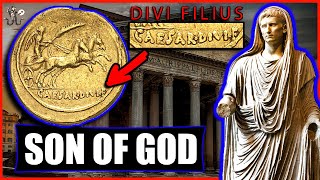
Caesar Augustus (63 BC-14 AD): Saviour of Rome and Original Son of God | Gnostic Informant
001962
40
 26:32
26:32
80
1784191652
1786461984
Did Yahweh Command Child Sacrifice? The Dark Side of Scripture | Skeptical Agnostic
001592
41