992 views
·
Last viewed: 11 hrs ago
Uploaded: 02 Sep 2009 (17 years ago) · Shared: 04 May 2017
itself paradoxically as preaching a Torah observant Christianity and a Christian mission that seeks to reach gentiles. The figure of Jesus in Matthew is that of a teacher, the founder of the Church, and the model for the apostles and Matthew's own community. Matthew seems to be writing for a church community that needs encouragement to have faith in a time of trouble.
00:00 - Chapter 1. Matthew: The Most Famous Gospel
12:29 - Chapter 2. Jesus and the Torah in Matthew
22:08 - Chapter 3. The Foundations of the Church in Matthew
27:51 - Chapter 4. Jesus as a Model for the Disciples
35:44 - Chapter 5. The Stilling of the Storm in Matthew
Complete course materials are available at the Open Yale Courses website: http://open.yale.edu/courses
This course was recorded in Spring 2009.
Uploaded: 02 Sep 2009 (17 years ago) · Shared: 04 May 2017
Video Description (from Youtube)
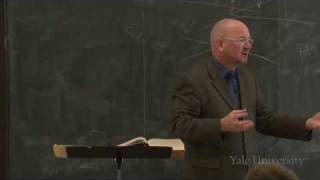
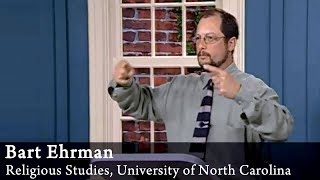
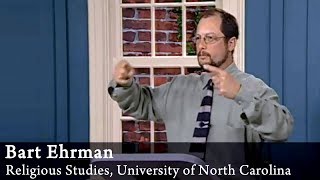
Introduction to New Testament (RLST 152) The Gospel of Matthew contains some of the most famous passages that both Christians and non-Christians are familiar with. However, Matthew also presentsitself paradoxically as preaching a Torah observant Christianity and a Christian mission that seeks to reach gentiles. The figure of Jesus in Matthew is that of a teacher, the founder of the Church, and the model for the apostles and Matthew's own community. Matthew seems to be writing for a church community that needs encouragement to have faith in a time of trouble.
00:00 - Chapter 1. Matthew: The Most Famous Gospel
12:29 - Chapter 2. Jesus and the Torah in Matthew
22:08 - Chapter 3. The Foundations of the Church in Matthew
27:51 - Chapter 4. Jesus as a Model for the Disciples
35:44 - Chapter 5. The Stilling of the Storm in Matthew
Complete course materials are available at the Open Yale Courses website: http://open.yale.edu/courses
This course was recorded in Spring 2009.
Search Results on 'New Testament: Gospel of Matthew - Dale Martin 4/23'
SCROLL TO :TOPICS | 7NEWS | 14ARTICLES | 6FAQ | 9VIDEO | 252LINKS | 0TOPICS #NEW TESTAMENT DALE MARTIN GOSPEL
Topics include New Testament, Dale Martin, Gospel (7)
What is New Testament? The New Testament is the second part of the Christian biblical canon. The first part being the Old Testament, based on the Hebrew Bible. The New Testament discusses the teachings and person of Jesus, as well as events in first-century Christianity. Christians regard both the Old and New Testaments
together as sacred scripture. The New Testament (in whole or in part) has frequently accompanied the spread of Christianity around the world. It reflects and serves as a source for Christian theology and morality. |
Who is Dale Martin? Dale Martin (born 1954) is an American New Testament scholar. He is Woolsey Professor of Religious Studies at Yale University. He has degrees from Abilene Christian University, Princeton Theological Seminary, and Yale. Martin previously taught at Rhodes College and Duke University. Martin was
elected a Fellow of the American Academy of Arts and Sciences in 2009. |
What is Gospel? Gospel is the Old English translation of Greek evangelion, meaning "good news". It originally meant the Christian message itself, but in the 2nd century it came to be used for the books in which the message was set out. The four gospels of the New Testament: Matthew, Mark, Luke and John are the
main source of information on the life of Jesus. |
What is Gospel John? Gospel According to John, or John is the fourth of the canonical gospels. The work is anonymous, although it identifies an unnamed "disciple whom Jesus loved" as the source of its traditions. It is closely related in style and content to the three Johannine epistles, and most scholars treat the four
books, along with Book of Revelation, as a single corpus of Johannine literature, albeit not from the same author. John seems to be concerned with issues of the church-synagogue debate at the time of composition. In John, the community appears to define itself primarily in contrast to Judaism, rather than as part of a wider Christian community. Though Christianity started as a movement within Judaism, it gradually separated from Judaism because of mutual opposition between the two religions. |
What is Gospel Matthew?
Gospel According to Matthew, or Matthew is the first book of the New Testament and one of the three synoptic gospels. It tell how the Messiah, Jesus, rejected by Israel, finally sends the disciples to preach the gospel to the whole world. Most scholars believe it was composed between AD 80-90 AD
The anonymous author was probably a male Jew, standing on the margin between traditional and non-traditional Jewish values, and familiar with technical legal aspects of scripture being debated in his time. |
What is Gospel Luke?
Gospel According to Luke, or Luke is the third of the four canonical Gospels. It tells of the origins, birth, ministry, atonement, death, resurrection, and ascension of Jesus Christ. Luke is the longest of the four gospels and the longest book in the New Testament; together with Acts of the Apostles
it makes up a two-volume work from the same author, called Luke-Acts. The cornerstone of Luke-Acts' theology is "salvation history", the author's understanding that God's purpose is seen in the way he has acted, and will continue to act, in history. Luke-Acts does not name its author. According to Church tradition this was Luke the Evangelist, the companion of Paul, but while this view is still occasionally put forward the scholarly consensus emphasises the many contradictions between Acts and the authentic Pauline letters. The most probable date for its composition is around 80-110 AD, and there is evidence that it was still being revised well into the 2nd century. |
What is Gospel Mark?
Gospel According to Mark, or Mark is one of the four canonical gospels and one of the three synoptic gospels. It tells of the ministry of Jesus from his baptism by John the Baptist to his death and burial and the discovery of the empty tomb - there is no genealogy of Jesus or birth narrative, nor
in the original ending at chapter 16, any post-resurrection appearances. It portrays Jesus as a heroic man of action, an exorcist, a healer, and a miracle worker. Jesus is also the Son of God, but he keeps his identity secret concealing it in parables so that even the disciples fail to understand. Mark probably dates from 66-70 AD. Most scholars now regard it as the earliest written gospel. They also reject the tradition which ascribes it to John Mark, the companion of the apostle Peter, and regard it as the work of an unknown author working with various sources including collections of miracle stories, controversy stories, parables, and a passion narrative. |
News on New Testament, Dale Martin, Gospel (14)
Articles on New Testament, Dale Martin, Gospel (6)
| Bible - Errors in Marks Gospel
2,881 views
|
| Bible - 12% of New Testament copied from Old Testament
15,659 views
|
Quran refers to Torah & Gospel

30,793 views
|
| Timeline of New Testament Bible
20,717 views
|
Bible - Scholars on John's Gospel
22,252 views
|
Bible NT - 55% of New Testament Papyrus contain under 3% of Biblical Text

21,350 views
|
FAQ on New Testament, Dale Martin, Gospel (9)
Youtube Videos on New Testament, Dale Martin, Gospel (252)
 What is the Christian
  Fallacies of the
  Fallacies of the
  Fallacies of the
  Fallacies of the
  Fallacies of the
  Fallacies of the
  Fallacies of the
  Fallacies of the
  The
The  Why are
  Is the
  The
The 

 The Infancy
  How did the
  A Jewish critique of the
  The
The  Jesus in the
  Who authored the
  In
In  Is the original
  Is the
  Can we trust the
  In 1 John 5:8, the Church corrupted the
  God revealed scripture: Torah, Gospels, Injeel,
  God revealed scripture: Torah, Gospels, Injeel,
  Where is the
  The Torah and
  Why did Bible
 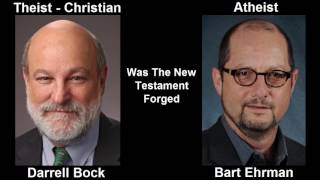 Was the
 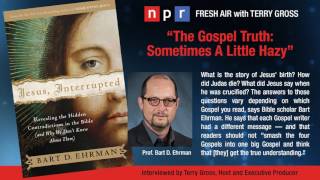 The
The 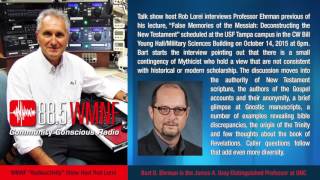 Deconstructing the
  Does the
 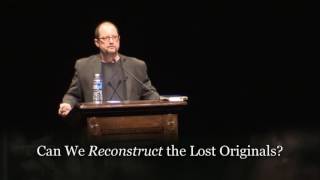 Is the
  Can we trust the
  Authenticity of the
  Origins of the
  Do we have the Original Manuscripts of the
  Can we reconstruct the Original Manuscripts of





 Was the
  Siege of Jerusalem and destruction of the Jewish Temple and Jesus'
  Using Logic to understand the
 The
The  Trinity is from Paganism; not found in
  Who chose the
 Forged Fiction:
  Forged Fiction:
  Forged Fiction:
  Forged Fiction:
  Why do we have 4 different Jesus' Resurrection accounts in the
  In Luke 8:45, Jesus asks who touched me. In Mark and Matthew's
  In Mark's
  99% of the foremost Bible Scholars, believe the historical Jesus in Mark's
  If Matthew's
  If Matthew's
  Mark 7:16 is missing from the Bible. Is this a conspiracy to change Mark's
  In Isaiah 7:14, Jesus was called Immanuel. Who called Jesus by this name in the
  Original Sin is a false belief in the
  Which
Which  In Matthew 2:15 and Hosea 11:1, Jesus came from Egypt. No other
  In Quran 5:68, which
  The Crucifixion of Truth by Tony Bushby (Reading) -
  The Crucifixion of Truth by Tony Bushby (Reading) -
 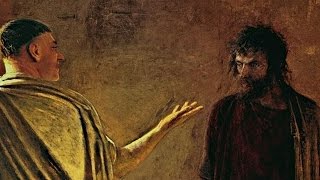 Did Jesus stand Trial before Pontius Pilate? -
  In Jeremiah 31:32 and Hebrews 8:9, God established a
  For 300 years, we have worked to restore the original
  For 300 years, we have worked to restore the original
  My Search for
  Apostle Paul wrote only 7 Letters (of 13) in the
  Jesus' Crucifixion is a celebrated Triumph in John, but a sad Tragedy in Mark, Matthew and Luke's
  Originally, the
 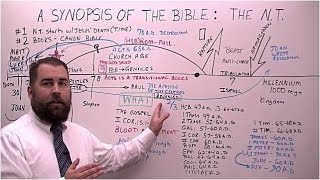 A Synopsis of
  Apostle Paul, Paganism and
  Matthew copied Mark. Therefore, Matthew believed Mark's
  According to the
 Judas did not author the
 In Marks
  75% of
  We do not have the original
  Greek
Greek  Jesus claims he is divine, God-like in John's
 We are getting closer to the original
  In the Christian
 Original
 In 70 AD, Mark, the earliest
  Early Christians did not believe Trinity, or write about it in
 Jesus, an Aramaic speaking Palestinian.
  Matthew, Mark and Luke are similar and different. Were the
  John's
  Conflicting
  Mark
Mark  Luke's
  John's
  Original text of all
  Luke
Luke  In John 7:53, Scribes added, later removed, the Adulteress story from
  In Mark 16:9-20, Scribes wrote a 'longer ending' to
  Gnostic Christians praise John's
  In 367 AD, the
  In 1545 AD, Council of Trent was first ecumenical council to officially recognise 27
  Apocalypse of Peter almost made it into the
  Mark's
  John-Mark wrote Mark's
  Anonymous author of Mark's
  Source for Mark's
  If Mark's
  Papias (163 AD) described Matthew's
  Early Christians invented Jesus' stories, sayings and sermons; aka
  Matthew and Luke 'revised' the order of historical events copied from Mark's
  Jesus' stories were shared between
 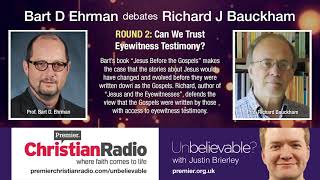 Critical scholars doubt the Jesus' sayings in John's
  Jesus in Luke's
  In Mark's
  In Matthew's
  In Matthew's
 On the
  5,300
5,300  Church growth led to demand for
  RSV (Revised Standard Version) is most accurate
  Bart Ehrman is most well-known, prolific writer and Professor of
 Jesus' resurrection is nowhere to be found in the
  After Nicaea 325 AD, Constantine had Eusebius determine the earliest
  John's
  In
In  Torah, Psalm and
  John's
  The original
  John did not write John. Who wrote John's
  Jesus preached the Oral
 Mark is the most reliable
  Christians believed in Jesus' Resurrection before the
  Jesus spoke Aramaic. Mark spoke Aramaic. Why is Mark's
 Evolution of Jesus Christ:
  There is only one, true God, a 'Unitarian' Father in
 In Matthew 4:23, Jesus preached the
  Is Mark's
  Belief in Jesus' Crucifixion & Resurrection determine our Salvation, not the
  Dating Mark's
  Which Church Council gave Athanasius authority to decide the 27
  Codex Sinaiticus: Oldest Surviving Christian
  Mark's
  Marcion (85-160 AD) listed 11 books in
  Greek philosophy, John's
  Was Mark's
  Christianity needs Jesus' Resurrection, not the
  History of
 Some Bible scholars believe Matthew did not write Matthew's
  Mark's
 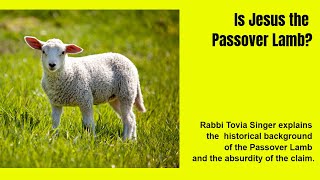 Jesus became the Passover Lamb in John's
 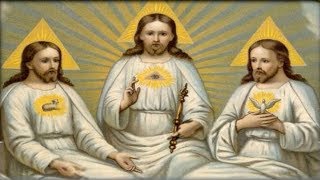 Trinity is a false doctrine not found in Old
  In John 8, the Adulteress Woman was added to John's
 Catholic tradition decided the
  In 367 AD, Athanasius decreed the 27
 Christianity is primarily based on
  Four
Four  How the Old &
  Mark's
  Homer's Odyssey (800 BC, Greek myth) parallels Jesus in Mark's
  Homer's Odyssey (800 BC, Greek myth) parallels Jesus in Mark's
  Homer's Odyssey (800 BC, Greek myth) parallels Jesus in Mark's
  Homer's Odyssey (800 BC, Greek myth) parallels Jesus in Mark's
  Mark's
  Homer's Odysseus (800 BC, Greek myth), a skilled Craftsman ('tekton') parallels Jesus the Carpenter in Mark's
 Celsus, a Greek philosopher in 177 AD wrote against Jesus using
 Jesus' Resurrection:
  John's
  Apostle Paul met Jesus in Spiritual visions. Later,
  Matthew and Luke copied from
  In Christianity, Jesus spoke of Muhammad in a 'Secret'
  In Christianity, Jesus spoke of Muhammad in a 'Secret'
  Apostle Paul and his
  Apostle Paul and his
  Is the
  Did Rome Create the
  Did Apostle Paul know his Letters would appear in the
  Jesus is GOD in
 Islamic Dilemma - Does The Quran confirm
  The
The  Was Jesus Born of a Virgin? The Earliest
  The Original Jesus Was Hidden in
DISCLAIMER
All videos are shared for educational and information purposes only. All videos are hosted and viewable on Youtube servers. Video titles are generated using the original video title; overall content theme including actual dialogue and speech (Transcript); and A.I-based recommendations with a focus on SEO, keyword density, and internal search functions. The video title does not represent the views held by the Youtube video uploader, or any individual, organisation or business.
If you spot any mistake, omission or give feedback, kindly contact us with details
All videos are shared for educational and information purposes only. All videos are hosted and viewable on Youtube servers. Video titles are generated using the original video title; overall content theme including actual dialogue and speech (Transcript); and A.I-based recommendations with a focus on SEO, keyword density, and internal search functions. The video title does not represent the views held by the Youtube video uploader, or any individual, organisation or business.
If you spot any mistake, omission or give feedback, kindly contact us with details