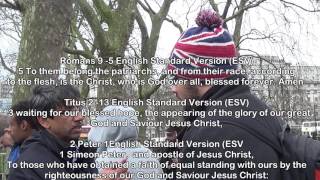
Youtube Description:
» If you liked this video, please subscribe & share on your social media platforms. The Prophet said, “Whoever guides someone to goodness will have a similar reward.” [Sahih Muslim 1893]
*Request to all to please not abuse or swear in comments, Dawah is to invite not to insult. Jazak Allah Khair
Disclaimer: The views and opinions of partakers in these debates and videos in no way represent the views of Sam Dawah but are a representation of what takes place at Speakers Corner.
» If you liked this video, please subscribe & share on your social media platforms. The Prophet said, “Whoever guides someone to goodness will have a similar reward.” [Sahih Muslim 1893]
*Request to all to please not abuse or swear in comments, Dawah is to invite not to insult. Jazak Allah Khair
Disclaimer: The views and opinions of partakers in these debates and videos in no way represent the views of Sam Dawah but are a representation of what takes place at Speakers Corner.
Explore More
 Who is Adnan Rashid?
Adnan Rashid is a public figure, historian, traveller, poet, author and a philanthropist. He is also a Senior Researcher and Lecturer at the Hittin Institute, London. Rashid has speciality in the history of Islamic civilisation, comparative religion
and Quran/Hadith sciences. He also takes a keen interest in lslamic numismatics, ancient manuscripts and antiquities. He has debated many high profile figures in the field of politics, history, Muslim/Christian theology. Rashid has represented Islam and Muslims appearing on a number of radio and TV platforms such as the BBC Asia Netwrok, Press TV, Iqra TV and Islam Channel.
 Who was Apostle Paul?
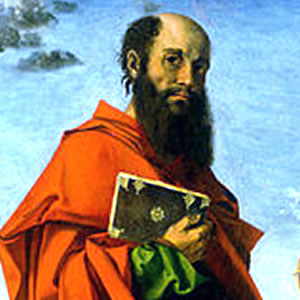
Paul the Apostle (Latin: Paulus), commonly known as Saint Paul and also known by his Jewish name Saul of Tarsus was an apostle (though not one of the Twelve Apostles) who taught the gospel of Christ to the first century world. Paul is generally
considered one of the most important figures of the Apostolic Age and in the mid-30s to the mid-50s AD he founded several churches in Asia Minor and Europe. He took advantage of his status as both a Jew and a Roman citizen to minister to both Jewish and Roman audiences. According to writings in the New Testament and prior to his conversion, Paul was dedicated to persecuting the early disciples of Jesus in the area of Jerusalem. In Acts, Paul was traveling on the road from Jerusalem to Damascus on a mission to 'arrest them and bring them back to Jerusalem' when the resurrected Jesus appeared to him in a great light. He was struck blind, but after three days his sight was restored by Ananias of Damascus and Paul began to preach that Jesus of Nazareth is the Jewish Messiah and the Son of God.
 What is Jewish Law?
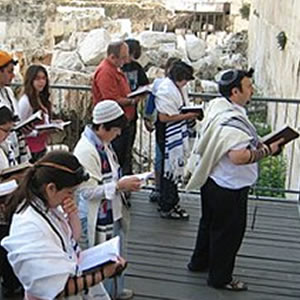
Jewish Law (Halakha) is the collective body of Jewish religious laws derived from the written and Oral Torah. Halakha is based on biblical commandments (mitzvot), subsequent Talmudic and rabbinic law, and the customs and traditions compiled in the
many books such as the Shulchan Aruch. Halakha is often translated as "Jewish law", although a more literal translation might be "the way to behave" or "the way of walking". The word derives from the root that means "to behave" (also "to go" or "to walk"). Halakha guides not only religious practices and beliefs, but also numerous aspects of day-to-day life.
 What is Sacrifice?
Sacrifice is the offering of food, objects or the lives of animals to a higher purpose, in particular divine beings, as an act of propitiation or worship. While sacrifice often implies the ritual killing of an animal, the term offering can be used
for bloodless sacrifices of food or artifacts.
 What is Salvation?
Salvation is being saved or protected from harm or being saved or delivered from a dire situation. In religion, salvation is saving of the soul from sin and its consequences. The academic study of salvation is called soteriology. In religion
salvation is the saving of the soul from sin and its consequences. It may also be called "deliverance" or "redemption" from sin and its effects. Historically, salvation is considered to be caused either by the grace of a deity (i.e. unmerited and unearned); by the independent choices of a free will and personal effort (i.e. earned and/or merited); or by some combination of the two.