15:59
1472 views
·
Last viewed: 1 hr ago
Uploaded: 28 Oct 2017 (9 years ago) · Shared: 30 Oct 2017
Video Description (from Youtube)
INJEEL IS NOT THE GOSPELS OF MARK LUKE JOHN MATHEW, ITS THE GOSPEL OF JESUS ITS CLEAR , Watch how a Christian is scared whn a Muslim tells a Unlearned Christian to go and study that and from yourown sources etc but he does not let her speak or let her use her own mind , brain etc it’s really sad .!! Unlearned ppl these days come to teach us our own scriptures or even there own which they go against there own scholars etc sad .!!
DISCLAIMER
All videos are shared for educational and information purposes only. All videos are hosted and viewable on Youtube servers. Video titles are generated using the original video title; overall content theme including actual dialogue and speech (Transcript); and A.I-based recommendations with a focus on SEO, keyword density, and internal search functions. The video title does not represent the views held by the Youtube video uploader, or any individual, organisation or business.
If you spot any mistake, omission or give feedback, kindly Contact Us with details
Overview & Key Concepts
Who is Mansur Ahmad?
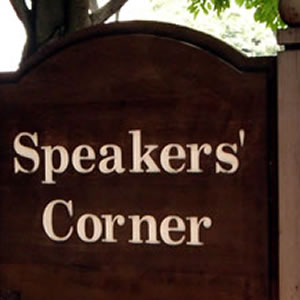 A Speakers' Corner is an area where open-air public speaking, debate, and discussion are allowed. The original and most noted is in the north-east
corner of Hyde Park in London, England. Speakers here may talk on any subject, as long as the police consider their speeches lawful, although this right is not restricted to Speakers' Corner only. Contrary to popular belief, there is no immunity from the law, nor are any subjects proscribed, but in practice the police intervene only when they receive a complaint. Speakers' Corner is often held up to demonstrate freedom of speech, as anyone can turn up unannounced and talk on almost any subject, although always at the risk of being heckled by regulars.
What is Injeel?
 Injeel, or Injil is the Arabic name for the Gospel of Jesus (Isa). The Injil is described by the Quran as one of the four Islamic holy books which was
revealed by God, the others being the Zabur (Psalms), the Tawrat (Torah), and the Quran. The word Injil is also used in the Quran, the Hadith and early Muslim documents to refer to both a book and revelations made by God to Jesus. Muslims believe the Injeel is lost and no longer available. The Injeel is not the modern New Testament Bible.
What is Gospel?
 Gospel is the Old English translation of Greek evangelion, meaning "good news". It originally meant the Christian message itself, but in the 2nd
century it came to be used for the books in which the message was set out. The four gospels of the New Testament: Matthew, Mark, Luke and John are the main source of information on the life of Jesus.
Who is GOD?
In monotheism and henotheism, God is conceived as the Supreme Being and principal object of faith. The concept of God as described by theologians
commonly includes the attributes of omniscience (infinite knowledge), omnipotence (unlimited power), omnipresence (present everywhere), omnibenevolence (perfect goodness), divine simplicity, and eternal and necessary existence.
<ul>
<li>In theism, God is the creator and sustainer of the universe</li>
<li>In deism, God is the creator, but not the sustainer, of the universe</li>
<li>Monotheism is the belief in the existence of one God or in the oneness of God</li>
<li>In pantheism, God is the universe itself</li>
<li>In atheism, God is purported not to exist, while deemed unknown or unknowable within the context of agnosticism. </li>
</ul>
Frequently Asked Questions
1.What do Synoptic Gospels say about Jesus?
The Synoptic Gospels strictly portray Jesus through a human lens as an honorable prophet, a moral hero, and a devoted martyr. They do not present him as a literal God who assumed human flesh, nor do they frame his life as a cosmic sacrifice intended to die and rise again for the spiritual salvation of mankind.
2.What did Apostle Paul think of his fellow Gospel writers?
Paul was deeply unyielding toward alternative views of the faith, explicitly writing in Galatians 1:9 that if any person preached a gospel different from the one his followers had received, that individual should be completely accursed. This indicates he aggressively dismissed the legalistic, Jewish-Christian perspectives held by original disciples like James and Peter.
3.How did Matthew (Gospel) support Apostle Pauline Christian doctrine?
The Gospel of Matthew, aimed at law-abiding Jewish-Christians, did not support Pauline doctrine and actually stood in direct opposition to it.
4.When were the Gospels written?
The canonical gospels were composed during the second half of the 1st century, with Mark widely dated around 65-70 CE, followed by Matthew and Luke between 80-90 CE, and John close to 90-100 CE. These dates mean the texts were compiled decades after Jesus' earthly ministry, drawing on reliable oral traditions and early eyewitness testimonies.
5.What did Apostle Paul say about the other gospels?
In Galatians 1:6-9, Paul strongly condemned anyone preaching a different gospel, reflecting a significant conflict in the early church between his Gentile-inclusive mission and strict adherence to the Law.
6.Who wrote John's gospel?
The author of the fourth gospel is believed to be a Greek convert with limited knowledge of traditional Judaism, who frequently uses "the Jews" as an antagonistic term throughout the text.
7.What were the Apocryphal Gospels?
The Apocrypha, meaning "hidden away," are ancient texts of uncertain authorship or questionable authenticity that were excluded from the official biblical canon, such as the Gospels of Thomas, Peter, and the Hebrews.
8.What is the significance of the Gospel of Thomas?
Regarded as a vital non-canonical text in studies of Christian origins, it contains sayings of Jesus and is considered by some to be an early record of his life.
9.How was the Gospel of John viewed?
In the 2nd century, some Christians felt its distinct tone and structure compared to the Synoptic Gospels warranted exclusion from the canon.
10.In 325 AD, did Emperor Constantine burn gospels, writings and religious text?
Following the Council of Nicaea, emperors including Constantine ordered the destruction of books belonging to Arius and his followers. An imperial decree was issued requiring adherence to the Trinity and condemning opposing views as heresy.