Explore More
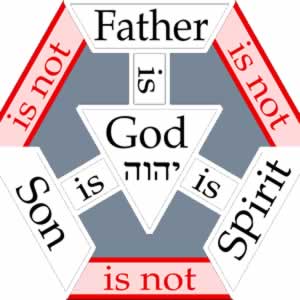 What is Trinitarian?
The Christian doctrine of the Trinity (Latin: trinus "threefold") holds that God is one God, but three coeternal consubstantial persons or hypostases. These being the Father, the Son (Jesus Christ), and the Holy Spirit - as "one God in three Divine
Persons". The three Persons are distinct, yet are one "substance, essence or nature" (homoousios).
 What is Unitarian?
Unitarianism can be viewed as a form of Nontrinitarianism which is a form of Christianity that rejects the mainstream Christian doctrine of the Trinity. The teaching that God is three distinct hypostases or persons who are coeternal, coequal, and
indivisibly united in one being, or essence (from the Greek ousia). Certain religious groups that emerged during the Protestant Reformation have historically been known as antitrinitarian, but are not considered Protestant in popular discourse due to their nontrinitarian nature. According to churches that consider the decisions of ecumenical councils final, Trinitarianism was definitively declared to be Christian doctrine at the 4th-century ecumenical councils, that of the First Council of Nicaea (325 AD), which declared the full divinity of the Son, and the First Council of Constantinople (381 AD), which declared the divinity of the Holy Spirit. In terms of number of adherents, nontrinitarian denominations comprise a minority of modern Christianity. The largest nontrinitarian Christian denominations are The Church of Jesus Christ of Latter-day Saints ("Mormons") and Jehovah's Witnesses.