10:00
703 views
·
Last viewed: 6 hrs ago
Uploaded: 30 Aug 2022 (4 years ago) · Shared: 13 Sep 2022
Video Description (from Youtube)
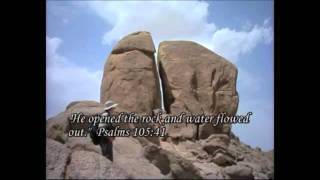
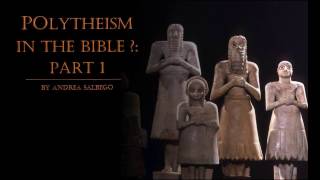
Evidence of Polytheism In The Bible We're told by those who hold faithful to apologetics that the Bible is purely monotheistic. In this episode Dr. Kipp Davis shows how the Bible went from Polytheismto Monotheism/Henotheism. The fossils for polytheism are all throughout the Bible as presented in this episode.
Subscribe to @Kipp Davis
https://www.youtube.com/channel/UCBTO34CZcIYGK6Qm2vQ-SMA
Subscribe to @Gnostic Informant for editing this clip - https://www.youtube.com/c/GnosticInformant
Watch the full video here
https://youtu.be/IXg680mDi70
==================================
Sign up for Bart Ehrman's Course 'The Unknown Gospels' here 👉 www.mythvisionpodcast.com/unknowngospels
Sign up for the 7 hour resurrection debate between Dr's Bart Ehrman & Mike Licona here
https://www.mythvisionpodcast.com/resurrection
Sign up for Dr. Bart D. Ehrman's Genesis 'In The Beginning' Webinar here: https://www.mythvisionpodcast.com/genesis
Sign up for Dr. Bart D. Ehrman's Christmas Webinar here:
https://www.mythvisionpodcast.com/christmas
Sign up for Dr. Bart D. Ehrman's Did Jesus call himself God webinar: https://www.mythvisionpodcast.com/bart
==================================
Please consider helping support MythVision's work by joining the Patreon or a one time donation through my links below.
🔥 GoFundMe link for MythVision to go to Israel 🔥 https://gofund.me/23b43d8a
GET RECOMMENDED BOOKS HERE: 👉 https://amzn.to/35FqNYf
MythVision Website: 🔥 https://mythvisionpodcast.com/
MythVision Patreon 👉 https://www.patreon.com/mythvision
MythVision Paypal. 👉 https://www.paypal.me/dereklambert7
Cashapp: 👉 $rewiredaddiction
Venmo: 👉 @Derek-Lambert-9
Recommeded books 👉 https://amzn.to/35FqNYf
Email MythVision 👉 mythvisionpodcast@gmail.com
Facebook page: 👉 https://www.facebook.com/MythVision/
Facebook group: 👉 https://www.facebook.com/groups/TheWaterBoyZRadio/
Twitter: 👉 https://twitter.com/DerekPodcast
Instagram: 👉 https://www.instagram.com/dereklambert_7/
MythVision Discord: https://discord.gg/dRQXdZBq6E
#bible #Polytheism #mythvision
DISCLAIMER
All videos are shared for educational and information purposes only. All videos are hosted and viewable on Youtube servers. Video titles are generated using the original video title; overall content theme including actual dialogue and speech (Transcript); and A.I-based recommendations with a focus on SEO, keyword density, and internal search functions. The video title does not represent the views held by the Youtube video uploader, or any individual, organisation or business.
If you spot any mistake, omission or give feedback, kindly Contact Us with details
Search Results on 'Polytheism to Yahweh-Only Monotheism in the Old Testament - Kipp Davis / MythVision'
SCROLL TO: TOPICS | 7 NEWS | 5 ARTICLES | 7 FAQ | 14 VIDEO | 218 LINKS | 0Topics include Monotheism, Polytheism, Old Testament, Yahweh, MythVision, Polytheist (7)
What is Monotheism? Monotheism has been defined as the belief in the existence of only one god. A god that created the world, is all-powerful and intervenes in the world. A broader definition of monotheism is the belief in one god. A distinction may be made between exclusive monotheism, and both inclusive monotheism
and pluriform (panentheistic) monotheism which, while recognising various distinct gods, postulate some underlying unity. |
What is Polytheism? Polytheism is the worship of or belief in multiple deities, usually as a pantheon of gods and goddesses. In most religions which accept polytheism, the different gods and goddesses are representations of forces of nature or ancestral principles, and can be viewed either as autonomous or as aspects
or emanations of a creator deity or transcendental absolute principle (monistic theologies), which manifests immanently in nature (panentheistic and pantheistic theologies). Most of the polytheistic deities of ancient religions, with the notable exceptions of the Ancient Egyptian and Hindu deities, were conceived as having physical bodies. Polytheism is a type of theism. Within theism, it contrasts with monotheism, the belief in a singular God, in most cases transcendent. Important polytheistic religions practiced today include Chinese traditional religion, Hinduism, Japanese Shinto, and various neopagan faiths. |
Who are Yahweh Ministry? Yahweh's Restoration Ministry (YRM) are devoted to exposing pagan church traditions and false doctrine. We also cover end-times prophecy, armageddon and prophetic events. The Hebrew roots of the Christian faith is an important element to unlocking Bible truth. Discover amazing facts that your church
doesn't want you to know! Facts like the Sabbath and Feast Days, the name of god Yahweh, common Bible misnomers, false doctrine, paganism, and amazing Bible facts are all covered. |
What is Old Testament? The Old Testament (OT) is the first part of Christian Bibles. This is based primarily upon the Hebrew Bible (or Tanakh), a collection of ancient religious writings by the Israelites believed by most Christians and religious Jews to be the sacred Word of God. The second part of the Christian Bible is
the New Testament. <br><br> The books that comprise the Old Testament canon, as well as their order and names, differ between Christian denominations. The Catholic canon comprises 46 books, and the canons of the Eastern Orthodox and Oriental Orthodox Churches comprise up to 51 books and the most common Protestant canon comprises 39 books. |
Who is Yahweh? Yahweh was the national god of the Iron Age kingdoms of Israel (Samaria) and Judah. His exact origins are disputed, although they reach back to the early Iron Age and even the Late Bronze: his name may have begun as an epithet of El, head of the Bronze Age Canaanite pantheon, but the earliest
plausible mentions of Yahweh are in Egyptian texts that refer to a similar-sounding place name associated with the Shasu nomads of the southern Transjordan. In the oldest biblical literature, Yahweh is a typical ancient Near Eastern "divine warrior", who leads the heavenly army against Israel's enemies; he later became the main god of the Kingdom of Israel (Samaria) and of Judah, and over time the royal court and temple promoted Yahweh as the god of the entire cosmos, possessing all the positive qualities previously attributed to the other gods and goddesses. |
Who is MythVision? MythVision Podcast (MVP) brings you some of the finest information surrounding Mythology. Knowledge from a variety of people in search of a better understanding of ancient text. We discuss mythology, syncretism, astrotheology, gematria, sacred geometry, secret societies, ancient languages, history
prophecy, scholarship, conspiracies, heretical ideas, myth interpretations and much more. |
What is a Polytheist? Polytheism is the belief in or worship of more than one deity, a type of theism. Polytheism contrasts with monotheism, the belief in only one deity that is, in most cases, transcendent. Oftentimes, polytheistic religions reflect belief in a pantheon of deities that may themselves have religious
sects and rituals dedicated to them. Polytheism was common in the time and place of the Abrahamic religions, namely Judaism, Christianity, and Islam. The Quran, central to Islam, quite explicitly denounces polytheism, though there is certainly evidence to suggest that the Hebrew Bible, which Judaism and Christianity are established upon, may have originally been polytheistic to some extent. |




 Cain and Abel -
  Noah -
  Do Muslims Worship
  How
How  How
How  How
How  How
How  Is belief in
  Secrets of
  In 200 years, Christianity lost Jesus' Jewish teachings; adopting Greek and Roman Paganism -
  Pagan
Pagan 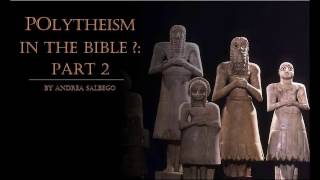 Pagan
Pagan  Pagan
Pagan 
 Is Christianity a
  You're not a
  Bible Scholars acknowledge
  Textual Corruption in
  Trinity is from Paganism; not found in New
  Interesting Facts About Jesus -
  False Church doctrine and False Christian teachings -
  Yeshua
  Pagan Origins of Christmas Exposed -
  Pagan Origins of New Years Day Exposed -
  Pagan Origins of Easter Exposed -
  Sabbath: Was it Saturday or Sunday? -
  Bible Secrets Unveiled -
  All people should be United in Love with
  In 2 Timothy 3:16, Apostle Paul refers to
  In Exodus 3:14 and Exodus 3:15, I Am is a name of
  Dietary Laws in
  What is worse, doing Shirk (
 Show me Trinity in
  Show me Trinity in
  Pagan Origins of Judaism: Evidence for Israelite
  Not a single Christian Doctrine is in
  Christian teachings are not found in
 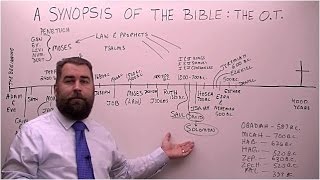 Prophets in
  Jesus
Jesus  Shirk, or
  Did You Know Christmas is Pagan? -
  In Genesis 1:26, One God created Man (
 Jewish Rabbis admit Islam is a
  Violence and Killings in
 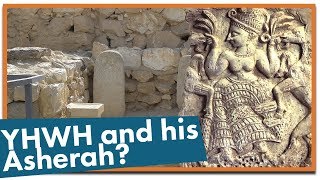 Archaeologists discover
  Why Muslims believe
 You could invent Christianity or any cult quoting
  93% of Romans were
  Jesus was a strict Jewish teacher who fully observed
  Keeping
  In
In  Father, Jesus, Holy Spirit. They are all
  Jesus, a Jew who worshiped
  Jesus stories are plagarized versions of Moses',
  Jesus was a Unitary
  Documentary Hypothesis (JEDP Theory/Wellhausen): Evidence of multiple
  Jesus was a Jew on Unitarian
  In Genesis 19:24 and Zecheriah 2:11, there is only one
  In Genesis 19:24,
 Matthew misquotes
  In
In  Jesus was a follower of Moses. He followed
 In Philippians 2:10, when Apostle Paul writes 'Every Knee Shall Bow', he contradicts
  Trinity is 'veiled' Tri-theism (Three
  In Deuteronomy 32:39, God emphasizes his Unique, Oneness. Trinity is not in
 In Genesis 1:1, Elohim ('God') is singular when applied to
  On John 1:18, this verse contradicts
  Jesus is not
  Bible Project:
  James Dunn: Jesus is not
  Jesus was a Unitarian
  Newton's Law: Isaac Newton, a follower of Arius was a Christian
 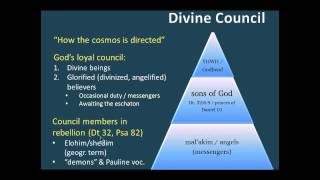 Many Biblical
  Pre-Islam Pagan Arabs made
  Father, Son and Holy Spirit is
  Marcion (85-160 AD) listed 11 books in New
  In Psalm 89:6,
  How did Yeshua ('
 How did Yeshua ('
 In Islam,
  Did Jesus speak of His Own or in name of
 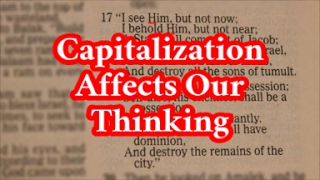 Capital letters in English translation of
  In Exodus 20:4, cleanse homes of graven Images,
 Jesus was a 1st century
  In Genesis 16:7, did Hagar speak to
  Trinity is a false doctrine not found in
  Hinduism: From 1 God to 1 Million
  New
New  Jesus instructed Jews to worship
  Valentinus (100-160 AD, Gnostic Christian) wrote of Monad,
  74 Reasons Jesus is a copy of Joseph -
  New
New  New
New  Christian Trinity is based on 'Unclear, Ambiguous' verses. Why reject
  All previous Scriptures (Torah, Psalms, Injeel, Quran) preached
  Jesus was a
  Jesus fulfilled 300 or 600
  Historical Understanding of God and
 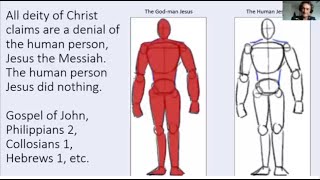 Historical development of Christian Trinity, Jesus-Man & Jesus-God-
 Apostle Paul proclaimed Jewish Law insignificant (dietary, circumcision, divinity etc.) insignificant - James Valliant (
 Father generated Jesus-Son. Can Jesus generate
  Jesus was a
  Is Christianity against
 Origins of
  Apostle Paul and his New
  Apostle Paul and his New
  Do Muslims follow
  Sabians of Yemen: 7
  Christianity, a collection of Pre-Christian Pagan Beliefs - David Madison /
 Pantheon, Roman Temple to
  Thusia (800 BC), Animal Sacrifice to
  Animal Sacrifice, a Gift from Farmers to
  Allah and
  Jesus and
  Adam & Eve Story copied from Early
  Jesus Resurrection Written for Greco-Roman Audience | Richard Miller |
  Before Noah: Alternative Mythical Flood Stories |
  Origins of Hellfire - A Social Tool for Population Control? |
 Ancient Pagan Myths Behind Biblical Stories |
  Origins of
  Critical Insight into Origins of Islam |
  Goddess Asherah,
  Adam And Eve's Origins Stolen from Mesopotamia? |
  History of Female
  Pre-Islam Arabia was
  Origins of Cain & Abel in Ancient Mesopotamia |
  Muhammad &
 Why Apostle Paul opposed
  Origins of Islam and
  Did Muhammad borrow from Christianity & Judaism?
| Shady Nasser |
Did Muhammad borrow from Christianity & Judaism?
| Shady Nasser | 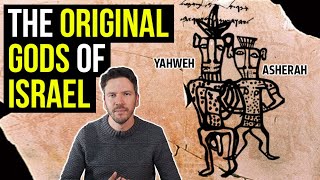
 Ancient Mesopotamia studied Planets to Understand
 Zoroaster,
  Early Developments in Quran Compilation, Islam & Kabah, Mecca | Shady Nasser |
  Who wrote
  Did Rome Create
  Why did David collect 100 Foreskins? |

 What happened before Jesus defeated Death? |
  Jesus is GOD in Gospel of John only? | Robert Price |
  Early Quran Manuscripts | Daniel Brubaker |
  Child Sacrifice in
  Raglan Hero themes shared by Mythical characters: Romulus, Hercules, Dionysus, Zeus, Moses, Elijah and Jesus | Richard Miller |
 Abraham,
  Jesus was copied from Osiris and Egyptian, North-African Mystery Cults? | Kara Cooney |
  Muhammad's Conquest of Mecca! 360
  Who Understood Jesus - Christians or Muslims? | Bart Ehrman |
  Real Jesus - A Jew Preaching Judaism to Other Jews
| Reza Aslan |
Real Jesus - A Jew Preaching Judaism to Other Jews
| Reza Aslan |  Caesar Messiah EXPOSED: Did Rome Create Christianity? | Joseph Atwill |
  Archaeology for
  Who Was Baal and
  Fighting intolerance and advancing understanding of Biblical Texts | Joshua Bowen |
  4000 year Secret Behind Jacob and Esau |
 Was
Was 
 A Virgin Birth was a Common Narrative |
  Jesus vs Greek
  Did Ebionites, Early Christians reject Apostle Paul? | James Tabor |
 Christian Trinity is Mono-
 Evolution of
 Pre-Islam Arabian Evidences point to
  Quran written in mix of Arabic Dialects | Marijn Van Putten |
  Early Judaism was
  Comparing Adam with Earlier, Ancient Mythology | Robert Price |
  Jerusalem, City of Islam | Paul Ellis |
  Jerusalem, City of Islam | Paul Ellis |
  Rome-Persia War (602-628 AD) set
 Why did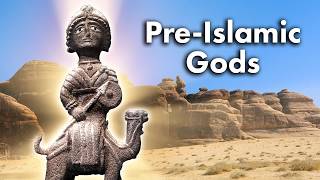
 Did Early Islam emerge from Petra or Mecca? | Peter Von Sivers |
  Bart Ehrman Says NO ONE Can Prove
 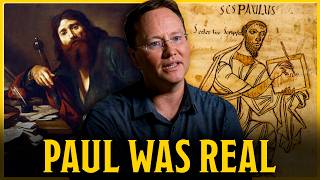 Did Apostle Paul even exist? Scholar DESTROYS
 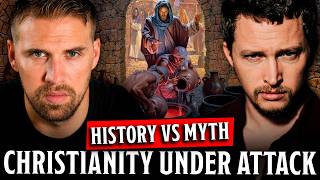 Did Christianity borrow from Pagan Myths? | Inspiring Philosophy vs
 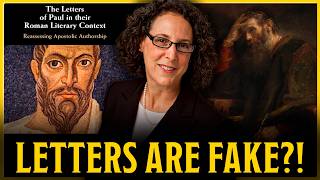 Did Apostle Paul EVER Exist? Nina Livesey claims his Letters Are FICTION |
 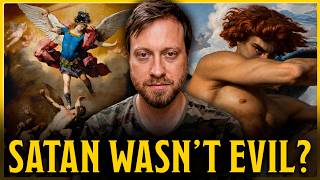 How Satan, Demons, Hell & Evil were found in Christianity | Derreck Bennett on
  Jesus Existed - Just NOT in
  Did
Did 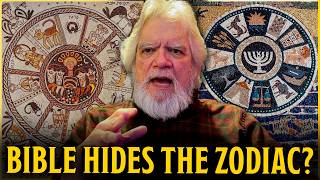 12 Tribes of Israel are 12 Zodiac Signs | Robert Price on Astrotheology |
  Was Jesus Born of a Virgin?
 Did Ancient Israelites Sacrifice Children to
  Did Governments Create
  Was James