Q Many Christians believe that Jesus abolished the Old Testament dietary laws
A Many Christians believe that Jesus abolished the Old Testament dietary laws. The dietary interpretation of Jesus' words (i.e. swine pig consumption) does not exist in the Textus Receptus Bible, the authoritative Greek New Testament text that was accepted by the Christian Church until about 100 years ago.
This parenthetic interpretation of Jesus words was obviously a comment that some Bible scribe wrote in the margin of the text. Later scribes accidentally or deliberately incorporated the marginal comment into the text itself, so the statement appears only in corrupted texts.
But the statement does not appear in the Textus Receptus, so the KJV says nothing about Jesus 'declaring all foods clean.'
God had clearly prohibited pig, swine and pork in the Old Testament. This verse was over whether or not 'unwashed hands' caused clean food to become unclean.
'Thus he declared all foods clean' is completely missing from the Textus Receptus, the authoritative Greek New Testament line used for centuries. It claims this widespread dietary interpretation was likely a later scribal note added to the margins of the text, which was subsequently mistaken for Jesus' actual words in corrupted versions.
0 views (57 years ago)
A Many Christians believe that Jesus abolished the Old Testament dietary laws. The dietary interpretation of Jesus' words (i.e. swine pig consumption) does not exist in the Textus Receptus Bible, the authoritative Greek New Testament text that was accepted by the Christian Church until about 100 years ago.
This parenthetic interpretation of Jesus words was obviously a comment that some Bible scribe wrote in the margin of the text. Later scribes accidentally or deliberately incorporated the marginal comment into the text itself, so the statement appears only in corrupted texts.
But the statement does not appear in the Textus Receptus, so the KJV says nothing about Jesus 'declaring all foods clean.'
God had clearly prohibited pig, swine and pork in the Old Testament. This verse was over whether or not 'unwashed hands' caused clean food to become unclean.
'Thus he declared all foods clean' is completely missing from the Textus Receptus, the authoritative Greek New Testament line used for centuries. It claims this widespread dietary interpretation was likely a later scribal note added to the margins of the text, which was subsequently mistaken for Jesus' actual words in corrupted versions.
Explore More
Old Testament
JESUS
Search Google Search Explore Topics
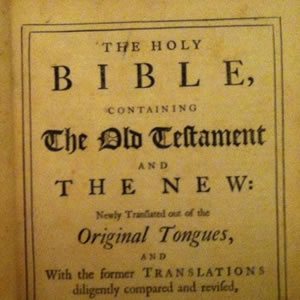 What is Old Testament?
The Old Testament (OT) is the first part of Christian Bibles. This is based primarily upon the Hebrew Bible (or Tanakh), a collection of ancient religious writings by the Israelites believed by most Christians and religious Jews to be the sacred Word of God. The second part of the Christian Bible is the New Testament. The books that comprise the Old Testament canon, as well as their order and names, differ between Christian denominations. The Catholic canon comprises 46 books, and the canons of the Eastern Orthodox and Oriental Orthodox Churches comprise up to 51 books and the most common Protestant canon comprises 39 books.