5:06
940 views
·
Last viewed: 1 hr ago
Uploaded: 14 Oct 2017 (9 years ago) · Shared: 06 Feb 2019
Video Description (from Youtube)
The origin of the "Christian" Trinity is blatantly pagan. There have been many witnesses throughout history that have told us so. Dr. Arnold was a wonderful scholar who went all over the world to diginto historical facts that uncovered a pagan trinity. Hislop's "Two Babylons" is a work of art that exposes pagan trinities throughout the world.
DISCLAIMER
All videos are shared for educational and information purposes only. All videos are hosted and viewable on Youtube servers. Video titles are generated using the original video title; overall content theme including actual dialogue and speech (Transcript); and A.I-based recommendations with a focus on SEO, keyword density, and internal search functions. The video title does not represent the views held by the Youtube video uploader, or any individual, organisation or business.
If you spot any mistake, omission or give feedback, kindly Contact Us with details
EXPLORE TOPICS :
CATHOLIC |
106
ROME |
60
APPROVEDOFGOD |
29
POLYCARP |
5
JUSTIN MARTYR |
4
IGNATIUS |
6
GOD |
0
Overview & Key Concepts
Who are approvedofGod?
 I am here to teach all people, but especially the "body of Christ" (the Church), that the bible is sufficient for what we believe. Throughout the
centuries, men have brought many doctrines into the church that have caused confusion and separation. My desire and goal is to clarify some of these errors and bring all Christians back to the basics of the Bible.
Who was Justin Martyr?
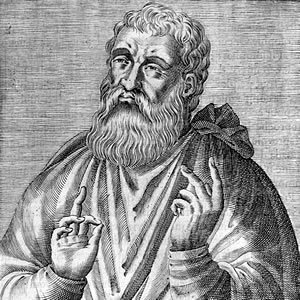 Justin Martyr was an early Christian apologist, and is regarded as the foremost interpreter of the theory of the Logos in the 2nd century. He was
martyred, alongside some of his students, and is considered a saint by the Roman Catholic Church, the Anglican Church, the Eastern Orthodox Church, and the Oriental Orthodox Churches.
What is Catholic?
 The Catholic Church, also known as the Roman Catholic Church. This is the largest Christian church, with approximately 1.3 billion baptised Catholics
worldwide, as of 2016. As one of the oldest religious institutions in the world, it has played a prominent role in the history and development of Western civilisation. The church is headed by the Bishop of Rome, known as the Pope. Its central administration, the Holy See, is in the Vatican City, an enclave within Rome, Italy. Catholic theology is based on the Nicene Creed.
Who was Polycarp?
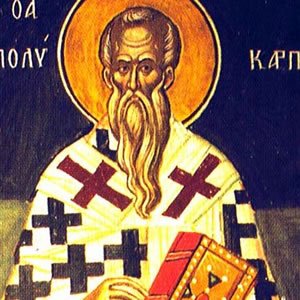 Polycarp (69-155 AD) was a 2nd-century Christian bishop of Smyrna. According to the Martyrdom of Polycarp he died a martyr, bound and burned at the
stake, then stabbed when the fire failed to touch him. Polycarp is regarded as a saint and Church Father in the Eastern Orthodox, Oriental Orthodox, Catholic, Anglican, and Lutheran churches.
Who was Ignatius?
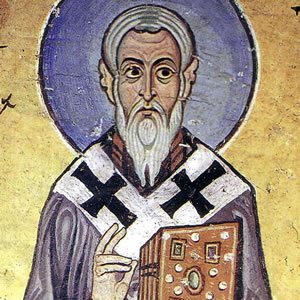 Ignatius of Antioch (35-107 AD) was an early Christian writer and bishop of Antioch. En route to Rome, where he met his martyrdom, Ignatius wrote a
series of letters. This correspondence now forms a central part of the later collection known as the Apostolic Fathers, of which he is considered one of the three chief ones together with Pope Clement I and Polycarp.
Where is Rome?
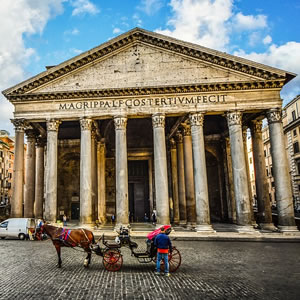 Rome is the capital city of Italy and a special comune (named Comune di Roma Capitale). Rome also serves as the capital of the Lazio region. With
2,872,800 residents in 1,285 km2 (496.1 sq mi), it is also the country's most populated comune. It is the fourth-most populous city in the European Union by population within city limits. It is the centre of the Metropolitan City of Rome, which has a population of 4.3 million residents. Rome is located in the central-western portion of the Italian Peninsula, within Lazio (Latium), along the shores of the Tiber. The Vatican City is an independent country inside the city boundaries of Rome, the only existing example of a country within a city: for this reason Rome has been often defined as capital of two states. Rome's history spans 28 centuries. While Roman mythology dates the founding of Rome at around 753 BC, the site has been inhabited for much longer, making it one of the oldest continuously occupied sites in Europe.
Frequently Asked Questions
1.When was the word 'Catholic' first used?
The linguistic term 'Catholic' derived from a Greek word meaning 'universal' was historically recorded as early as 107 CE in the letters of Ignatius of Antioch.
2.When did Catholic Christianity become official religion of Rome?
In 380 CE, under the Edict of Thessalonica issued by Emperor Theodosius I, Nicene (Catholic) Christianity officially became the state religion of the Roman Empire, leading to the institutional regulation of religious practices and the formalisation of a calendar of feast days like Christmas and Easter.
3.How did early Catholics learn about Christianity?
Early Catholics were taught Christianity by the priests, nuns and at Catholic schools - and not through Bible study. The priests role was to pass on Christian beliefs and practise to his congregation. The priest acted as an intermediary between God and the people; as mankind was regarded as inherently sinful.
Catholics were discouraged from individual Bible study and pushed towards conforming with traditional Church teachings.
4.When were Catholics encouraged to read the Bible for themselves?
In 1909, Pope Pius X first encouraged Bible study. For the first time, Catholics could now study the Bible for themselves and Catholicism returned to being a 'religion of the book' for the people
5.Was Jesus a Catholic Christian?
Historically, Jesus was a practicing Jew, and the original Jesus movement was a reform movement within Judaism . Conversely, the Catholic Church views Jesus' mission as universal, intended for the entire world, not just the Jewish people .
6.When did Catholic Christianity become official religion of Rome?
In 380 CE, under the Edict of Thessalonica issued by Emperor Theodosius I, Nicene (Catholic) Christianity officially became the state religion of the Roman Empire, leading to the institutional regulation of religious practices and the formalisation of a calendar of feast days like Christmas and Easter.
7.What happened after Rome chose Christianity as the state religion?
When the Roman authorities officially adopted Christianity in the 4th century CE, they institutionalised the Roman Catholic version of the faith, favoring the universal theological framework of Paul over the localized, law-observant traditions of the original disciples. Mainstream historians emphasize that this political alliance standardized a singular imperial orthodoxy across the Mediterranean world, systematically suppressing alternative theological perspectives.
8.What is the "Lazarus Effect" or "Lazarus Syndrome" in science?
In medicine, this refers to a rare phenomenon where a patient's blood circulation spontaneously returns after CPR has failed and resuscitation attempts have stopped. The patient essentially 'comes back to life.'
Videos on London Real (0)
EXPLORE TOPICS :
CATHOLIC |
106
ROME |
60
APPROVEDOFGOD |
29
POLYCARP |
5
JUSTIN MARTYR |
4
IGNATIUS |
6
GOD |
0