20:02
924 views
·
Last viewed: 11 hrs ago
Uploaded: 30 Aug 2025 (12 months ago) · Shared: 23 Sep 2025
Video Description (from Youtube)
This is a lecture about a chapter of my world history book called: 'In Search of the Sublime - A world history of humanity's relentless pursuit of scientific truth, moral excellence, andenlightenment.'
Read the book for FREE at:
worldhistorybook.com
Or buy it on Amazon:
https://www.amazon.com/Search-Sublime-relentless-scientific-enlightenment/dp/B0D28FVM8T
Kind regards,
Stephan P. Dinkgreve
MSc Theoretical Physics
Amsterdam
SOURCES:
R. Bellah, Religion in Human Evolution, Harvard University Press, 2011.
R. Hendel, The Book of Genesis. Composition, Reception, and Interpretation, Brill, 2012.
R. Hendel, The Book of Genesis; A biography, Princeton University Press, 2013.
M. Smith, The Early History of God. Yahweh and the Other Deities in Ancient Israel, Eerdmans Publishing, 2002
T. Römer, R. Geuss, The Invention of God, Harvard University Press, 2015
Correction:
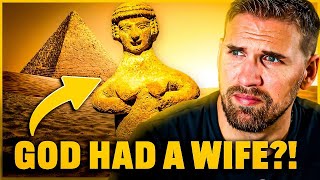
09:08 Another theory is that these figures are representation of the Egyptian drawf god Bes, who is often represented with a similar frontal pose, clear genetalia, and a plume, and sometimes as twins (although this figure is more elongated. The god usually with its head between its shoulders). To make this case, it has to be assumed that the text 'Yahweh and his Asherah' written above is not connected to the image, which is possible given the overlap.
Also, the earliest modern drawing of the vague original shows both figures with male genetalia. Further inspection showed this was only the case for one figure.
DISCLAIMER
All videos are shared for educational and information purposes only. All videos are hosted and viewable on Youtube servers. Video titles are generated using the original video title; overall content theme including actual dialogue and speech (Transcript); and A.I-based recommendations with a focus on SEO, keyword density, and internal search functions. The video title does not represent the views held by the Youtube video uploader, or any individual, organisation or business.
If you spot any mistake, omission or give feedback, kindly Contact Us with details
EXPLORE TOPICS :
ISRAEL |
724
IDF |
15
POLYTHEISM |
11
THE GODS |
11
IDOLS |
10
ASHERAH |
11
YAHWEH |
43
STEPHANS HISTORY |
11
BAAL |
9
GOD |
0
Search Results on 'The Gods of Israel (El, Baal, Yahweh, Asherah) | Stephans History'
SCROLL TO: TOPICS | 8 NEWS | 175 ARTICLES | 4 FAQ | 4 VIDEO | 428 LINKS | 9Topics include Israel, Polytheism, Asherah, Yahweh, Stephans History, Baal (8)
What is Israel? Israel, officially the State of Israel, is a country in the Middle East. Located on the southeastern shore of the Mediterranean Sea and the northern shore of the Red Sea. It has land borders with Lebanon to the north, Syria to the northeast, Jordan on the east, the Palestinian territories of the
West Bank and Gaza Strip to the east and west, respectively, and Egypt to the southwest. |
What is Polytheism? Polytheism is the worship of or belief in multiple deities, usually as a pantheon of gods and goddesses. In most religions which accept polytheism, the different gods and goddesses are representations of forces of nature or ancestral principles, and can be viewed either as autonomous or as aspects
or emanations of a creator deity or transcendental absolute principle (monistic theologies), which manifests immanently in nature (panentheistic and pantheistic theologies). Most of the polytheistic deities of ancient religions, with the notable exceptions of the Ancient Egyptian and Hindu deities, were conceived as having physical bodies. Polytheism is a type of theism. Within theism, it contrasts with monotheism, the belief in a singular God, in most cases transcendent. Important polytheistic religions practiced today include Chinese traditional religion, Hinduism, Japanese Shinto, and various neopagan faiths. |
Who are Yahweh Ministry? Yahweh's Restoration Ministry (YRM) are devoted to exposing pagan church traditions and false doctrine. We also cover end-times prophecy, armageddon and prophetic events. The Hebrew roots of the Christian faith is an important element to unlocking Bible truth. Discover amazing facts that your church
doesn't want you to know! Facts like the Sabbath and Feast Days, the name of god Yahweh, common Bible misnomers, false doctrine, paganism, and amazing Bible facts are all covered. |
Who was Asherah? Asherah in ancient Semitic religion, is a mother goddess who appears in a number of ancient sources. She appears in Akkadian writings by the name of Asratu, and in Hittite as Aserdu or Asertu. Asherah is generally considered identical with the Ugaritic goddess Atirat. Asherah is identified as the
queen consort of the Sumerian god Anu, and Ugaritic El, the oldest deities of their respective pantheons, as well as Yahweh, the god of Israel and Judah. Despite her association with Yahweh in extra-biblical sources, Deuteronomy 12 has Yahweh commanding the destruction of her shrines so as to maintain purity of his worship. |
Who is Ruben Israel?
I am a God fearing Christian Patriot that is willing to fight for my Country and die for my faith. I am not ashamed of the gospel of Christ.
|
Who is Yahweh? Yahweh was the national god of the Iron Age kingdoms of Israel (Samaria) and Judah. His exact origins are disputed, although they reach back to the early Iron Age and even the Late Bronze: his name may have begun as an epithet of El, head of the Bronze Age Canaanite pantheon, but the earliest
plausible mentions of Yahweh are in Egyptian texts that refer to a similar-sounding place name associated with the Shasu nomads of the southern Transjordan. In the oldest biblical literature, Yahweh is a typical ancient Near Eastern "divine warrior", who leads the heavenly army against Israel's enemies; he later became the main god of the Kingdom of Israel (Samaria) and of Judah, and over time the royal court and temple promoted Yahweh as the god of the entire cosmos, possessing all the positive qualities previously attributed to the other gods and goddesses. |
Who are Stephans History? Stephan's History of the World. Reclaim the foundational thoughts and deeds of the great ancestors of humanity.
|
Who is Baal?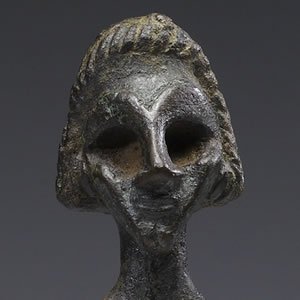 Baal was a title and honorific meaning 'owner' or 'lord' in the Northwest Semitic languages spoken in the Levant during antiquity. From its use among people, it came to be applied to gods. Scholars previously associated the theonym with solar cults and with a variety of unrelated patron deities, but
inscriptions have shown that the name Baal was particularly associated with the storm and fertility god Hadad and his local manifestations. <br><br> Known by epithets like 'rider of the clouds' and 'Victorious Baal', he was associated with rain, lightning, wind, fertility, and kingship, and was often depicted in opposition to sea and death deities like Yammu and Mot. Worship of Baal spread throughout the Levant, Egypt, and the Mediterranean. <br><br> The Hebrew Bible includes use of the term in reference to various Levantine deities, often with application towards Hadad, who was decried as a false god. In the Hebrew Bible, Baal appears frequently as a foreign or rival deity, with prophets like Elijah opposing his cult, while in early Israelite contexts, the title may have sometimes referred to Yahweh. <br><br> Depiction as a false god was taken over into Christianity and Islam, sometimes under the form Beelzebub in demonology. |
News on Israel, Polytheism, Asherah, Yahweh, Stephans History, Baal (175)
Articles on Israel, Polytheism, Asherah, Yahweh, Stephans History, Baal (4)
1.Monotheism vs Polytheism

|
2.Palestine and Creation of Israel in 1948

|
3.Bible - 27 Verses on Yahweh, Elohim(s) and The Gods

|
4.Paul made Jesus into Yahweh

|
FAQ on Israel, Polytheism, Asherah, Yahweh, Stephans History, Baal (4)
| 1.Were the Gods sacrificed? |
| 2.Who was the Babylonian Baal God? |
| 3.Where did the name Yahweh come from? |
| 4.Who are the Gods in the Bible? |
Youtube Videos on Israel, Polytheism, Asherah, Yahweh, Stephans History, Baal (428)
 Christians of
  Do Muslims Worship
  Moses and People of
  Moses and People of
  Is belief in
  Exodus Revealed - Hard Evidence in Red Sea of
  In 200 years, Christianity lost Jesus' Jewish teachings; adopting Greek and Roman Paganism -
  Gay Pride 2017 in Tel Aviv,
  Trinity is from Paganism; not found in New Testament -
  Interesting Facts About Jesus -
  False Church doctrine and False Christian teachings -
  Yeshua
  Pagan Origins of Christmas Exposed -
  Pagan Origins of New Years Day Exposed -
  Pagan Origins of Easter Exposed -
  Sabbath: Was it Saturday or Sunday? -
  Bible Secrets Unveiled -
  All people should be United in Love with
  In Exodus 3:14 and Exodus 3:15, I Am is a name of
  What is worse, doing Shirk (
 Pagan Origins of Judaism: Evidence for Israelite
 In Isaiah 53,
  9/11, Building 7 and

 Current Realities of
 Ancient Maps prove Palestine always existed, and not
 Palestine has a right to security, and is no threat to
  Time to boycott
  Zionism and Judaism are not
  Shirk, or
  In Judaism, Jerusalem is a holy city. In Zionism, Jerusalem is
  Did You Know Christmas is Pagan? -
  Who is
 Roots of
  Roots of
  Isaiah 53 is about Prophet
  In Psalm 83, is
  Strategy for
  Greater
  Greater
 5.5M Palestinians evicted from their Homeland.
  Greater
 Archaeologists discover
  El,
El,  State of
  Ultra Orthodox: We are not Israelis. We have no connection with
  Divide & Conquer:
  Greater

 Prophet Moses and Children of
  In Hebrew Bible, humans were called
  No 'Brethren', Israelites or 'Children of
  Father, Jesus, Holy Spirit. They are all
  Thou shalt not make any graven image. So, why do you worship Jesus? - Rabbi vs Ruben
  Where was God's Mercy at Sodom-Gomorrah? | Ruben
  Jews disobeyed God. Jews lost
  Gay Pride 2018: Tel Aviv,
  Conflict, Violence & War in Gaza, Palestine and
  Conflict, Violence & War in Gaza, Palestine and
  Conflict, Violence & War in Gaza, Palestine and
  Conflict, Violence & War in Gaza, Palestine and
  Moses would not buy that T-shirt! - Ruben
  Free Palestine? Give My Banner Back & I'll Go Home - Ruben
  Torah is a result of 500 years of literary activity in
  In Genesis 19:24 and Zecheriah 2:11, there is only one
  In Genesis 19:24,
  God will judge your Nerd world - Ruben
  In India, Hindus worship and feed
  Red Heifer born in
  Red Heifer born in
  Misconceptions about
  Our World: Tel Aviv,
  You are in Jerusalem,
  Biblical Prophecy points to a Russia-
 Rabbi Moskoff,
  In Matthew 10:5, Jesus commanded his disciples preach to Israelites only ('lost sheep of
  Trinity is 'veiled' Tri-theism (Three
  In Genesis 1:1, Elohim ('God') is singular when applied to
  Jesus is not
  James Dunn: Jesus is not
 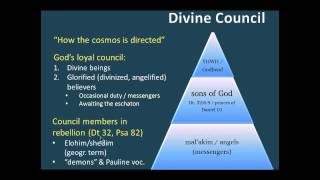 Many Biblical
  Pre-Islam Pagan Arabs made
  Father, Son and Holy Spirit is
 In Psalm 89:6,
  In Quran 7:137,
  How did Yeshua ('
 How did Yeshua ('
 Promises and Betrayals: Britain,
  Occupation of
  Did Jesus speak of His Own or in name of
  In Exodus 20:4, cleanse homes of graven Images,
  In Exodus 4:22,
 In Genesis 16:7, did Hagar speak to
  How
How  Hinduism: From 1 God to 1 Million
  Role of
  Role of
  Jesus instructed Jews to worship
  It's Hurry Jesus. Not Hare Krishna,
  Inside
  OT law applies to
  Valentinus (100-160 AD, Gnostic Christian) wrote of Monad,
  Top CIA Analyst on
  Mount Carmel: Elijah confronts 850 false Prophets of
  In Romans 1:16, Apostle Paul urges GOD TV to evangelize
  Daniel's travels around
 Converting from Jehovah Witness to Islam -
 Historical Understanding of God and
 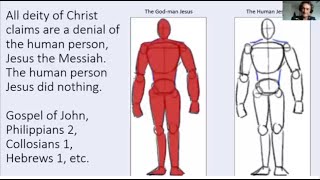 Historical development of Christian Trinity, Jesus-Man & Jesus-God-
 Father generated Jesus-Son. Can Jesus generate
  Antichrist invites Arabs-
 Origins of

 COVID Vaccine Passport in
  Was LGBTQ approved in Ancient
 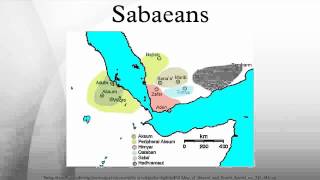 Sabians of Yemen: 7
  Elijah
 Pantheon, Roman Temple to
  Every Muslim Country is a Friend of
  Thusia (800 BC), Animal Sacrifice to
  Animal Sacrifice, a Gift from Farmers to
  Allah and
  Muslim Zionism: UAE Choose
  GOD Commands
 Why does
  Tour of Hebron. Burial place of Abraham, Isaac, Jacob,

 Holocaust of 50,000 Muslims by
  Social Media Censorship for Defending Palestine Against
  Origins of
  Is
Is  Saudi Arabia, UAE, Qatar, Syria unite with Zionist
  Arab Leaders offer TRILLIONS DOLLARS to US as
  POLL: 47% Israeli Jews support
  Goddess
  Tour of Mais al-Jabal, Lebanon destroyed by





 Archaeology indicates
  How Muslim Countries help
 Secret
  Wahhabi/Salafis seek Peace With Zionist
 Only Iran Supports Palestine. Arab Countries Support
  Did America bomb Iran due to
  Theodor Herzl, Spiritual father of Zionist
  How Saudi Arabia, UAE, Jordan, Egypt, Libya, Syria SUPPORT
 Death to
  'Death To
  UNICEF: A Palestinian 'Child killed every hour' by
  GAZA: Doctors Under Attack |
  Muslim Zionists bow down to
  Israeli
  Israeli

 Why does my Free Speech stop at
 Humanity is grateful to Iran for confronting

 Why has
  Real Talk on
  News Media delivers biased news of
  Who were





 Sham Rumman, 11 year Palestinian girl begs
  Greater
 Exposing
  'Forgive me Mother. I chose to help my people. May Allah accept my death', a paramedic killed by
 Greater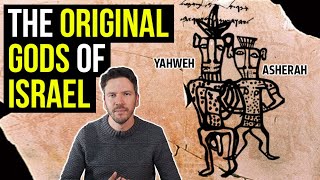
 Ancient Mesopotamia studied Planets to Understand
 Mesopotamia created all 12 Zodiac Astrology Constellations |
  Comparing Flood Stories from
 Ptolemy's Geocentric Model of Solar System Animation in 3-Minutes |
  Ptolemy's Almagest - How
  Biblical differences in Creation Story and Noah's Flood |
  Zoroaster,
  Exposing Zionist
 '
' Walking Tour of Jerusalem,
 Let's discuss
  Epstein Files, Trump &
  Is
Is  Bethlehem Christians Under Attack from
 Desperate Humanitarian Crisis in Gaza due to
 Gaza, Christian Zionism &

 UK Doctors face hardship for criticizing
  Why Early Christians turned Against Jews and
  Stop Criticising
  12 Tribes of
  F-35 Jets 'burn to death' Palestinian Children. UK support for

 Armenian Christians Under Attack in Jerusalem,
 Muslim Countries WAKE UP to '
 America First? American Christians choose
  Services in Gaza crippled due to
  Declining Support for
  'God gave us
  Children! Why would
  Palestine and
  Phoenix of Gaza - Life in Gaza before

 Islam is
 Does
Does  Arab Muslims ('Slaves & Stooges') surrender Gaza to USA and

 Exposing
 1,000 U.S Pastors recruited by
 UN OFFICIAL: No Evidence of rape on 7 October,
 Does
Does  Christian Zionists support
  Iran-
Iran-

 Christian Zionists reject Jesus by supporting
 Living in a tent is 'very difficult' under
  Muhammad's Conquest of Mecca! 360

 Religious, Anti-Zionist Jews who oppose
  Origins of
 90% of Gaza's Water Infrastructure destroyed by
  GOD commanded
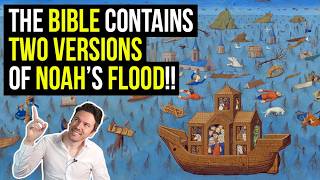 Different Versions of Noah's Flood story in Bible |
  72,000 Palestinians killed,
  Greater
 Archaeology for
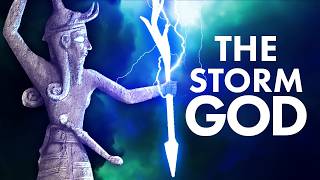 Who Was
  Will
Will 
 Muslim & Jew explore religious differences and common ground in 2026 | Bro Hajji vs
  8000 Palestinians disappear as
 Christians face 'spitting and physical attacks' from Jews in Jerusalem,
  Can Christians survive in
 America and
  'Evil
'Evil  What is
  Origins of 'Greater
 Catholic Christians BANNED from Worship at Holy Sepulchre,

 Where are

 How Palantir is transforming
  Tour of Odaisseh, Lebanon destroyed by
  Palestinians are True Descendants of Ancient

 Did Saudi Arabia give weapons to
  How
How  270 Palestinian journalists shared their hunger and desperation, before
  How
How  Criticism of
  'Our Sons die before our Eyes.




 Ex-Marine Commando exposes 'Apocolyptic War Crimes' by
 Tombs of Prophets Haggai, Zechariah, & Malachi in Jerusalem,
  Christian Trinity is Mono-
 Our future as Slaves to a Greater
  Adnan Al-Bursh, Gaza doctor arrested by
  Why is Shia Iran
  Sunni vs Shia vs Zionism (Saudi Arabia, UAE, Turkey, Iran, Syria, Lebanon,
  Zionist
  Why is Joseph not a Tribe in
  Challenges Muslims face in Gaza-
 How
How  Edom (Christianity, Rome, Europe, USA) must FALL for
  America attacked 7 Countries for
  Tour around

 Asking Questions and Speaking Truth is NOT HATE. Unless...
  Has Iran terminated
  Christian Zionists must be 'Jesus First', not '
 Why Saudi Arabia and Arab Countries favor
  Early Judaism was
  PRIDE LAND 2026, 4-day 'largest ever' LGBTQ festival at Dead Sea,
  Asking Questions and Speaking Truth is NOT HATE. Unless...
  Tour of
  Saqer Alawneh, 70-years old and forced by
  Fall of Arab Salafism and Rise of Greater
 71,000 Palestinian children face death as
  'My uncle amputated my leg after
  Lowkey EXPOSES how UK Government and Police work for
  Lebanon pays 'a big price' for resisting
  Social Media 'brainwashed' Americans into hating
  Neturei Karta, Ultra-Orthodox Jews protest AGAINST Zionism and
  Zionism is Judaism. Judaism is Zionism.
 Greater
 Which Experts claim
  'We Kill Them First',
  Jesus would never approve of
  UN blacklist
  Bodies of Evidence:
  How
How  '
'

 90% of Gaza's children face emotional, psychological stress caused by



 40% Unemployment Rate as
  Tyre, Lebanon residents refuse to abandon homes bombed by

 1000 days of
  12 Tribes of


 Why do Christian Zionists Support
 Can Christian Zionists identify '
 Mona Khalil killed by
  Over 21,000 children killed in 1000 days of
  How
How 
 Civilized people DO NOT KILL 1000's of Children. When did
  Gaza faces starvation as
  Mosque, Clinics, Hospitals bombed by
 Was Goddess
  'Zionist, Facist, Genocidel State of
  Elijah & God vs
  Did
Did  12 Tribes of
 Israeli
  Palestinians confront 'Unbearable Conditions' from
  1,900,000 Palestinians homeless, displaced in

 UNDER ATTACK - 2000 years of Christianity in Jerusalem,
  South Africa (ICJ Court):


 Jezebel -
  Elijah and
  Deborah - God had a Woman lead
  Gideon -
  Josiah -
  Samuel chose David,
 King Saul -
  Elijah vs 450 Prophets of
  Sacrifice To
  Dreams of Palestinian Sports Talent ended by
  Did Ancient Israelites Sacrifice Children to
 Links on Israel, Polytheism, Asherah, Yahweh, Stephans History, Baal (9)
EXPLORE TOPICS :
ISRAEL |
724
IDF |
15
POLYTHEISM |
11
THE GODS |
11
IDOLS |
10
ASHERAH |
11
YAHWEH |
43
STEPHANS HISTORY |
11
BAAL |
9
GOD |
0