Q Who was the Babylonian Baal God?
A Details of the Babylonion Baal or Bel God were found by German excavators in 1904 at the site of the ancient city of Ashur.
* Details of Baal's capture and his trial in the House on the Mount
* Baal's torture and being led away to his death
* The city broke out in fighting
* Baal's clothes were carried away
* A woman wiped away blood from the weapon thrust into his heart
* A weeping woman came to lament him at the 'Gate of Burial'
* Baal was brought back to life at the spring equinox
2 views (1 day ago)
A Details of the Babylonion Baal or Bel God were found by German excavators in 1904 at the site of the ancient city of Ashur.
* Details of Baal's capture and his trial in the House on the Mount
* Baal's torture and being led away to his death
* The city broke out in fighting
* Baal's clothes were carried away
* A woman wiped away blood from the weapon thrust into his heart
* A weeping woman came to lament him at the 'Gate of Burial'
* Baal was brought back to life at the spring equinox
Explore More
Babylon Baal GODSearch Google Search Explore Topics
 Where is Babylon?
Babylon was an ancient city located on the lower Euphrates river in southern Mesopotamia, within modern-day Hillah, Iraq. This is about 85 kilometres (53 miles) south of modern-day Baghdad. Babylon functioned as the main cultural and political centre of the Akkadian-speaking region of Babylonia. Its rulers established two important empires in antiquity, the 19th-16th century BC Old Babylonian Empire, and the 7th-6th century BC Neo-Babylonian Empire. Babylon was also used as a regional capital of other empires, such as the Achaemenid Empire. Babylon was one of the most important urban centres of the ancient Near East, until its decline during the Hellenistic period.
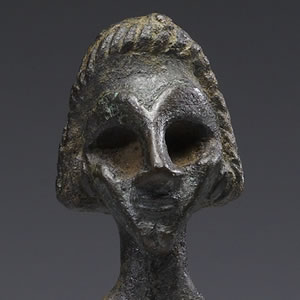 Who is Baal?
Baal was a title and honorific meaning 'owner' or 'lord' in the Northwest Semitic languages spoken in the Levant during antiquity. From its use among people, it came to be applied to gods. Scholars previously associated the theonym with solar cults and with a variety of unrelated patron deities, but inscriptions have shown that the name Baal was particularly associated with the storm and fertility god Hadad and his local manifestations. Known by epithets like 'rider of the clouds' and 'Victorious Baal', he was associated with rain, lightning, wind, fertility, and kingship, and was often depicted in opposition to sea and death deities like Yammu and Mot. Worship of Baal spread throughout the Levant, Egypt, and the Mediterranean. The Hebrew Bible includes use of the term in reference to various Levantine deities, often with application towards Hadad, who was decried as a false god. In the Hebrew Bible, Baal appears frequently as a foreign or rival deity, with prophets like Elijah opposing his cult, while in early Israelite contexts, the title may have sometimes referred to Yahweh. Depiction as a false god was taken over into Christianity and Islam, sometimes under the form Beelzebub in demonology.
Who is GOD?In monotheism and henotheism, God is conceived as the Supreme Being and principal object of faith. The concept of God as described by theologians commonly includes the attributes of omniscience (infinite knowledge), omnipotence (unlimited power), omnipresence (present everywhere), omnibenevolence (perfect goodness), divine simplicity, and eternal and necessary existence. In theism, God is the creator and sustainer of the universe In deism, God is the creator, but not the sustainer, of the universe Monotheism is the belief in the existence of one God or in the oneness of God In pantheism, God is the universe itself In atheism, God is purported not to exist, while deemed unknown or unknowable within the context of agnosticism.