11:20
519 views
·
Last viewed: 1 hr ago
Uploaded: 26 Feb 2011 (15 years ago) · Shared: 16 Aug 2017
Video Description (from Youtube)
"Why did we call Jesus 'lord'? In the Roman world, Caesar was lord, so if you call Jesus lord, Caesar ain't, and it becomes high treason. What was the alternative vision for the world that Jesus andPaul had, and why did it get them killed?"
In MATTHEW AND EMPIRE, New Testament professor Warren Carter examines the political claims and visions of social organization found in the Gospel of Matthew, which he describes as "a theological challenge to Rome's imperial propaganda." Biblical studies professor Neil Elliott interprets Paul's Letter to the Romans "in the shadow of empire" in a book entitled THE ARROGANCE OF NATIONS, and he makes a case for "the counter-imperial aspects" of Paul's rhetoric. In THE POWER OF THE WORD: SCRIPTURE AND THE RHETORIC OF EMPIRE, feminist scholar Elisabeth Schussler Fiorenza calls for an effort to "deconstruct the language of imperial domination in which scriptural texts remain caught up."
John Dominic Crossan was originally drawn to the priesthood because "God had the most interesting game in town".
Controversial scholar and former priest John Dominic Crossan has never shied away from uncomfortable questions of faith.
JOHN Dominic Crossan may be one of the world's leading New Testament scholars but he doesn't hide behind academic language. The man who shocked Christians by claiming that -- rather than being resurrected -- the body of Jesus was probably devoured by dogs and scavengers was still entertainingly uncompromising delivering a series of lectures to packed Melbourne audiences of mostly progressive Christians.
Think, for a moment, about the first-century world of Jesus...
Religion scholar John Dominic Crossan, in GOD AND EMPIRE, a study of the early Christian movement as well as empire, posits a broader understanding of empire than most and contrasts it with his understanding of the kingdom of God as championed by Jesus and Paul. But the biblical witness and historical development of the church don't always make that easy. "How is it possible to be a faithful Christian in an American Empire facilitated by a violent Christian Bible?" he asks. The answer, he says, is in the radical nonviolence of God's justice.
For Crossan, empire and civilization are essentially equivalent. Civilization itself, he writes, "has always been imperial -- that is, empire is the normalcy of civilization's violence." America and the Rome of Jesus and Paul are not that different from one another. "As the greatest pre-industrial and territorial empire -- just as we are the greatest post-industrial and commercial empire -- Rome was the expression, no more and no less, of the normalcy of civilization's violence, first-century style." Violence is the defining characteristic of civilization and thus of empire.
DISCLAIMER
All videos are shared for educational and information purposes only. All videos are hosted and viewable on Youtube servers. Video titles are generated using the original video title; overall content theme including actual dialogue and speech (Transcript); and A.I-based recommendations with a focus on SEO, keyword density, and internal search functions. The video title does not represent the views held by the Youtube video uploader, or any individual, organisation or business.
If you spot any mistake, omission or give feedback, kindly Contact Us with details
Overview & Key Concepts
Who is John Dominic Crossan?
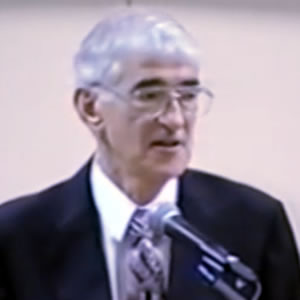 John Dominic Crossan (born 1934) is an Irish-American New Testament scholar, historian of early Christianity, and former Catholic priest. Dominic
Crossan has produced both scholarly and popular works. His research has focused on the historical Jesus, on the anthropology of the Ancient Mediterranean and New Testament worlds and on the application of postmodern hermeneutical approaches to the Bible.
What is Caesar?
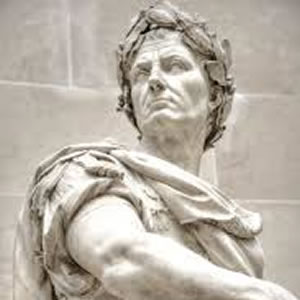 Gaius Julius Caesar, 100-44 BC, known by his cognomen Julius Caesar, was a Roman politician and military general. Caesar played a critical role in the
events that led to the demise of the Roman Republic and the rise of the Roman Empire.
Who is GOD?
 In monotheism and henotheism, God is conceived as the Supreme Being and principal object of faith. The concept of God as described by theologians
commonly includes the attributes of omniscience (infinite knowledge), omnipotence (unlimited power), omnipresence (present everywhere), omnibenevolence (perfect goodness), divine simplicity, and eternal and necessary existence.
<ul>
<li>In theism, God is the creator and sustainer of the universe</li>
<li>In deism, God is the creator, but not the sustainer, of the universe</li>
<li>Monotheism is the belief in the existence of one God or in the oneness of God</li>
<li>In pantheism, God is the universe itself</li>
<li>In atheism, God is purported not to exist, while deemed unknown or unknowable within the context of agnosticism. </li>
</ul>