The Catholic Church condemned numerous Christian sects as heretical
In the early years, the Catholic Church was ruthless in condemning and silencing rival Christian sects, their followers killed or forced to flee. Below are a few of the rival sects and their beliefs.
1. Adoptionism
Jesus was adopted by God
Jesus was in nature a man who became God by adoption. Therefore, God adopted Jesus the Man, who then became God himself.
3. Arianism
Jesus was subordinate to Father
Jesus is the Son of God, created by God the Father. Jesus was distinct from the Father and therefore below the Father.
4. Docetism
Jesus was a spirit
Jesus only seemed to be human, and that his human form was an illusion, as was his crucifixion;
Jesus only seemed to have a physical body and to physically die, but in reality he was incorporeal, a pure spirit, and hence could not physically die.
6. Macedonians or Pneumatomachians ("Spirit fighters")
Jesus was divine, not the Holy Spirit
They accepted the divinity of Jesus Christ, but denied divinity of the Holy Spirit who was a creation of the Son, and a servant of the Father and Son.
The substance of Jesus Christ as being of "similar substance" (homoiousios) but not of the "same essence" (homoousios) as that of God the Father.
7. Melchisedechians
Jesus was Melchizedek
Jesus Christ is Melchizedek who lives, preaches, dies and is resurrected.
Jesus Christ is identified as "a priest forever in the order of Melchizedek", and so Jesus assumes the role of High Priest once and for all.
10. MiaphysiteJesus was equal God and Man
In Jesus, the divinity and humanity are united in one nature, without separation, without confusion, and without alteration
13. NestorianismJesus had two natures
Jesus had two natures, divine and human. He was a separate human united, but not identical, to the divine Son of God.
14. PatripassianismFather suffered when Son was crucified
Father, Son and the Holy Spirit are three different aspects of one God.
The Father suffered out of love, when His beloved Son, Jesus was made to suffer on Earth.
God the Father suffered on the cross as Jesus.
15. Psilanthropism Jesus was just a Man
Jesus was simply human, the literal son of human parents.
Jesus was not born of the virgin birth and he was not divine.
16. SabellianismFather, Son and Holy Spirit are three distinct aspects of one God
Father, Son and Holy Spirit are three different aspects of one God as perceived by the Christian believer, rather than three distinct persons within the Godhead (Trinity)
17. PaulicianismPaul was a prophet
Pure Christianity of Paul (of Tarsus) is the truth and needs to be rejuvenated. A Gnostic and dualistic sect. Belief in the two kingdoms of Good and Evil.
20. CircumcellionsFighting and dying is requiredMartyrdom (dying for your religion) is the true Christian virtue.
Disagreed with chastity, sobriety, humility, and charity. Focused on bringing about their own martyrdom.
They would attack random travellers on the road, while shouting "Praise God". The aim being to provoke their victim to kill them, thereby the Christian adherents become "martyrs".
A militant subset of Donatism
21. Donatism
Only righteous can enter Church
Donatists were rigorists, holding that the church must be a church of saints, not sinners.
They regarded martyrdom as the supreme Christian virtue and regarded those that actively sought martyrdom as saints.
22. EbionitesJesus was a Jewish prophetJesus was not divine.
The Father and Son (Jesus) are not of the same substance, the same "person" or being.
Need to observe Jewish law and rites.
23. Euchites / Messalians God has three formsGod takes different forms in order to reveal himself to the senses.
Trinity could be perceived by the carnal senses.
The Threefold God transformed himself into a single hypostasis (substance) in order to unite with the souls of the perfect (i.e. clergy)
25. Marcionism
Jesus/New Testament is superior to previous prophets/scripture
Jesus was sent by God and Paul was his chief apostle.
The God of the New Testament was all-forgiving; unlike the Hebrew God who was wrathful, avenging and a lower entity.
Rejected the Hebrew Bible and the Hebrew God.
26. MontanismSinners cannot be forgiven
Christians who fell from grace could not be redeemed.
Avoid sin and church discipline, emphasize chastity, including forbidding re-marriage.
Some of the Montanists were also "Quartodeciman"
27. PelagianismOriginal sin did not effect Man
Original sin did not taint human nature. Man is seen as effecting his own salvation.
Man is capable of living a sin-free life; determining good and evil, without the need of Gods' assistance.
28. SemipelagianismMan needs grace to reach God
Man cannot come to God without the grace of God.
Increased faith is the work of God, while the beginning of faith is an act of mans free-will.
What is Catholic? The Catholic Church, also known as the Roman Catholic Church. This is the largest Christian church, with approximately 1.3 billion baptised Catholics worldwide, as of 2016. As one of the oldest religious institutions in the world, it has played a prominent role in the history and development of
Western civilisation. The church is headed by the Bishop of Rome, known as the Pope. Its central administration, the Holy See, is in the Vatican City, an enclave within Rome, Italy. Catholic theology is based on the Nicene Creed.
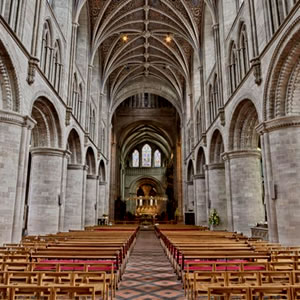
What is the Church? A church is a building used for Christian worship services and Christian activities. The earliest identified Christian church is a house church founded between 233 AD and 256 AD. The word church also describes a body or assembly of Christian believers, while "the Church" refers to the worldwide