The Abrahamic Religions, Judaism, Christianity and Islam are the most influential world religions in history
These religions are sometimes called ther "Abrahamic religions" because they trace their history back to Abraham. The chart below compares various aspects of each religion.| Judaism | Christianity | Islam | |
Shared message is to worship the one, true GOD |
|||
| Prophet | Moses/Abraham | Jesus (4 BC - 30 AD) | Muhammad (570 - 632 AD) |
| Adherents | Jews | Christians | Muslims |
| History | |||
| Founded (Date) | 7 BCE | 33 CE | 622 CE |
| Founded (Place) | Palestine | Palestine | Saudi Arabia |
| Early Expansion | Little expansion; mostly confined to Palestine | Within 60 years, churches in major cities in Palestine, Turkey, Greece and Rome; entire Roman Empire by 4th century | Within 12 years, entire Arabian peninsula; within 100 years, Muslim world stretched from the Atlantic to China |
| Facts | |||
| Main Locations | Israel, Europe, USA | Europe, North and South America, Africa | Middle East, Southeast Asia |
| Population (Today) | 14 Million | 2200 Million | 1500 Million |
| Population (Rank) | 12th | 1st (largest) | 2nd |
| Main Sects | Hasidic, Conservative, Reform, Ashkenazi and Sephardi Jews | Orthodox, Protestant and Roman Catholic | Sunni and Shia |
| Worship Place | Synagogue, Temple | Church, Chapel, Cathederal | Mosque |
| Holy Day | Saturday | Sunday | Friday |
| Scripture | |||
| Scripture | Old Testament Torah (Law), Nevi'im (Prophets) and Ketuvim (Writings) |
New Testament Bible (Gospels): written by men inspired by God |
Quran Quran revealed to Muhammed |
| Original Language | Hebrew | Aramaic | Arabic |
| Books | 39 In Protestant Old Testaments; 51 In Catholic Old Testaments; 55 In Orthodox Bibles; 57 In Coptic Bibles | 27 Books | 1 Book, Hadith Books (secondary source) |
| Vocabulary | 5,800 words | 4,800 words | |
| Text | The Old Testament provides the basis of the present day Judeo-Christian faith. It talks about the history of how the world was created, exodus of Israelites, and the Ten Commandments given to Moses by God, and also includes real life stories. The function of this text is to teach people through the experiences of people throughout history. Several books also foretell the arrival of the Messiah and the end of the world. | The New Testament, on the other hand, focuses more on the life and teachings of Jesus and the Christian church. The stories are narrated through gospels and emphasize the importance of the sacrifice of Jesus. The function of the New Testament is to lead people to follow the example of Jesus more closely. The other books, written by various authors also talk about the end of the world and last battle between good and evil. | |
| Content | The Old Testament explains the history of the creation of the World, the exodus of Israelites, and the Ten Commandments given to Moses by God. | The New Testament focuses more on the life and teachings of Jesus and the Christian church. | |
| What is it | Old Testament is the first division of the Christian Bible. | The New Testament is the second major division of the Christian Bible. | |
| Language | Hebrew and Aramaic | Greek | Arabic |
| Religious Law | Halakhah | Canon Law | Sharia |
| God | |||
| Theism | Strict Monotheism | Trinitarian Monotheism | Strict Monotheism |
| God | One God | One God (Trinity, 3-in-1): Father, Son and Holy Spirit | One God |
| God (Name) | Yahweh, Elohim | Yahweh, The Holy Trinity | Allah |
| God's identity | The Lord is the only God (is 42:8; Is 44:6) | Trinity of God. (God the Father, the Son and the Holy Spirit. | Allah is one. There is none like Him |
| View on God | The God of the Old Testament was a god of law, justice, wrath, condemnation, and punishment. | The God of Jesus was the god of gospel, mercy, love, forgiveness, and salvation. | |
| Authority | |||
| Revered Humans | Prophets | Saints, Church Fathers | Prophets, Imams (Shia) |
| Clergy | Rabbi | Priest, Minister, Pastor, Bishop | Imam |
| Spiritual Beings | Angels, Demons | Angels, Demons | Angels, Demons, Jinn |
| Views On Prophet | |||
| Universal | Believe in God's prophets, except Jesus and Muhammad | Believe in God's prophets, except Muhammad | Believe in all of God's prophets |
| Moses | Prophet | Prophet | Prophet |
| Muhammad | False Prophet | False Prophet | Prophet |
| Jesus | False Prophet, bastard child | Divine, of the Trinity. Son of God, God incarnate, Messiah, Savior of the world | Prophet of God, whose message has been corrupted |
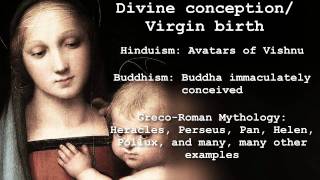
| Jesus (Birth) | Normal birth | Virgin birth | Virgin birth |
| Jesus (Mission) | Rejected | To reconcile Man to God, through his death as a sacrifice for the sins of mankind | To encourage monotheism and worship of the Father |
| Jesus (Death) | Crucified for divinity claim/Normal death | Crucified for our sins/Spiritual suffering | Not crucified, raised to Heaven by God |
| Jesus (Resurrection) | Denied | Affirmed | Denied |
| Jesus (Return) | Denied | Affirmed | Affirmed |
| Views On | |||
| Abrahamic Religions | Islam and Christianity are false interpretations and extensions of Judaism | Judaism is a true religion, but with incomplete revelation. Islam is a false religion | Jews and Christians are respected as 'People of the Book'. Today they have wrong beliefs and partial/ corrupted revelation |
| Holy Spirit | Divine power given to Prophets | Part of Trinity, with the Father and Son he is worshipped | Angel Gabriel |
| Human Nature | Two equal impulses, good and bad | "Original sin" inherited from Adam - tendency towards evil | Equal ability to do good or evil |
| Sin | No original sin. Atonement for sins through forgiveness from God in repentance | All humans from Adam are inherently sinful. Jesus atoned for our sins through his death on the Cross | All humans are born sinless, but our weakness leads to sin |
| Forgiveness | You have to bring a lamb as a sacrifice for your sin to be forgiven. | All you have to do is to repent and you're forgiven automatically. | |
| Salvation | By good works, prayers and grace of God | By faith in Jesus Christ | By good works, and belief in true monotheism |
| Salvation (God's Role) | Predestination | Predestination, various forms of grace | Divine revelation and forgiveness |
| End Times | God (YHWH/Adonai) will send a messenger to bring salvation on earth. | Jesus came to save the Earth | |
| Heaven | Views vary: either heaven or no afterlife | Eternal heaven | Eternal paradise |
| Hell | Views vary: sinners may suffer temporary punishment, but certain sins merit eternal punishment; reincarnation or no afterlife | Eternal hell. Everlasting punishment for the unrighteous | Eternal hell. A place of torment and fire |
15-abrahamic-religions
| Author: Guest • Updated: 24 Sep 2018 • 29,608 views | 9 hrs ago |
Explore More
 What is Abrahamic Religion?
The Abrahamic religions are a set of monotheistic religions that respect or admire the religious figure Abraham as a patriarch, namely Judaism, Christianity, and Islam. The term also often encompasses several smaller faiths. The religions of this set share doctrinal, historical, and geographic
overlap that contrasts them with Indian religions, Iranian religions, and East Asian religions. The term, introduced in the 20th century, replaced "Judeo-Christian" to include Islam as an Abrahamic religion and acknowledge differences between Judaism and Christianity. The term Abrahamic religions (and its variations) is a collective religious descriptor for elements shared by Judaism, Christianity, and Islam. It features prominently in interfaith dialogue and civil discourse, as well as academic discourse.
What are Religions?Religion is a range of social-cultural systems, including designated behaviors and practices, ethics, morals, beliefs, worldviews, texts, sanctified places, prophecies, or organizations, that generally relate humanity to supernatural, transcendental, and spiritual elements. There is no scholarly
consensus over what precisely constitutes a religion. It is an essentially contested concept. Different religions may or may not contain various elements ranging from the divine, sacredness, faith, and a supernatural being or beings.
The origin of religious belief is an open question, with possible explanations including awareness of individual death, a sense of community, and dreams. Religions have sacred histories, narratives, and mythologies, preserved in oral traditions, sacred texts, symbols, and holy places, that may attempt to explain the origin of life, the universe, and other phenomena. Religious practice may include rituals, sermons, commemoration or veneration (of deities or saints), sacrifices, festivals, feasts, trances, initiations, matrimonial and funerary services, meditation, prayer, music, art, dance, or public service.
There are an estimated 10,000 distinct religions worldwide, though nearly all of them have regionally based, relatively small followings. Four religions: Christianity, Islam, Hinduism, and Buddhism account for over 77% of the world's population, and 92% of the world either follows one of those four religions or identifies as non-religious, meaning that the vast majority of remaining religions account for only 8% of the population combined.