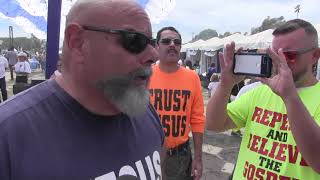
In 2 Timothy 3:16, Apostle Paul refers to the Old Testament as Word of God - Hamza Myatt vs Christian

   10:29
1423 views  ·  Last viewed: 1 day ago
Uploaded: 25 Aug 2017   (9 years ago)  ·  Shared: 03 Sep 2017

Video Description (from Youtube)

Hamza delves into why people believe certain information and is it based on belief and what is this belief exactly!? Full debate will be up on EFDawah Soon!
DISCLAIMER
All videos are shared for educational and information purposes only. All videos are hosted and viewable on Youtube servers. Video titles are generated using the original video title; overall content theme including actual dialogue and speech (Transcript); and A.I-based recommendations with a focus on SEO, keyword density, and internal search functions. The video title does not represent the views held by the Youtube video uploader, or any individual, organisation or business.

If you spot any mistake, omission or give feedback, kindly Contact Us with details

Overview & Key Concepts


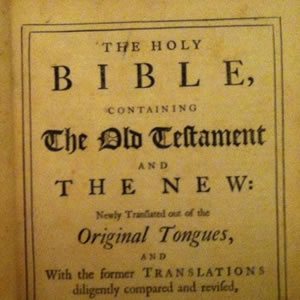
What is Old Testament?

The Old Testament (OT) is the first part of Christian Bibles. This is based primarily upon the Hebrew Bible (or Tanakh), a collection of ancient

religious writings by the Israelites believed by most Christians and religious Jews to be the sacred Word of God. The second part of the Christian Bible is the New Testament.
<br><br>
The books that comprise the Old Testament canon, as well as their order and names, differ between Christian denominations. The Catholic canon comprises 46 books, and the canons of the Eastern Orthodox and Oriental Orthodox Churches comprise up to 51 books and the most common Protestant canon comprises 39 books.
Who was Apostle Paul?

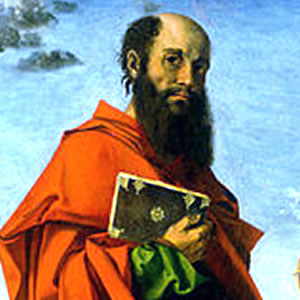
Paul the Apostle (Latin: Paulus), commonly known as Saint Paul and also known by his Jewish name Saul of Tarsus was an apostle (though not one of the

Twelve Apostles) who taught the gospel of Christ to the first century world. Paul is generally considered one of the most important figures of the Apostolic Age and in the mid-30s to the mid-50s AD he founded several churches in Asia Minor and Europe. He took advantage of his status as both a Jew and a Roman citizen to minister to both Jewish and Roman audiences. According to writings in the New Testament and prior to his conversion, Paul was dedicated to persecuting the early disciples of Jesus in the area of Jerusalem. In Acts, Paul was traveling on the road from Jerusalem to Damascus on a mission to 'arrest them and bring them back to Jerusalem' when the resurrected Jesus appeared to him in a great light. He was struck blind, but after three days his sight was restored by Ananias of Damascus and Paul began to preach that Jesus of Nazareth is the Jewish Messiah and the Son of God.

Who is Hamza Myatt?

A Speakers' Corner is an area where open-air public speaking, debate, and discussion are allowed. The original and most noted is in the north-east

corner of Hyde Park in London, England. Speakers here may talk on any subject, as long as the police consider their speeches lawful, although this right is not restricted to Speakers' Corner only. Contrary to popular belief, there is no immunity from the law, nor are any subjects proscribed, but in practice the police intervene only when they receive a complaint. Speakers' Corner is often held up to demonstrate freedom of speech, as anyone can turn up unannounced and talk on almost any subject, although always at the risk of being heckled by regulars.

What is Christian?

Christianity is a global religion centered on the life and teachings of Jesus Christ, who followers believe is the Son of God. It's a monotheistic

faith, meaning Christians believe in one God who exists in three co-equal persons: God the Father, God the Son (Jesus Christ), and the Holy Spirit. Christianity is based on the Bible, with the Old Testament and New Testament serving as sacred texts.

Who is GOD?

In monotheism and henotheism, God is conceived as the Supreme Being and principal object of faith. The concept of God as described by theologians

commonly includes the attributes of omniscience (infinite knowledge), omnipotence (unlimited power), omnipresence (present everywhere), omnibenevolence (perfect goodness), divine simplicity, and eternal and necessary existence.
<ul>
<li>In theism, God is the creator and sustainer of the universe</li>
<li>In deism, God is the creator, but not the sustainer, of the universe</li>
<li>Monotheism is the belief in the existence of one God or in the oneness of God</li>
<li>In pantheism, God is the universe itself</li>
<li>In atheism, God is purported not to exist, while deemed unknown or unknowable within the context of agnosticism. </li>

</ul>

Frequently Asked Questions


1.Why did Apostle Paul preach a new religion?

When Rome adopted Christianity with the conversion of the Roman Emperor (4th Century) and his official campaign to repress anyone who refused to conform; to kill those Christians who refused to follow Romes 'Trinitarian Christianity'.
Paul knew that the victors wrote history and in order to win 'he had to be all things to all men' (I Corinthians 9:24-27).
Those who dig their heels in 'beat the air' and refused to compromise any detail of the true faith ended their days as martyrs.


2.What did early Jewish-Christians think of Apostle Paul?

Between 55 and 66 CE, early Jewish-Christian leaders in Jerusalem rejected Paul's teachings and challenged his authority, leading to a significant decline in his popularity.


3.How did Saul become Apostle Paul?

A young man named Saul of Tarsus was bent on murdering all the Christians he could. He was a Jew, a Pharisee (well-versed in the Law of Moses), a man of knowledge, letters and spirit.

Following a dramatic experience, where according to Saul, Jesus Christ appeared to him on the road to Damascus.

Saul converted to Christianity and now became the beloved apostle, saint, evangelist, theologian, and pastor we call Apostle Paul.


4.How was Apostle Paul's message different to Jesus?

Paul introduced a new theology focusing on Jesus as a divine sacrifice, arguing that Jewish law was unnecessary for salvation and largely disregarding Jesus's earthly teachings.


5.How did Apostle Paul view Jesus?

Paul viewed Jesus as the divine image of God, the firstborn of creation, and the fullness of God, as outlined in Colossians 1:15-20.


6.How did the Jews view Apostle Paul?

Faithful Jews viewed Paul's salvation theory as blatant blasphemy because his theological teachings explicitly ridiculed all previous revelations from God, including the sacred Torah, while teaching a doctrine that went against the absolute oneness of God.


7.How did Apostle Paul become the authority?

Following his dramatic conversion experience on the road to Damascus, Paul claimed direct divine authority to speak on behalf of God and began preaching that salvation depended entirely on believing that Jesus was part of the divine Godhead.


8.According to Apostle Paul, why did God give Jews the Torah?

Paul viewed the Torah as a temporary guide, claiming it was given to the Jews until they could be saved through faith in Jesus Christ.


9.How did Apostle Paul differ with the Jewish Rabbis?

The Jewish Rabbis preached a person was saved so long as their intention was to remain within the covenant, and one truly repented and seek forgiveness for their sins.

Paul preached that every person was 'damned' until they was offered salvation. Mans problem was that he was 'in the flesh' in bondage to the Law, sold under Sin, enslaved by the fundamental spirits of the universe (ie. dead).

Paul preached the only cure was liberation from slavery and death by union with Christ, who had conquered death and sin.


10.What was the core message of Apostle Paul's teachings?

The core of Paul's theology rested entirely on the absolute necessity of the crucifixion and resurrection of Jesus Christ, arguing in his letters that if righteousness could be achieved through the Mosaic Torah, then Christ died for absolutely nothing. He insisted to his followers that if Christ was not raised from the dead, then all Christian preaching and faith were completely vain and empty.


11.What happened after Apostle Paul converted to Christianity?

Following his conversion, Paul did not immediately meet with the original Apostles in Jerusalem; instead, he went to Arabia and returned to Damascus, waiting three years before visiting Peter and James for only fifteen days, avoiding the others.


12.What about Apostle Paul's writings?

Paul authored 13 of the 27 books in the modern New Testament, comprising a major portion of the text. This is significant due to his differing theological teachings to the law-observant teachings of Jesus.


13.What books did Apostle Paul write?

Romans
Paul explains how the gospel works and how to respond. Paul wrote this letter before he had visited the Roman church.

1 Corinthians
In 55 A.D., Paul admonished the local church that he had founded in Corinth.

2 Corinthians
Come 56 A.D., the Corinthian church had escalated and then resolved their conflict with Paul. Second Corinthians is Paul's a letter of forgiveness and reconciliation.

Galatians
Someone had misled the churches of Galatia re-subjecting them to the Law of Moses and devaluing God's grace. Paul writes the Galatians an aggressive letter to set them straight on their freedom in Christ.

Ephesians
Paul outlines doctrines of grace, peace, and salvation, and then instructs the church to walk in a manner worthy of Jesus Christ.

Philippians
Even though he's suffering in prison, Paul finds joy in Christ. He writes to the church at Philippi urging them to take on a Christlike attitude.

Colossians
This letter explains to the church at Colossae who they are in Christ.

1 Thessalonians
The church of Thessalonica is setting a great example for other churches, even though they're being persecuted for their faith. Paul encourages them to 'excel still more'.

2 Thessalonians
The affliction just won't let up on the Thessalonian church, so Paul coaches them on standing firm until Jesus return.

1 Timothy
This is Paul's guide to godliness and sound teaching for the young pastor Timothy at Ephesus.

2 Timothy
Paul's death is drawing near, and he charges Timothy to carry on his gospel work.

Titus
Paul had left Titus at Crete to set up order in the churches there. Now he writes Titus instructions for leading a counter-cultural church.

Philemon
It's a message to Philemon, a leader in the Colossian church.


14.Why is believing in Apostle Paul so wrong?

Accepting Paul's theology implies that Jesus mistakenly selected the wrong individuals as his original twelve disciples,

It renders Jesus's earthly life and direct moral teachings completely irrelevant, and

Ignores the fact that Paul never actually met Jesus in person yet rejected the guidance of those who lived and learned directly from him.

Furthermore, it notes that the final New Testament canon restricted competing eyewitness accounts by omitting the gospels of Peter, Barnabas, and James.


15.What did Apostle Paul think of his fellow Gospel writers?

Paul was deeply unyielding toward alternative views of the faith, explicitly writing in Galatians 1:9 that if any person preached a gospel different from the one his followers had received, that individual should be completely accursed. This indicates he aggressively dismissed the legalistic, Jewish-Christian perspectives held by original disciples like James and Peter.


16.How did Apostle Paul break Gods Law?

Paul is described as rejecting the binding authority of the Torah, specifically mandatory male circumcision as an everlasting covenant and laws regarding dietary purity. Thereby breaking away from divine commands given to the Hebrew people.


17.How was Apostle Paul viewed in his time?

Paul's controversial doctrine of justification through faith alone made him an implacable enemy of the Jewish population who vehemently refused to accept his arguments. Concurrently, many early Christians viewed him as an outsider and a dangerous theological threat, as his teachings ultimately caused the absolute severance of Christianity from its original Judaism roots.


18.Was Apostle Paul an Apostle?

An Apostle is one of the original 12 disciples called by Jesus to preach the gospel: Simon Peter, the brothers James and John, Andrew, Philip, Bartholomew, Matthew, Thomas, James the son of Alpheus, Thaddaeus, Simon the Zealot, Judas Iscariot.

As Paul never met Jesus, many Galatians and Corinthian Christians actively challanged Pauls right to even teach, and his right to call himself an Apostle.


19.What dramatic experience made Apostle Paul convert to Christianity?

Paul experienced a sudden vision of a blinding light and a voice on the road to Damascus, but the multiple accounts recorded in the Book of Acts contain clear, direct contradictions regarding whether his companions also fell to the ground, and whether they actually heard the voice or saw the light.


20.How did Matthew (Gospel) support Apostle Pauline Christian doctrine?

The Gospel of Matthew, aimed at law-abiding Jewish-Christians, did not support Pauline doctrine and actually stood in direct opposition to it.


21.Why was Apostle Paul superior to other Apostles?

Paul insisted that his gospel possessed a superior divine authority because he claimed it was delivered directly by the risen Lord Jesus, rather than the earthly, historical Jesus whom the twelve disciples had trained under in-person; this supposed heavenly origin entitled him to act entirely independently of the original Jewish-Christian beliefs and modify their doctrine.


22.Did Apostle Paul face any opposition. If so how?

Yes, early gospel writers strongly opposed Paul's innovations, with John the Evangelist and John of Patmos writing sharp warnings in 1 John and the Book of Revelation to guard believers against a dangerous heretic, a false Jew, a false apostle, and a deceitful doctrine that broke God's commandments.


23.What was the message preached by Apostle Paul?

Paul's theology centered on the message that salvation is a gift from God obtained through faith in the death and resurrection of Jesus Christ, rather than through performing the works of the Mosaic law. He argued that Christ's sacrifice fulfilled the ultimate requirements of the law, opening the path to redemption and righteousness for both Jews and Gentiles globally.


24.Why did Apostle Paul choose to preach to the Gentiles?

Historically, Paul's mission shifted toward non-Jewish Gentiles because the majority of mainstream Jewish communities rejected his messianic doctrines regarding Jesus. In orthodox Christian history, this decision is also framed as a direct divine calling following his conversion, leading him to systematically establish multi-ethnic churches across the Roman Empire.

Paul was a Pharisee and would have been familiar with the knowledge, teachings, methodologies and mistakes of his Pharasaic brothers. Thus, he would have been the best person to preach to them his interpretation of soteriology. Yet he chose not to; leaving this task to James, Peter and the rest, dubbing them as the 'super apostles'.

The real reason why Paul preached to the gentiles is because they were ignorant. They did not know the Torah. They did not possess intimate knowledge of Judaism, its scripture or its doctrine.

Therefore Paul was not presenting his new religion to his own brethren because they would be able to debunk him. Due to this, logically speaking, he preached to those who would find his new faith appealing.

The gentiles would not argue about Christ's deity, or about the new doctrine of salvation, but the Jews would and vehemently so. Thus the path of least resistance is among the gentiles who would eventually see him as an authoritative figure, as opposed to the Jews who would see him as a heretic and shame him.

Yet with the gentiles, he is able to avoid these problems and ascend to power and authority very quickly.


25.How was Apostle Paul viewed by the Jews?

Paul was widely viewed by mainstream Jewish communities as a radical apostate and religious heretic because he preached that observance of the Mosaic Torah was no longer required for salvation. This fierce theological conflict frequently resulted in severe public opposition, legal charges before Roman authorities, and physical riots during his travel throughout ancient Mediterranean cities.


26.What did Apostle Paul achieve by his Christian conversion?

By adopting faith in Jesus, Paul effectively expanded a localized, strictly observant Jewish movement into a highly adaptable, universal religion accessible to all cultures. He utilized his unique background as both a learned Pharisee and a Roman citizen to systematically build an expansive network of legal-exempt Christian communities across multiple Roman provinces.


27.What did Apostle Paul say about the other gospels?

In Galatians 1:6-9, Paul strongly condemned anyone preaching a different gospel, reflecting a significant conflict in the early church between his Gentile-inclusive mission and strict adherence to the Law.


28.How important was Jesus' crucifixion to Apostle Paul?

In his surviving epistles, the Apostle Paul demonstrates almost no interest in the day-to-day earthly life, chronological career, or specific moral parables of Jesus of Nazareth. Instead, his extensive theology is completely fixated on the cosmic, atoning meaning of the crucifixion and subsequent resurrection of the figure he addresses as 'the Lord'. Secular historians analyze this focus to illustrate how early Christian theology transformed from an inward-looking Jewish prophetic movement into a universal savior faith.


29.Was Apostle Paul a disciple of Jesus?

No, Paul never met Jesus during his ministry. He is considered an independent figure whose teachings, influenced by Hellenism, shifted the focus toward a divine Christ.


30.What life did Apostle Paul lead before his miraculous conversion to Christianity?

Before his conversion, Paul was known as Saul and operated as a strict Pharisee and enforcer hostile toward early followers of Jesus. Academic historians note that he worked under the authority of the high priestly administration in Jerusalem to systematically suppress the growing messianic movement, believing he was protecting traditional Judaism from a dangerous heresy


31.Why did James allow Apostle Paul to preach a new religion?

It is suggested James tolerated Paul's expansive missionary activities because the financial collections Paul raised from wealthy Gentile communities directly supported the impoverished Jerusalem mother church. Critical historians clarify that this financial collection, detailed across Paul's letters, was an official diplomatic agreement meant to preserve a fragile unity between Paul's Gentile converts and James' law-abiding Jewish-Christian community.


32.How did Apostle Paul view Jesus' teachings?

According to the source text, Paul's theology effectively relegated Jesus' specific earthly, Jewish ethical teachings to a position of secondary importance, prioritizing instead a cosmic message centered entirely on the crucifixion and resurrection for salvation. Textual analysis demonstrates that Paul's letters rarely quote Jesus' parables or earthly sermons, focusing almost exclusively on his identity as a divine savior figure.


33.What did Apostle Paul do after his miraculous conversion to Christianity?

Following his Damascus vision, Paul records in his letters that he did not seek instruction from others, but immediately withdrew into the Arabian desert for a period of reflection. The platform notes that this independence significantly elevated Paul's personal status, allowing him to claim he received his theological mandate directly from a divine revelation rather than from Jesus' twelve original earthly disciples.


34.What was the main difference between Apostle Paul's religion and the message of Jesus?

The core difference lies in the theological meaning of Jesus' life, with Paul's creed fundamentally focusing on the crucifixion as a necessary cosmic sacrifice to save mankind from sin. While Jesus preached repentance and the ethical arrival of the Kingdom of God, Paul's Damascus vision shifted the entire framework to a savior faith centered on the mechanical necessity of Jesus' violent death and resurrection for salvation.


35.How did Apostle Paul convince the Gentiles?

Paul's theological message had a strategic advantage because it stayed close to the authority of the Hebrew Scriptures while thoroughly re-interpreting them to forecast the saving death of Jesus. This scriptural grounding gave his teachings a unique legitimacy that proved highly attractive and persuasive to the Gentile masses.


36.How did James, leader of the Jerusalem Church, view Apostle Paul?

Paul's new doctrine met with disapproval from the Jewish-Christians of the Jerusalem Church led by James, who regarded the substitution of Jesus' atoning death for the observance of the Torah as a lapse into paganism.

Paul was duly summoned to Jerusalem by the leaders James, Peter and John to explain his doctrine in 50 AD.


37.What was Apostle Paul's view on circumcision?

Paul considered the physical act of circumcision to be unimportant, prioritizing faith and adherence to God's commandments as more significant than the physical ritual.


38.What did Apostle Paul do after he converted to Christianity, on the road to Damascus?

Following his conversion 1-3 years after the crucifixion, Paul vanished from the public eye before re-emerging 13 years later (47-60 CE) as a missionary to the Gentiles.


39.What is the God of the Old Testament like?

The God of the Old Testament is a jealous, bloodthirsty, vicious God that mercilessly commanded horrific attrocities like, for example:

Killing every human on the planet except the handful that went with Noah.

Moses commanding his people to shed each others blood as atonement for creating and worshiping the golden calf

The genocide of the people in the promised land when the Hebrews finally ended their 40-year stay in the dessert. Under the command of God, they wiped out whole cities, killing every man, woman and child.


40.Is the Old Testament historically authentic?

Mainstream biblical scholarship clarifies that the Old Testament is an anthology of ancient texts compiled, edited, and transmission-copied by diverse authors over more than a millennium. While archaeological discoveries like the Dead Sea Scrolls confirm that the texts have been preserved with high fidelity for over 2,000 years, comparative textual analysis reveals localized spelling updates, minor scribal variations, and stylistic expansions common to ancient Near Eastern manuscript traditions.


41.Did Jesus abolish the Old Testament Law?

In the Synoptic Gospels, Jesus explicitly states in Matthew 5:17 that he did not come to abolish the Law or the Prophets, but to fulfill them. Mainstream Christian theology interprets this 'fulfillment' as Jesus perfectly satisfying the legal and sacrificial requirements of the Mosaic covenant, thereby inaugurating a New Covenant where specific ritual laws are no longer binding on believers. Secular historians and Islamic scholars emphasize that during his life, Jesus operated firmly within first-century Judaism, actively practicing and teaching obedience to the commandments of the Torah.


42.What did James say of the Old Testament Law?

In the New Testament Epistle of James, the author strongly emphasizes that faith without accompanying righteous deeds is dead and notes that stumbling at just one point makes a person guilty of breaking the entire Law (James 2:10). Early church records and historical scholarship depict James the Just (the brother of Jesus) as a deeply traditional, law-observant leader of the Jerusalem Church. He maintained that Jewish believers should strictly adhere to traditional Mosaic customs, which later created a significant theological tension with Apostle Paul's ministry to the Gentiles.


43.What is the punishment for apostasy in The Bible (Old Testament)?

In the legal codes of the Old Testament, most notably Deuteronomy 13:6-11, the prescribed statutory punishment for an Israelite who entices others to worship foreign gods is death by public stoning. While historical narratives like Exodus 32 document severe executions for national apostasy (such as the incident with the Golden Calf), biblical scholars note that this capital penalty was legally designed to protect the monotheistic identity of ancient Israel.


44.What was the foundation of the Old Testament?

The foundational belief of the Old Testament is strict monotheism, epitomized by the Shema (Deuteronomy 6:4): 'Hear, O Israel: The Lord our God is one Lord.' This faith was maintained in opposition to surrounding polytheistic practices.


45.Does the Old Testament teach the Christian Trinity?

Mainstream biblical scholars and historians agree that the Old Testament does not explicitly teach the doctrine of the Trinity, nor did ancient Jewish communities possess a concept of a triune Godhead. There is no historical evidence in pre-Christian Jewish literature including the Hebrew text, the Dead Sea Scrolls, or ancient commentaries of a belief in a plurality of divine Persons. While Christian theologians retrospectively interpret certain plural expressions (such as 'Let us make man' in Genesis 1:26) as hints of the Trinity, ancient Judaism strictly maintained a unitarian monotheistic understanding of God.


46.What do Christian 'Trinity' scholars say about the Old Testament?

Many theologians, including this analysis of Trinity dogma, note that the Old Testament does not explicitly contain the Trinity, which they believe was only fully revealed later.

The distinguished Trinitarian scholar Bertrand de Margerie in his book The Christian Trinity in History writes:

'Contemporary exegetes [Bible teachers] affirm unanimously that the Old Testament did not bring to the Jewish people a clear and distinct Revelation of the existence of a plurality of persons in God. In this they agree with the clear and frequent affirmation of Fathers such as Irenaeus, Hilary, and Gregory of Nazianzus: that the doctrine of the Trinity is revealed only in the New Testament.'

So any person who lived before Jesus' ministry did not have to believe in the Trinity to be saved because the Trinity is not mentioned in the Old Testament.


47.Many Christians believe that Jesus abolished the Old Testament dietary laws

Many Christians believe that Jesus abolished the Old Testament dietary laws. The dietary interpretation of Jesus' words (i.e. swine pig consumption) does not exist in the Textus Receptus Bible, the authoritative Greek New Testament text that was accepted by the Christian Church until about 100 years ago.

This parenthetic interpretation of Jesus words was obviously a comment that some Bible scribe wrote in the margin of the text. Later scribes accidentally or deliberately incorporated the marginal comment into the text itself, so the statement appears only in corrupted texts.

But the statement does not appear in the Textus Receptus, so the KJV says nothing about Jesus 'declaring all foods clean.'

God had clearly prohibited pig, swine and pork in the Old Testament. This verse was over whether or not 'unwashed hands' caused clean food to become unclean.

'Thus he declared all foods clean' is completely missing from the Textus Receptus, the authoritative Greek New Testament line used for centuries. It claims this widespread dietary interpretation was likely a later scribal note added to the margins of the text, which was subsequently mistaken for Jesus' actual words in corrupted versions.


48.How did Early Christians view the Old Testament?

Early Christians considered the Old Testament 'God-breathed' and authoritative, but believed its ultimate meaning was only revealed through its connection to Jesus Christ, who fulfilled Israel's prophetic history.


49.Christianity and Hinduism revere their religious figures as gods or incarnations of God

According to Islam, all these righteous persons were mortal, human prophets of God, like Muhammad, having the same needs that every human being has. They all eventually died, as everyone must.

There are several reasons why they have come to be revered by their followers as 'gods'. One is that their words were misunderstood by the later generations, who mistook their figurative expressions in a literal sense. Another is that the details of their lives were not preserved accurately, and therefore a great many myths have grown up around them, and their works and deeds have been much exaggerated.


50.What is Christianity?

The platform defines Christianity as a religion that was originally and historically preached by Jesus himself, but argues that the mainstream version practiced across the world today has evolved into a system based almost entirely on the subsequent theological teachings, letters, and doctrines developed by the Apostle Paul.


51.How did the Early Jewish-Christians practise their religion?

The earliest Jewish-Christians strictly followed traditional Hebrew practices, including daily prayers, circumcision, rituals for purity, fasting, dietary laws, and temple, according to the source material.


52.Why did Christians turn away from the original message of Jesus?

By the time the New Testament Gospels (Mark, Matthew, Luke, John) were compiled, there was a growing movement to frame traditional Jewish practices as obsolete, driven by a desire to break free from strict Mosaic laws like circumcision, ritual purity, and dietary codes, which required portraying Judaism as an inferior path for the new faith to flourish.


53.What did early Jewish-Christians think of Apostle Paul?

Between 55 and 66 CE, early Jewish-Christian leaders in Jerusalem rejected Paul's teachings and challenged his authority, leading to a significant decline in his popularity.


54.When was Christianity born?

After 70 CE, Christianity became a new movement. Western Christian writings after 70 CE are a product of that transformation. Christianity became a Mithras-type saviour cult whose hero was not a myth but a real man.

Anyone who questioned Jesus' divinity were viewed as ignorant and inferior, including early Jewish-Christians, Jews, Jesus' closest friends and even family.


55.Were the early Christians Jews?

Yes, Jesus and early followers were entirely Jewish, strictly observing traditional laws and customs.


56.Did Saul kill the early Jewish-Christians?

Before his conversion, Saul actively sought to imprison and execute early Jewish-Christians. Saul believed that he was serving God by finding Christians, throwing them into prison, and even executing them.

1 And Saul was consenting unto his death. And at that time there was a great persecution against the church which was at Jerusalem; and they were all scattered abroad throughout the regions of Judaea and Samaria, except the apostles.
2 And devout men carried Stephen to his burial, and made great lamentation over him.
3 As for Saul, he made havock of the church, entering into every house, and haling men and women committed them to prison.
[Acts 8:1-3]


57.How did the early Jewish-Christians view Jesus' resurrection?

The earliest Jewish-Christians did not believe that the resurrection meant Jesus was God, but rather that he was a righteous man approved by God through miracles, wonders, and signs. Based on texts like Acts 2:22-24, they maintained the theological view that Jesus had been raised by God, not that he was the Creator himself.


58.Who seperated Christianity from Judaism?

It was Apostle Paul's dramatic conversion and subsequent teachings that directly resulted in the permanent theological separation of Christianity from Judaism. Within mere months of Jesus' departure, the original human-centric and law-abiding message was fundamentally altered into an independent religious system.


59.What happened after Apostle Paul converted to Christianity?

Following his conversion, Paul did not immediately meet with the original Apostles in Jerusalem; instead, he went to Arabia and returned to Damascus, waiting three years before visiting Peter and James for only fifteen days, avoiding the others.


60.What dramatic experience made Apostle Paul convert to Christianity?

Paul experienced a sudden vision of a blinding light and a voice on the road to Damascus, but the multiple accounts recorded in the Book of Acts contain clear, direct contradictions regarding whether his companions also fell to the ground, and whether they actually heard the voice or saw the light.


61.How did Matthew (Gospel) support Apostle Pauline Christian doctrine?

The Gospel of Matthew, aimed at law-abiding Jewish-Christians, did not support Pauline doctrine and actually stood in direct opposition to it.


62.Where is Pauline Christianity today?

Pauline Christianity constitutes the majority of modern Christianity, though some scholars question if the early, law-observant Jewish-Christian church was more accurate than Paul's later, Trinitarian-focused theology.


63.How was Christianity made appealing to pagan idol worshippers?

Pope Gregory I (540-604 CE), a famous Christian leader encouraged accomodating pagan customs and beliefs. So if pagans worshipped a Tree or Spirit abiding in it, rather than shun the pagan worship, he urged priests to somehow link the worship to Jesus Christ, and allow them to continue their Tree or pagan idol worship.


64.Should Christians celebrate Jesus on 25th December?

Any believing Christian who is aware of the historical, pagan 'Sun-Baal' connections of this date should entirely avoid celebrating Christmas. It points to certain denominations, such as Jehovah Witnesses, who explicitly refuse to participate in the celebration for this very reason.


65.Does the Christian Trinity come from pagan Triadic dieties?

Yes, the core teachings of modern Trinitarian Christian churches do not come from Jesus, but were pagan three-in-one concepts that existed long before his arrival and were later adopted by Christians to make their doctrine highly appealing to idol-worshipping masses.


66.How did Christianity start?

The road from Jesus to the Christian religion that finally emerged in the fourth century, with its myth of Jesus as the son of God solidly in place, is a very long and twisty path.

Christianity was not born of an immaculate conception. It was the product of myriad moments of intellectual labor and negotiated social agreements by the people investing in the experiment.

This discovery has been difficult for many Christians to accept. That is because the traditional picture of Christian beginnings starts with a Jesus who knows in advance what is required of him and his disciples in order to establish the Christian religion.


67.Who were the early Christians?

The earliest followers of Jesus were entirely Jewish individuals who continued to observe traditional Mosaic law and temple customs. They did not immediately form a new religion, but were initially viewed as a messianic sect within Judaism.


68.What does the Quran say about Jews and Christians?

The Quran recognizes Jews and Christians as 'People of the Book' (Ahl al-Kitab), acknowledging that they were given previous divine revelations through prophets like Moses and Jesus. While it praises the righteous among them, it also critiques their theological developments, specifically rejecting the Christian doctrine of the Trinity and the divine sonship of Jesus.


69.Do Christians worship Mary?

Mainstream Christian denominations, including Catholics and Eastern Orthodox, explicitly state that they do not worship Mary as a goddess, as worship (latria) belongs strictly to God alone. Instead, they give her a high level of honor and veneration (hyperdulia) as the Mother of God (Theotokos), asking her to intercede and pray to God on their behalf.

Some Christians do worship Mary. Even today, the abstract of that is found in churches where she is called upon as THEOTOKOS in Greek which means 'Mother of God', God bearer, one who give birth to God.

There was an idea that Mary was not the mother of God and counsels tried to change her name from THEOTOKOS to CHRISTOTOKOS, or from 'Mother of God' to 'Mother of Christ' - but this change was rejected.


70.What did Apostle Paul achieve by his Christian conversion?

By adopting faith in Jesus, Paul effectively expanded a localized, strictly observant Jewish movement into a highly adaptable, universal religion accessible to all cultures. He utilized his unique background as both a learned Pharisee and a Roman citizen to systematically build an expansive network of legal-exempt Christian communities across multiple Roman provinces.


71.I am a Christian and I know my sins are forgiven and I am going to Heaven. Is this correct?

Mainstream Christian theology teaches that a believer can have absolute assurance of salvation and the forgiveness of sins through personal faith in the sacrificial death and resurrection of Jesus Christ.

In contrast, Islamic theology emphasizes that definitive assurance of entering Heaven remains unknown during worldly life, as final judgment belongs entirely to God, who balances infinite mercy with a strict accountability of an individual's faith and actions.


72.How did the Christian Trinity come about?

The New Testament gospels show Jesus selecting twelve apostles to lead his immediate followers, but he did not lay down a detailed blueprint for a complex institutional priesthood or administrative hierarchy. The elaborate structures, clerical offices, and distinct liturgical traditions seen in modern churches developed gradually over centuries as the movement adapted to Roman institutional frameworks.

The concept of a dual human and divine nature in the person of Jesus is known as the Hypostatic Union, an essential component of modern Trinitarianism.

Yet it was not until the Council of Chalcedon that we see the emergence of an official doctrine of the Trinity in a form that is recognisable with what Christian Trinitarians believe in today. This took place in the fifth century, over 400 years after Jesus!

The evangelical theologian and Professor Wayne A. Grudem sums this up as follows: 'A precise understanding of how full deity and full humanity' argues Grudem, 'could be combined together in one person was formulated only gradually in the church and did not reach the final form until the Chalcedonian Definition in 451 AD.


73.Does the Quran tell Jews and Christians to refer to their Scriptures (Torah and Bible)?

Yes, the Quran references previous scriptures in passages like Surah Al-Ma'idah (5:47), which tells the followers of the Gospel to judge by what God has revealed in it. From an academic perspective, this reflects the historical context of 7th-century Medina, where Jews and Christians were recognized as 'People of the Book' who possessed divine laws. While Islamic theology holds that modern biblical texts have suffered from textual corruption (tahrif), the Quran historically appeals to the core monotheistic truths remaining in those scriptures to validate Muhammad's message.


74.Do all Christians believe Jesus was God or Son of God?

The early Jewish-Christians such as the Ebonites, the Cerinthians, the Basilidians, the Capocratians, and the Hypisistarians. The Arians, Paulicians and Goths also accepted Jesus as a prophet of God.

Even in the modern age there are churches in Asia, in Africa, the Unitarian church, the Jehovah's witnesses, and even the majority of todays Anglican Bishops do not worship Jesus as God.


75.Why did early Christians have church synods and councils?

Early Christian bishops organized regional synods and ecumenical councils to systematically define orthodox Christian doctrines and combat widespread heresies. These massive assemblies were essential for creating a unified creed, standardizing the New Testament canon, and establishing clear administrative laws for a rapidly growing global church. Prominent gatherings, like the Council of Nicaea, were often financed and politically mandated by Roman emperors to secure empire-wide religious stability.


76.There is only one Bible with one Christian doctrine?

No, textual criticism shows the Bible consists of thousands of varying manuscripts rather than a single, uniform text. These textual differences, such as in Jude 1:5, have historically contributed to diverse theological interpretations within Christianity.

Bible versions translate verses with different explanations. For example, in JUDE 1:5, who saves and then destroys the people of Egypt?

17 Bible versions state the 'Lord' did
7 Bibles state 'Jesus'
1 Bible claims 'God' did

These differences give rise to different Christian theological views.


77.Does the Old Testament teach the Christian Trinity?

Mainstream biblical scholars and historians agree that the Old Testament does not explicitly teach the doctrine of the Trinity, nor did ancient Jewish communities possess a concept of a triune Godhead. There is no historical evidence in pre-Christian Jewish literature including the Hebrew text, the Dead Sea Scrolls, or ancient commentaries of a belief in a plurality of divine Persons. While Christian theologians retrospectively interpret certain plural expressions (such as 'Let us make man' in Genesis 1:26) as hints of the Trinity, ancient Judaism strictly maintained a unitarian monotheistic understanding of God.


78.What is the Christian Trinity?

Orthodox Christian theologians define the doctrine of the Trinity as the belief that the Father is God, the Son is God, and the Holy Spirit is God, existing eternally as three distinct Persons within one single, undivided divine Being. These three Persons are considered entirely co-equal in power and co-eternal in time, with the Son being understood as 'eternally begotten' of the Father and existing simultaneously as 100% God and 100% man. The platform notes that many modern Christians mistakenly believe they are practicing Trinitarianism simply by acknowledging the Father, Son, and Holy Spirit, without understanding the complex historical and philosophical mechanics required by the formal church dogma.


79.What do Christian 'Trinity' scholars say about the Old Testament?

Many theologians, including this analysis of Trinity dogma, note that the Old Testament does not explicitly contain the Trinity, which they believe was only fully revealed later.

The distinguished Trinitarian scholar Bertrand de Margerie in his book The Christian Trinity in History writes:

'Contemporary exegetes [Bible teachers] affirm unanimously that the Old Testament did not bring to the Jewish people a clear and distinct Revelation of the existence of a plurality of persons in God. In this they agree with the clear and frequent affirmation of Fathers such as Irenaeus, Hilary, and Gregory of Nazianzus: that the doctrine of the Trinity is revealed only in the New Testament.'

So any person who lived before Jesus' ministry did not have to believe in the Trinity to be saved because the Trinity is not mentioned in the Old Testament.


80.What do Christian scholars say about the Trinity?

Mainstream scholars acknowledge that the Trinity is not explicitly defined in the New Testament but was formulated later by combining various verses and theological concepts.

Scholars freely admit that the Trinity is never presented as a complete doctrine in the New Testament, but rather is built from scattered Bible verses.

In the New Testament there is no explicit statement of the doctrine
Evangelical Dictionary of Theology (p. 1112)

It is not a Biblical doctrine in the sense that any formulation of it can be found in the Bible
New Bible Dictionary (p.1221)

The New Testament does not present a systematic presentation of the Trinity. The scattered segments from various writers that appear throughout the New Testament reflect a seemingly accepted understanding that exists without a full-length discussion.
Holman Bible Dictionary (p.1372)

Theologians admit the New Testament does not define the Trinity. Furthermore, there is no clear teaching that salvation depends on the belief in the Trinity.


81.When did Catholic Christianity become official religion of Rome?

In 380 CE, under the Edict of Thessalonica issued by Emperor Theodosius I, Nicene (Catholic) Christianity officially became the state religion of the Roman Empire, leading to the institutional regulation of religious practices and the formalisation of a calendar of feast days like Christmas and Easter.


82.What happened to Christians who questioned their creed?

Once Catholicism became the official state religion of the Roman Empire in the 4th century, it became highly dangerous to question or deviate from imperial doctrinal definitions. Imperial authorities enforced a strict monopoly on thought by carrying out systematic book burnings, completely destroying the philosophical refutations written by early critics like Celsus and Porphyry. As a result, modern academic knowledge of these ancient counter-arguments is limited to surviving snippets quoted inside the church's own refutation books.

  • Porphyry (3rd century philosopher) wrote a 15-volume refutation of Christianity, the gospels and resurrection
  • Celsus (2nd century philosopher) rejected the impossible concept of the resurrection
The imperialistic power of the church, and its stranglehold on intellectual endeavours was such that the above books and many more perished in the pious book burnings in the 4th century. Today, our knowledge of these books is limited and known through the refutation books which had to quote the destroyed books.

Once Christianity was established as the state religion, it became dangerous, as a subject of Rome, to question the doctrinal version of events.


83.Can Christians eat swine and pork?

While modern Christian practice permits eating pork, the text notes that God explicitly prohibited the consumption of pig and swine meat in the Old Testament laws. The source argues that the New Testament passage often used to defend eating pork was originally a specific debate regarding whether unwashed hands made clean food unclean, rather than a lifting of the pork ban.


84.Many Christians believe that Jesus abolished the Old Testament dietary laws

Many Christians believe that Jesus abolished the Old Testament dietary laws. The dietary interpretation of Jesus' words (i.e. swine pig consumption) does not exist in the Textus Receptus Bible, the authoritative Greek New Testament text that was accepted by the Christian Church until about 100 years ago.

This parenthetic interpretation of Jesus words was obviously a comment that some Bible scribe wrote in the margin of the text. Later scribes accidentally or deliberately incorporated the marginal comment into the text itself, so the statement appears only in corrupted texts.

But the statement does not appear in the Textus Receptus, so the KJV says nothing about Jesus 'declaring all foods clean.'

God had clearly prohibited pig, swine and pork in the Old Testament. This verse was over whether or not 'unwashed hands' caused clean food to become unclean.

'Thus he declared all foods clean' is completely missing from the Textus Receptus, the authoritative Greek New Testament line used for centuries. It claims this widespread dietary interpretation was likely a later scribal note added to the margins of the text, which was subsequently mistaken for Jesus' actual words in corrupted versions.


85.What life did Apostle Paul lead before his miraculous conversion to Christianity?

Before his conversion, Paul was known as Saul and operated as a strict Pharisee and enforcer hostile toward early followers of Jesus. Academic historians note that he worked under the authority of the high priestly administration in Jerusalem to systematically suppress the growing messianic movement, believing he was protecting traditional Judaism from a dangerous heresy


86.Who was the founder of Christianity?

The platform asserts that Jesus was not the actual founder of Christianity as an independent world religion, noting that the vast majority of the New Testament text does not directly focus on the historical Jesus but is defined by Paul. Academic critical scholars agree that while Jesus initiated the original localized movement within Judaism, it was Paul's theological letters and universal missionary blueprint that systematically institutionalized the faith globally.


87.What did Apostle Paul do after his miraculous conversion to Christianity?

Following his Damascus vision, Paul records in his letters that he did not seek instruction from others, but immediately withdrew into the Arabian desert for a period of reflection. The platform notes that this independence significantly elevated Paul's personal status, allowing him to claim he received his theological mandate directly from a divine revelation rather than from Jesus' twelve original earthly disciples.


88.What happened after Rome chose Christianity as the state religion?

When the Roman authorities officially adopted Christianity in the 4th century CE, they institutionalised the Roman Catholic version of the faith, favoring the universal theological framework of Paul over the localized, law-observant traditions of the original disciples. Mainstream historians emphasize that this political alliance standardized a singular imperial orthodoxy across the Mediterranean world, systematically suppressing alternative theological perspectives.


89.Did Jesus ever preach Christianity?

No. Neither Jesus nor his twelve disciples had any intention of founding a new, separate religion, as they operated entirely within the confines of traditional Judaism. Mainstream historians and biblical scholars affirm that the historical Jesus viewed his messianic mission as a internal renewal of Israel's covenant, continuing to follow the Mosaic Torah and temple rituals rather than building a separate world religion.


90.What are the origins of Christian church music?

Saint Ambrose (334-397), a keen advocate of church music is credited with introducing it into Christian worship.


91.How did early Catholics learn about Christianity?

Early Catholics were taught Christianity by the priests, nuns and at Catholic schools - and not through Bible study. The priests role was to pass on Christian beliefs and practise to his congregation. The priest acted as an intermediary between God and the people; as mankind was regarded as inherently sinful.

Catholics were discouraged from individual Bible study and pushed towards conforming with traditional Church teachings.


92.When was the word 'Christian' first ever used?

When Paul was joined in his missionary by Peter, Antioch became the first outreach centre for the Gentiles; it was here the term 'Christian' was first used.

The author of Acts (Luke, the companion of Paul) is assigning the term Christian to the disciples, all of whom were observant and respectful of Jewish Law.


93.What did Apostle Paul do after he converted to Christianity, on the road to Damascus?

Following his conversion 1-3 years after the crucifixion, Paul vanished from the public eye before re-emerging 13 years later (47-60 CE) as a missionary to the Gentiles.


94.Was Jesus a Catholic Christian?

Historically, Jesus was a practicing Jew, and the original Jesus movement was a reform movement within Judaism . Conversely, the Catholic Church views Jesus' mission as universal, intended for the entire world, not just the Jewish people .


95.How did Early Christians view the Old Testament?

Early Christians considered the Old Testament 'God-breathed' and authoritative, but believed its ultimate meaning was only revealed through its connection to Jesus Christ, who fulfilled Israel's prophetic history.


96.In the past, how were the Christians viewed?

Paul's Christianity had a universal ambition; it aspired to bring salvation to the world.

Christianity had to reject the Hebrew representation of scripture, written in the obscure, provincial tongue only the Jews spoke, and to announce the miraculous new revelation of Septuagint, the eternal bible reincarnated in a language that everyone understood.


Videos on Apostle Paul (181)

Video: Why did Apostle Paul change the commandments of God? - Khalid Yasin 9:55
Video: 82% of Bible written by Apostle Paul - Khalid Yasin 10:26
Video: Was Apostle Paul founder of Christianity? - Shabir Ally vs George Shillington 2:18:16
Video: Who do you follow: Apostle Paul or Jesus and the Disciples? - Christian vs Muslim 43:43
Video: Apostle Paul was the Antichrist according to Early Christians (Matthew 5:17) - Robert Price 8:56
Video: What did Apostle Paul say about keeping the Jewish Law? 19:02
Video: How Apostle Paul invented Christian Theology? - NT Wright 1:16:57
Video: Did Apostle Paul invent Christianity? - Michael Skobac 1:06:14
Video: Did Apostle Paul read the Jewish Hebrew Bible? - Tovia Singer 30:02
Video: The First Christians & Apostle Paul - Lost Worlds 45:09
Video: In Deuteronomy 13:1-5, does God warn against Jesus and Apostle Paul? 13:25
Video: How did Apostle Paul corrupt Jewish scriptures? - Tovia Singer 27:55
Video: If Apostle Paul's lost  letters are ever found,  the Christian Bible and  doctrine may need to be revised - Mike Licona 2:57
Video: Peter, Apostle Paul and Mary Magdalene - Bart Ehrman 37:36
Video: Did Apostle Paul write 2 Corinthians? - Bart Ehrman 8:45
Video: Apostle Paul and Jesus - James Tabor 49:04
Video: How Apostle Paul Invented Christian Theology - NT Wright 1:00:31
Video: New Testament: Life of Apostle Paul - Dale Martin 2/23 36:42
Video: New Testament: Apostle Paul as Missionary - Dale Martin 11/23 50:15
Video: New Testament: Apostle Paul as Pastor - Dale Martin 12/23 47:31
Video: New Testament: Apostle Paul as Jewish Theologian - Dale Martin 13/23 47:50
Video: New Testament: Disciples of Apostle Paul - Dale Martin 14/23 49:52
Video: New Testament: Arguments with Apostle Paul - Dale Martin 15/23 45:52
Video: New Testament: Pastoral Epistles of Apostle Paul - Dale Martin 16/23 46:04
Video: New Testament: Acts of Apostle Paul - Dale Martin 17/23 48:34
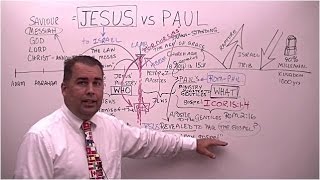
Video: Jesus vs Apostle Paul - Robert Breaker 1:13:58
Video: Faith and Works according to Apostle Paul and James - Brant Pitre 3:10
Video: Apostle Paul: Satan in the Flesh? 19:54
Video: The Real Apostle Paul: His Life, Mission and Travels - David Hulme 1:11:18
Video: Historical Paul: 50% of Apostle Paul's Letters were not written by Paul. 50% were written by THREE different Pauls! - John Dominic Crossan 1:02:28
Video: Authorship of the Gospels, Apostle Paul's Letters and Torah is  disputed - Hamza Saudi vs Richard London 32:32
Video: Apostle Paul only wrote 7 Letters/Epistles out of 13 - Bart Ehrman 3:02
Video: Who was Apostle Paul of Tarsus? - Henry Abramson 57:51
Video: The Fake Teachings of Apostle Paul - Ray Hagins 1:26:51
Video: In Philippians 3:8, Apostle Paul compares Jewish Law with excrement - Tovia Singer 9:26
Video: Eclipsing Empire: Apostle Paul, Rome and Kingdom of God - John Dominic Crossan 11:00
Video: Jesus the Teacher. Apostle Paul the Theologian - Marcus Borg 18:18
Video: Apostle Paul said Jesus came from Heaven to redeem Man. Paul said so! - Muhammad Lamin vs Christian Preacher 29:27
Video: Apostle Paul worshipped Jesus the myth, mystical Savior God. He never met the real Jesus 9:54
Video: In 2 Timothy 3:16, Apostle Paul refers to the Old Testament as Word of God - Hamza Myatt vs Christian 10:29
Video: Apostle Paul was a Liar, Heretic and Traitor, according to Early Christians: the Nazarenes and Ebionites - Peleh Ben Avraham 22:44
Video: After Jesus, the Early Christians followed James. They Hated Apostle Paul the Liar, Heretic and False Prophet - Peleh Ben Avraham 14:59
Video: How Saul became Apostle Paul on the Road to Damascus, Syria? - Ken Humphreys 17:42
Video: In Romans 11:26, Apostle Paul misquotes Isaiah 59:20 and distorts the Jewish doctrine on the Redeemer - Michael Skobac 7:10
Video: In Genesis 3:15 and Galatians 3:16, Apostle Paul mistranslates 'seeds' plural to 'seed' for Jesus - Michael Skobac 17:39
Video: In 1 Timothy 2:5, Apostle Paul wrote Jesus was a Mediator between Man and God - Paul William vs Irish Christian 28:50
Video: Jesus was not God according to Mark, Matthew, Luke and Apostle Paul - Karen Armstrong 1:32
Video: Apostle Paul wrote only 7 Letters (of 13) in the New Testament - Mike Licona 2:28
Video: If Jesus existed, why did Apostle Paul write so little about him? - Richard Carrier 42:46
Video: In Mark 7:15 and Acts 10:13, Dietary Laws were changed by Jesus, Apostle Paul, Mark or James? Does God Care? - Hamza Myatt vs Nathan 55:20
Video: In 1 Corinthians 16:2, did Apostle Paul change Sabbath to Sunday? - BeyondTV 1/2 2:11
Video: In 1 Corinthians 16:2, did Apostle Paul change Sabbath to Sunday? - BeyondTV 2/2 5:10
Video: Apostle Paul said 'Follow My Commandments and My Law', not Moses or Jesus - Robert Breaker 1:20:51
Video: Apostle Paul preached Revelation he received directly from God;  superior to Apostles Doctrine - Robert Breaker 1:08:07
Video: Jesus the Myth is found in Apostle Paul's letters - Fishers Evidence 8:17
Video: Did Apostle Paul Invent Christianity? - Shabir Ally vs Cliff Forward 1:58:13
Video: Apostle Paul was not a religious Jew. He corrupted the Jewish Bible - Tovia Singer 31:37
Video: What kind of Jew was Apostle Paul? - Luke Timothy Johnson 59:18
Video: Apostle Paul, Paganism and New Testament - Luke Timothy Johnson 3:52
Video: Apostle Paul of Tarsus was not Rabbi Gamaliel's student - Tovia Singer 9:39
Video: Apostle Paul was not a Pharisee, or student of Rabbi Gamaliel. He persecuted early Jewish-Christians - Tovia Singer 29:04
Video: According to the New Testament, Jesus and Apostle Paul died as Jews - Bernard Starr 12:09
Video: In Hebrews, Apostle Paul writes of a mystical, heavenly Jesus. Not a Earthly human being - David Fitzgerald 0:58
Video: Apostle Paul disrespects Jesus' disciples, Jesus' family and  Jerusalem Church - David Fitzgerald 1:20
Video: Apostle Paul never mentions Jesus' empty tomb. For Paul, Jesus' resurrection was a heavenly, spiritual experience - David Fitzgerald 0:48
Video: 75% of New Testament Bible is fake. 50% of Apostle Paul's letters are forged. We have no originals - David Fitzgerald 2:27
Video: Apostle Paul claims he received revelation from Jesus, 20 years after his crucifixion - Richard Carrier 0:58
Video: Apostle Paul believed in a earthly Jesus, or a celestial, spiritual Jesus  - Richard Carrier 1:14
Video: Luke, author of Acts copies and contradicts his travelling companion, Apostle Paul - Richard Carrier 2:41
Video: In 36 AD, Apostle Paul claimed he met Jesus Christ in a vision. 19 years later, Paul wrote about it - Gary Habermas 1:45
Video: For Apostle Paul, Jesus' death & resurrection was key to salvation. Not the Jewish Law - Bart Ehrman 2:06
Video: Apostle Paul never met Jesus in his lifetime. Paul spoke Greek and lived outside of Palestine - Bart Ehrman 0:46
Video: Apostle Paul preached Jesus' death & resurrection guaranteed Salvation, not observing Jewish Law - Bart Ehrman 1:33
Video: Apostle Paul established Churches, and converted Gentiles, Polytheists and Pagans to Christianity - Bart Ehrman 0:36
Video: In Galatians, Apostle Paul orders new Christians abandon circumcision/Jewish Law; return to faith in Jesus - Bart Ehrman 1:36
Video: Apostle Paul was highly controversial amongst early Christians who believed he had fabricated the Gospels - Bart Ehrman 1:57
Video: Apostle Paul taught faith in Jesus' blood/death on the Cross was ultimate sacrifice for our Sins - Bart Ehrman 1:44
Video: Apostle Paul may not have written 2 Thessalonians, Ephesians and Colossians - Bart Ehrman 0:36
Video: Apostle Paul did not write 1 Timothy, 2 Timothy and Titus - Bart Ehrman 0:46
Video: Bible scholars agree 6 out of 13 Apostle Paul's Letters were not written by him - John Dominic Crossan 1:00
Video: Apostle Paul evolves from radical, liberal to conservative; de-radicalized and sanitized to appease Rome - John Dominic Crossan 2:27
Video: Apostle Paul did not accept the leadership of James, brother of Jesus - John Dominic Crossan 1:05
Video: Apostle Paul discovered Jesus in the Jewish Scriptures - NT Wright 2:41
Video: Apostle Paul preached, Jesus is in control of the World - NT Wright 1:06
Video: If Apostle Paul had a Son, he may have been Circumcised - NT Wright 1:44
Video: Apostle Paul's Letters (Epistles) have had an explosive effect on the Christian world - NT Wright 1:38
Video: Apostle Paul wrote short, compact Letters filled with poems and hymns - NT Wright 1:19
Video: In Corinth, Apostle Paul wrote about Love and himself - NT Wright 1:01
Video: After Apostle Paul's Jesus' vision in Damascus, Syria, we have a 10-year gap - NT Wright 0:49
Video: Apostle Paul had a nervous breakdown (mental health?) - NT Wright 1:59
Video: Apostle Paul takes the Jewish Prayer (Shema Yisrael) and finds Jesus inside it - NT Wright 1:27
Video: Take from the Apostle Paul and reflect on his writings - NT Wright 0:34
Video: Apostle Paul wrote of a spiritual, celestial, heavenly Jesus - Richard Carrier 1:55
Video: In 1 Corinthians 9:9, Apostle Paul questions Gods command to muzzle an Ox - Tovia Singer 3:13
Video: Apostle Paul's foundations are in the Greek Hellenistic, Graeco-Roman world - Tovia Singer 0:37
Video: Apostle Paul of Tarsus: Tarsus, Athens & Alexandria were the 3 centres of Greek thought - Tovia Singer 1:05
Video: Apostle Paul wrote Letters. Later Christians, raised their status to God-inspired revelation - Bart Ehrman 2:48
Video: Apostle Paul taught new Christians, ex-pagans, did not have to convert to Judaism - Bart Ehrman 0:58
Video: Apostle Paul did not see Jesus as a real, historical Jewish Man - Charles Hedrick 1:28
Video: In 1 Corinthians (55 AD), Apostle Paul wrote of his Jesus vision, 25 years later -  Richard Bauckham 0:50
Video: If a new Apostle Paul's Letters was discovered, it would not be added to NT Bible - Michael Kruger 2:11
Video: F.C Baur (d. 1860 AD) argued Apostle Paul preached a 'different Christianity' to Jesus - Michael Kruger 2:01
Video: 6 of 13 Apostle Paul's Letters were not written by Paul, but unknown authors - Bart Ehrman 2:16
Video: 6 of 13 Apostle Paul's Letters were forgeries, written for 'Greater Christian Good' - Bart Ehrman 1:09
Video: Apostle Paul evidences Jesus as a Spiritual, celestial being sent from Heaven - Richard Carrier 3:17
Video: Jesus' Resurrection: Deny the Historical Evidence and trust Apostle Paul - Tony Costa (Godless Engineer) 21:47
Video: Apostle Paul lied. Jesus did not repair the 'Original Sin' of Adam - Tovia Singer 30:49
Video: In Isaiah 53, Jesus was 'final' sacrifice. In Acts 21:26, Apostle Paul continued to sacrifice animals? - Hashim vs Ray 1/3 33:12
Video: In Isaiah 53, Jesus was 'final' sacrifice. In Acts 21:26, Apostle Paul continued to sacrifice animals? - Hashim vs Ray 2/3 33:18
Video: In Isaiah 53, Jesus was 'final' sacrifice. In Acts 21:26, Apostle Paul continued to sacrifice animals? - Hashim vs Ray 3/3 9:25
Video: Evolution of Jesus Christ: Apostle Paul's Letters (Late 50-57 AD) - Mike Lawrence (NotoriUK) 4/6 31:09
Video: Evolution of Jesus Christ: Apostle Paul's Letters (Early 50-57 AD) - Mike Lawrence (NotoriUK) 3/6 42:29
Video: Evolution of Jesus Christ: Apostle Paul - Mike Lawrence (NotoriUK) 2/6 16:28
Video: Discussion on Jesus, Apostle Paul and the Bible - Rex Burks & Owen Younger (Atheist Edge) 26:11
Video: In Romans 15:20, Apostle Paul announces creation of a New Religion ('new foundation') - Muhammad Lamin 5:12
Video: In Romans 10:9, Apostle Paul claimed Salvation was through faith in Jesus' Resurrection - Muhammad Lamin 16:21
Video: In Philippians 2:10, when Apostle Paul writes 'Every Knee Shall Bow', he contradicts Old Testament teachings - Muhammad Lamin 13:03
Video: In 1 Corinthians 8:6, Apostle Paul disproves of the Trinity in 1 John 5:7 - Muhammad Lamin 8:26
Video: Apostle Paul's influence over Western civilization and Human Rights - NT Wright & Tom Holland 58:09
Video: In Galatians 2:16, Apostle Paul claims Faith Alone saves. In James 2:20, James calls Paul a foolish person for this Lie  - Muhammad Lamin 9:03
Video: In Acts 15:13-35, Apostle Paul and James argue over Jewish Law. Jesus' blood/salvation/sacrifice was absent - Adnan Rashid vs Paperboy 29:49
Video: Apostle Paul saw a 'White Light' on road to Damascus, Syria? - Tovia Singer 6:54
Video: In Acts 17:31, Apostle Paul refers to a Man-Jesus who brings justice - Paul William vs PhD Josh 1/2 30:00
Video: In Acts 17:31, Apostle Paul refers to a Man-Jesus who brings justice - Paul William vs PhD Josh 2/2 13:38
Video: In Hebrews 9:22, Apostle Paul wrote only 'shedding blood' atoned for Sin. He is wrong! - RTC 17:19
Video: In Galatians 1:12 and 2 Corinthians 3:10, Apostle Paul claims revelation from Jesus & opposed the Jewish Law - RTC 8:45
Video: Apostle Paul, a Pharisee, had a Love-Hate relationship with Jewish Torah - RTC 12:52
Video: In 2 Peter 3:16, Apostle Paul's letters are described as 'hard to understand' - RTC 3:35
Video: In 1 Corinthians 7:19, Apostle Paul opposes Circumcision and Jewish Torah - RTC 23:41
Video: In 1 Corinthians 11:23, Apostle Paul wrote of Jesus'  Last Supper - Fishers Evidence 8:22
Video: In 1 Corinthians 7:12, Apostle Paul writes his own opinion. Not God's revelation - Paul William vs Dominic 20:02
Video: Council of Jerusalem (50 AD) charged Apostle Paul of taking Jews away from established Dietary and Circumcision laws - Abbas London vs Man 42:14
Video: On Jewish Law, Jesus was Liberal, but Apostle Paul was a Heretic who abandoned the Law - Nazam44 vs Christian 20:43
Video: In Hebrews 9:22, Apostle Paul requires shedding of Blood. Jews reject this teaching - Julius Ciss 14:11
Video: For Apostle Paul, Jesus Christ was Hidden, and revealed though him alone - TruthSurge 13:32
Video: 2:56
Video: 1:30
Video: 6:02
Video: 3:45
Video: 0:36
Video: 2:33
Video: 2:00
Video: 4:02
Video: 3:31
Video: Apostle Paul said Women should cover their Hair - Uthman Ibn Farooq vs Christian 6:29
Video: In Acts 21:21, Apostle Paul accused of Apostasy, follows Jewish Law. But encourages others to abandon the same Law - Hamza Saudi vs Christian 9:49
Video: In Acts 15:29, the first Ecumenical Council ever set early Christian Laws, which Apostle Paul later opposed - Tovia Singer 14:06
Video: Apostle Paul's journey to Cyprus - R$E 16:13
Video: Was Apostle Paul really Jewish? - Tovia Singer 13:29
Video: In Romans 1:16, Apostle Paul urges GOD TV to evangelize Israel's Jews - Tovia Singer 17:51
Video: Life of Apostle Paul & His Missions around the World - Ken Schenck 1:13:02
Video: Jesus and Apostle Paul warned of the UN Agenda 2030 'Antichrist System' - Northlake Church 38:15
Video: 10:53
Video: 10:03
Video: Apostle Paul's Tour to Philippi, Greece via Neapolis (Kavala) - godnewevidence 2:01
Video: Was Apostle Paul really a Jew? - Tovia Singer 19:59
Video: Did Apostle Paul meet Jesus as hallucination, vision or in space? - Mike Licona 6:55
Video: Apostle Paul and his New Testament fantasy adventures - Ken Humphreys / MythVision 1/2 39:49
Video: Apostle Paul and his New Testament fantasy adventures - Ken Humphreys / MythVision 2/2 33:07
Video: 50 Reasons to reject Apostle Paul - Bustin Jest 1:49:55
Video: Was Apostle Paul a secret Roman Agent? | Thijs Voskuilen | History Valley 1:09:14
Video: Why Apostle Paul opposed Old Testament Law | Tovia Singer 8:13
Video: Apostle Paul preached of Jesus The God to Pagans | Paula Fredriksen | History Valley 22:46
Video: Did Apostle Paul know his Letters would appear in the New Testament Bible? | Tovia Singer 13:45
Video: God is NOT a Man. Jesus, Apostle Paul, and the disciples agreed | theology room 2:44
Video: Apostle Paul did NOT teach Jesus Is God | theology room 2:47
Video: Apostle Paul rejected Jesus Jewish Teachings | Hamza Saudi vs Christian 1:24:31
Video: Apostle Paul Lied! Hebrew Bible does not predict Jesus | Tovia Singer | History Valley 52:10
Video: Did Apostle Paul Invent Christianity? | Tovia Singer 19:54
Video: Did Ebionites, Early Christians reject Apostle Paul? | James Tabor | MythVision 28:44
Video: The Early Teachings of Apostle Paul | Peter Bolland 17:41
Video: 7:46
Video: Did Apostle Paul even exist? Scholar DESTROYS the Mythicist Argument | Mark Goodacre | MythVision 21:08
Video: Tour of Ephesus, the City where Apostle Paul established a Church | Hoshana Rabbah 13:14
Video: Did Apostle Paul EVER Exist? Nina Livesey claims his Letters Are FICTION | MythVision 1:42:19
Video: Early Christianity developed under Apostle Paul - NOT Jesus | Jiang Xueqin 55:31
Video: Apostle Paul invented Christianity to honour Rome | Jiang Xueqin 14:22
Video: Apostle Paul and Silas | Unlocking the Power of Midnight Worship | Red Lamb Stories 14:24
Video: Apostle Paul - From Persecutor to Preacher | Epic Bible Animation 32:51
Video: Greatest Transformation of Saul of Tarsus to Apostle Paul | Bible Chronicles Animation 7:37
Video: Was James the Leader of Christianity before Peter and Apostle Paul? | James Tabor | MythVision TV 22:3

EXPLORE TOPICS : APOSTLE PAUL | 181 HAMZA MYATT | 49 OLD TESTAMENT | 57 CHRISTIANITY | 236 CHRISTIAN | 883 GOD | 0

Latest videos  •  6,061 videos  •  0 viewed/24 hour

SUBSCRIBE

Receive the latest news and updates by email - Subscribe Now!
About  |  Q&A  |  Contact Us    •    Terms  |  Privacy  |  Disclaimer  |  Sitemap
Connect:      Facebook  |    Twitter  |    Youtube
MuslimProphets.com is an educational website on the Prophets of God: David, Noah, Abraham, Moses, Jesus and Muhammad, who established the Abrahamic faiths of Judaism, Christianity and Islam. MuslimProphets.com explores contemporary social themes through Scripture, Evidences, Photo, Video, Maps, Current Affairs, Debate and 'alternative' Views held by Theologians, Apologists, Scholars and Street Preachers. Take a Site Tour

In accordance with Islamic etiquette, all prophet names should be followed with 'Peace Be Upon Him (PBUH)'. This is omitted to minimise text.

DISCLAIMER: All website content is for general information and educational purposes only and available in the public domain. Whilst all information comes from sources believed to be reliable, this cannot be guaranteed. External links are provided as a convenience and for informational purposes only. They do not constitute endorsement or approval for any products, services or comments by organizations or individuals. Title and Text links may be edited for external SEO, internal site and keyword search purposes. We bear no responsibility for the accuracy, legality, or content found on any external website or its subsequent links. Unless indicated, all images and content is licensed under a Creative Commons Attribution License distributed by Wikipedia, Wikimedia Commons, Pixabay, Pxhere, Pexels, Unsplash, Flickr and others. All Torah, Psalms, Old and New Testament Bible quotes are from the King James Version (KJV) Holy Bible in the public domain. All Quran quotes are from Taqi-ud-Din al-Hilali/Muhsin Khan English Quran translation.

ALWAYS DO YOUR OWN RESEARCH. If you spot any mistake, error or omission of information, contact us so we can correct it.