Live Screenshot
Source link:
https://www.dw.com/en/germanys-protestant-and-catholic-churches-predicted-to-lose-millions-of-members/a-48578035Published by: DW on 2 May 2019
1677 views · Last view: 8 hrs ago
News Text (from DW)
Germany's Catholic and Protestant churches may lose half their members by 2060, according to a study. A drop in membership is expected to lead to a major budget shortfall. The number of members belonging to Germany's two main churches will drop by half by 2060, putting severe financial strain onthe religious institutions, according to a study published Thursday.
The main reasons for declining membership in the German Catholic and Protestant churches include adults leaving the church, fewer baptisms and an aging population, researchers at the University of Freiburg said.
Read more: The main differences between Catholics and Protestants
The study, which was commissioned by the Catholic German Bishops Conference and the Evangelical Church in Germany (EKD), predicted the combined membership in the two churches will drop from about 45 million now to 34.8 million by 2035 and 22.7 million by 2060.
To view this video please enable JavaScript, and consider upgrading to a web browser [...]
To view the original News article, click here
DISCLAIMER All news articles are shared for educational purposes only. The news content is hosted on the external news website. News articles titles are derived from the original news title, news content, dialogue, speech or general content theme. The news title may be edited and optimized for SEO, keyword density, information and internal website search purposes. You are advised to view the original news article for a better understanding. If you spot any mistakes, errors or omissions kindly contact us.
Search Results on 'Study: Germany's Catholic/Protestant churches may lose 50% of members by 2060 - DW'
SCROLL TO: TOPICS | 4 NEWS | 33 ARTICLES | 6 FAQ | 3 VIDEO | 51 LINKS | 0Topics include Catholic, Protestant, Germany (4)
What is Catholic? The Catholic Church, also known as the Roman Catholic Church. This is the largest Christian church, with approximately 1.3 billion baptised Catholics worldwide, as of 2016. As one of the oldest religious institutions in the world, it has played a prominent role in the history and development of
Western civilisation. The church is headed by the Bishop of Rome, known as the Pope. Its central administration, the Holy See, is in the Vatican City, an enclave within Rome, Italy. Catholic theology is based on the Nicene Creed. |
Who are Catholic Church Crimes?
|
Who is a Protestant? Protestantism is the second largest form of Christianity with collectively more than 900 million adherents worldwide or nearly 40% of all Christians. It originated with the Reformation, a movement against what its followers perceived to be errors in the Roman Catholic Church. Ever since, Protestants
reject the Roman Catholic doctrine of papal supremacy and sacraments, but disagree among themselves regarding the real presence of Christ in the Eucharist. They emphasize the priesthood of all believers, justification by faith alone (sola fide) rather than by good works, and the highest authority of the Bible alone (rather than with sacred tradition) in faith and morals (sola scriptura). The "Five solae" summarize basic theological differences in opposition to the Roman Catholic Church. |
What is Germany?
Germany is a country in Central and Western Europe. Covering an area of 357,022 square kilometres (137,847 sq mi), it lies between the Baltic and North seas to the north, and the Alps to the south. It borders Denmark to the north, Poland and the Czech Republic to the east, Austria and Switzerland to
the south, and France, Luxembourg, Belgium and the Netherlands to the west. |
News on Catholic, Protestant, Germany (33)
Articles on Catholic, Protestant, Germany (6)

FAQ on Catholic, Protestant, Germany (3)
| 1.When was the word 'Catholic' first used? |
| 2.When did Catholic Christianity become official religion of Rome? |
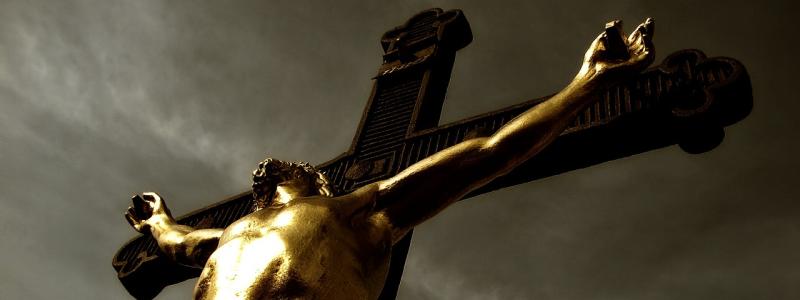
| 3.Was Jesus a Catholic Christian? |
 Was Jesus A
  A
A  Why do
 Spanish Inquisition - How the
  The Roman
 Clarifying
  Crusades: Roman
  Ricardo, a
  The
The  In Matthew 2:15 and Hosea 11:1, Jesus came from Egypt. No other gospel narrates this event - Hamza Myatt vs
  We agree. Everything comes back to Scripture - Muhammad Tawheed & Abdul Hamid vs
  Secret Societies - History of the Roman
 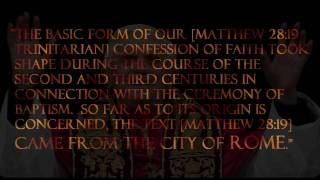 In Matthew 28:19, the Trinity text was a later insertion and corruption, after 200 AD, by the
  In John 20:17, Jesus said I am going to my Father and your Father. Whose Father? - Mansur Ahmad vs
  Inside The Vatican: The
  New Testament Bible compiled to agree with
  Fullness of truth is in the
  In 1492 AD, Muslims protected Jews from
  21 Ecumenical Church Councils defined
  It's Time to Quit the
  Pope Francis is a
  History of The Roman
  Greek Apostate Fathers: Clement, Ignatius, Justin Martyr, Shepherd of Hermas & Polycarp founded the
  From Proverbs 8:22, Philo of Alexandria applied a 'feminine' Wisdom (Sophia) in support of Roman
 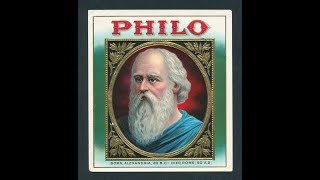 Philo of Alexandria mixed Greek philosophy with Jewish-Christianity to invent
  I believe in Muhammad. Am I still a
  The far-right in
  The
The 
 Ignatius' Letter to Smyrnaeans (110 AD) is earliest mention of '
 Why is
  Muhammad's wife, Aisha was aged between 6-15 years based on Historic Events - Uthman Ibn Farooq vs
 In Conversation with COVID Skeptics,
  NWO and Vatican
  Orthodox Jews start new life in
 Totalitarian COVID 'Prison' Camps in Australia, Canada, New Zealand and
  Zero options for Homeless in
  Israeli Zionists demand Christians and
  Israel blocks
 Is The Pope OK with
  USA, UK, Russia, China,