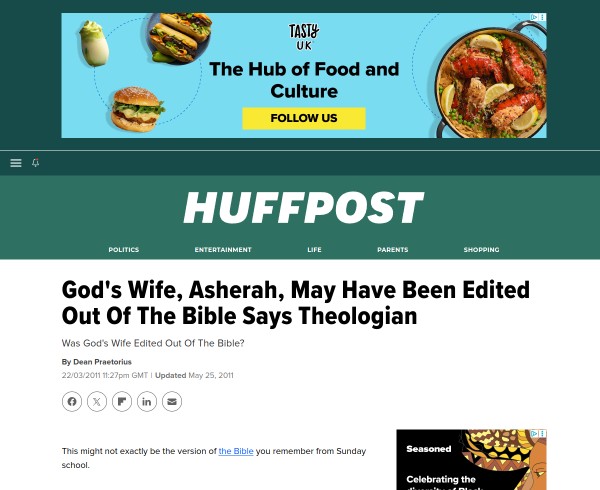
Live Screenshot
Source link:
https://www.huffingtonpost.co.uk/entry/gods-wife-asherah_n_839226Published by: HUFFINGTON on 22 Mar 2011
1754 views · Last view: 2 hrs ago
News Text (from HUFFINGTON)
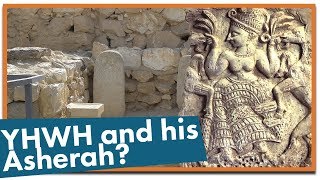
This might not exactly be the version of the Bible you remember from Sunday school. Early versions of the Bible apparently featured a fertility godess, Asherah, who may have been God's wife, at least according to one British theologian. Back in 1967, historian Raphael Patai mentioned ancientIsraelites worshiped both Yahweh and Asherah, according to Discovery.
Francesca Stavrakopoulou, who began her work at Oxford and is now a senior lecturer in the department of Theology and Religion at the University of Exeter, is shedding new light on the theory. However, even if she's right, the Bible's editors may very well have wiped her almost clean from the document, reports TIME.
From TIME:
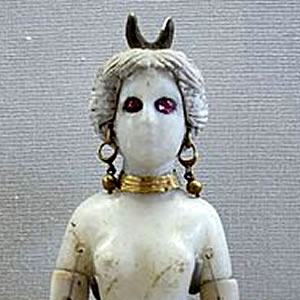
What remains of God's purported other half are clues in ancient texts, amulets and figurines unearthed primarily in an ancient Canaanite coastal city, now in modern-day Syria. Inscriptions on pottery found in the Sinai desert also show Yahweh and Asherah were worshipped as a pair, and a passage in the [...]
To view the original News article, click here
DISCLAIMER All news articles are shared for educational purposes only. The news content is hosted on the external news website. News articles titles are derived from the original news title, news content, dialogue, speech or general content theme. The news title may be edited and optimized for SEO, keyword density, information and internal website search purposes. You are advised to view the original news article for a better understanding. If you spot any mistakes, errors or omissions kindly contact us.
Search Results on 'God's Wife, Asherah, May Have Been Edited Out Of The Bible, Says Theologian - Huffington'
SCROLL TO: TOPICS | 2 NEWS | 43 ARTICLES | 6 FAQ | 18 VIDEO | 187 LINKS | 0Topics include Asherah, The Bible (2)
Who was Asherah? Asherah in ancient Semitic religion, is a mother goddess who appears in a number of ancient sources. She appears in Akkadian writings by the name of Asratu, and in Hittite as Aserdu or Asertu. Asherah is generally considered identical with the Ugaritic goddess Atirat. Asherah is identified as the
queen consort of the Sumerian god Anu, and Ugaritic El, the oldest deities of their respective pantheons, as well as Yahweh, the god of Israel and Judah. Despite her association with Yahweh in extra-biblical sources, Deuteronomy 12 has Yahweh commanding the destruction of her shrines so as to maintain purity of his worship. |
What is The Bible?
The Bible is a canonical collection of texts sacred in Judaism and Christianity. There is no single "Bible" and many Bibles with varying contents exist. The term Bible is shared between Judaism and Christianity, although the contents of each of their collections of canonical texts is not the same
<br><br> Different religious groups include different books within their Biblical canons, in different orders, and sometimes divide or combine books, or incorporate additional material into canonical books. <br><br> The Hebrew Bible, or Tanakh, contains 24 books. Christian Bibles range from the 66 books of the Protestant canon to the 81 books of the Ethiopian Orthodox Church canon. <br><br> The first part of Christian Bibles is the Old Testament, which contains, at minimum, the 24 books of the Hebrew Bible divided into 39 books and ordered differently from the Hebrew Bible. The Catholic Church and Eastern Christian churches also hold certain deuterocanonical books and passages to be part of the Old Testament canon. <br><br> The second part is the New Testament, containing 27 books: the 4 Canonical gospels, Acts of the Apostles, 21 Epistles or didactic letters, and the Book of Revelation. |
News on Asherah, The Bible (43)
Articles on Asherah, The Bible (6)
1.Trinity in the Bible

|
2.History of the Bible
|
| 3.Bible - Lost Books of the Bible
|
| 4.Bible - Pagan Texts in the Bible
|
5.Rome, Caesar & Emperors in the Bible

|
6.Gods - 60 Pagan deities in the Bible
|
 Prophet Muhammad and
  Books Banned from
  Prophet Job -
 How
How  Adam, Eve and Seth - Stories from
 Parallel accounts in
  Allah in
  Prophet Muhammad in
  Baby Jesus: His Birth in
  Muhammed in
  What is
  Christian Dilemmas: Secret History of
 How does Christianity establish Justice in
  Is
Is  Was Muhammad foretold in
  Does
Does  Does
Does  Contradictions in
  Gospel of Thomas: Why is it not in
  Constantine did not choose
  Is Muhammed prophesised in
  Is Muhammad foretold in
  Is Makkah (Mecca) in
  What does
  Islam In
  Is
Is  Does Jesus use violence in
  Are
Are  How
How  Is Trinity supported in
  Can
Can  Is David and Muhammad a Prophet in
  In Quran 10:94, God commands Muslims to study
  Is Muhammad prophesied in
 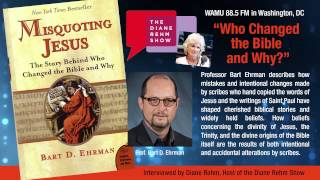 Misquoting Jesus: Who changed
 In John 7:53,
  On
On  1 John 5:7 proves
  Pagan Gods In
  Pagan Gods In
  Pagan Gods In
  What Is
  Mistakes in
  Prophets in

 Who wrote
  1 John 5:7 added
  How to Read
  Banned From
  Who wrote
 How do we explain
  Should 1 John 5:7 be in
  Jesus' Resurrection: Mark 16:9-20 was added into
  In Numbers 31:18,
 Is
Is  Grooming Gangs of America: Human trafficking by White Christian Men. Do we blame
  Grooming Gangs of America: Human trafficking by White Christian Men. Do we blame
  Mark 7:16 is missing from
  Jesus: A Mystery - Mysteries of
  In
In  Show me Trinity in
  Show me Trinity in
  In Numbers 1:46,
 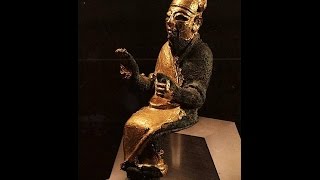 Pagan Origins of Judaism: Evidence for Israelite Gods, El,
 History of
  Is
Is  In Leviticus 11:7,
  In Luke 23:34, this is a Textual Variant, a verse added to
  In
In 
 In John 1:1, a 'Word With Him' is a common phrase in
  Muhammad in
  Prophets in
  Muhammad in
  Muhammad in
  Muhammad in
  Is
Is  Trinity is not in
  At
At  At
At  How Badly Has
  New World Order in
 In Genesis 1:1 and John 3:16, 'Allah' is mentioned in
  Sons of God in
  Authorship of
  Where is Muhammad in
  Archaeologists discover Yahweh,
  El, Baal and
  In John 7:53,
  For me,
  Keeping Old Testament in
  Christians today differ on what constitutes
  Early Christians freely disagreed on Christian fundamentals as
  In Ezekiel 18:21,
  In Ezekiel 18:21,
  Quoting
  Muhammad met 5-points qualifying as a Prophet. What's
  Muhammad met 5-points qualifying as a Prophet. What's
  In Isaiah 42, Muhammad is found in
  God inspired Scribes to insert verses into
  Jesus' Birth Narrative contradictions in
  Homosexuality, Sodom-Gomorrah and Lot in
  Evidence for Trinity in
  Show me Muhammad glorifying Jesus in
  Show me Muhammad glorifying Jesus in
  Discussion on Jesus, Apostle Paul and
  Is
Is  In John 3:16, God gave his 'One And Only Begotten Son'. in some versions of
  In Romans 1:27,
  Alcohol & Wine in
  Torah and Injeel are not in
  Quran & Hadith date to Muhammad's life.
  How
How  Story of
  God 'spoke' to me in
  Shemesh,
  Greek Philosophy won at Council of Nicaea.
  Israeli Minister:
  Lost Books of
 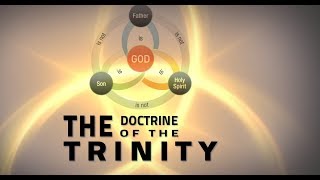 Trinity is not in
  Jewish Messiah will die for our Sins? Prove it from
  King James 'authorized'
  Muhammad in
  Muhammad in
  Is Muhammad mentioned in
  Jesus never explicitly says 'I Am God' in
  Noah in
  Adam in
  Prophets in
  Lot in
  Jacob in
  Job in
  Prophet Muhammad in
 Moses in
  Aaron in
  David in
  Mount Carmel: Elijah confronts 850 false Prophets of Baal and
  Noah in
  Who made
  False Prophets in
 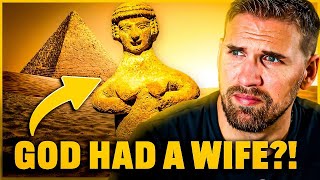 Goddess
 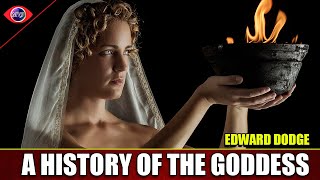 History of Female Gods:
  Israel will expand 'From Nile to Euphrates' according to
  Passion City Church?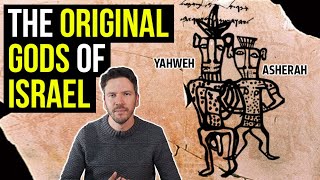
 Who wrote
  Where is December 25th and 'this bastid' in
 Solomon -
  Moses Before
  Canada Law can imprison Christians for quoting
  Gods of Canaan: El,
  Quran affirms
  Creation of Adam & Eve |
  Where did Jesus claim to be GOD in
  Was Goddess
  Methuselah -
  Methuselah -
  Who was Judah in
  Jesus Existed - Just NOT in
  Show me Free Will in
  Queen Esther - A Hidden Hero in
  Queen Jezebel
  Job - Faith in
  Is Muhammad in