In those days, when Moses had grown up, he went out to his brothers, and looked at their burdens. He saw an Egyptian striking a Hebrew, one of his brothers.
He looked this way and that way, and when he saw that there was no one, he killed the Egyptian, and hid him in the sand.
He went out the second day, and behold, two men of the Hebrews were fighting with each other. He said to him who did the wrong, “Why do you strike your fellow?”
He said, “Who made you a prince and a judge over us? Do you plan to kill me, as you killed the Egyptian?”
Moses was afraid, and said, “Surely this thing is known.”
Now when Pharaoh heard this thing, he sought to kill Moses. But Moses fled from the face of Pharaoh, and lived in the land of Midian, and he sat down by a well.
Now the priest of Midian had seven daughters. They came and drew water, and filled the troughs to water their father’s flock.
The shepherds came and drove them away; but Moses stood up and helped them, and watered their flock.
When they came to Reuel, their father, he said, “How is it that you have returned so early today?”
They said, “An Egyptian delivered us out of the hand of the shepherds, and moreover he drew water for us, and watered the flock.”
He said to his daughters, “Where is he? Why is it that you have left the man? Call him, that he may eat bread.”
Moses was content to dwell with the man. He gave Moses Zipporah, his daughter.
She bore a son, and he named him Gershom, for he said, “I have lived as a foreigner in a foreign land.”
In the course of those many days, the king of Egypt died, and the children of Israel sighed because of the bondage, and they cried, and their cry came up to God because of the bondage.
God heard their groaning, and God remembered his covenant with Abraham, with Isaac, and with Jacob.
God saw the children of Israel, and God was concerned about them.
Exodus 2:11-25
Prophet Moses Flees Egypt to Midian (Exodus 2:11-25)
Follow the dramatic turning point as a young Prophet Moses flees Egypt for the desert of Midian after defending a Hebrew slave in Exodus 2:11-25.
MOSES
1106 views · Last view: 1 day ago
Follow the dramatic turning point as a young Prophet Moses flees Egypt for the desert of Midian after defending a Hebrew slave in Exodus 2:11-25.
MOSES
1106 views · Last view: 1 day ago
Explore More
Search Google Search Explore Topics Prophet Egypt What is a Prophet?
In religion, a prophet is an individual who is regarded as being in contact with a divine being and is said to speak on that entity's behalf. They claim to be serving as an intermediary with humanity by delivering messages or teachings from the supernatural source to other people. The message that the prophet conveys is called a prophecy. In Islam, all prophetic messengers are prophets (such as Adam, Noah, Abraham, Moses, Jesus, and Muhammad) though not all prophets are prophetic messengers. The primary distinction is that a prophet is required to demonstrate God's law through his actions, character, and behavior without necessarily calling people to follow him, while a prophetic messenger is required to pronounce God's law (i.e. revelation) and call his people to submit and follow him.
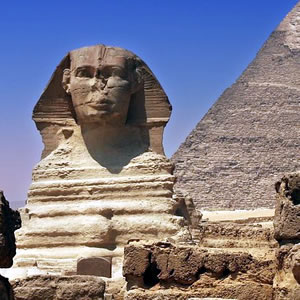 What is Egypt?
Egypt, officially the Arab Republic of Egypt, is a country spanning the northeast corner of Africa and southwest corner of Asia by a land bridge formed by the Sinai Peninsula. Egypt is a Mediterranean country bordered by the Gaza Strip and Israel to the northeast, the Gulf of Aqaba and the Red Sea to the east, Sudan to the south, and Libya to the west. Across the Gulf of Aqaba lies Jordan, across the Red Sea lies Saudi Arabia, and across the Mediterranean lie Greece, Turkey and Cyprus, although none share a land border with Egypt.