Explore More
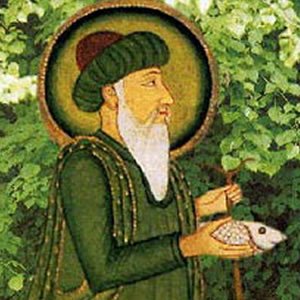 Who was Khidr?
Khidr is a quaranic figure of Islam. He is described in Surah Al-Kahf, as a righteous servant of God possessing great wisdom or mystic knowledge. In various Islamic and non-Islamic traditions, Khidr is described as an angel, prophet, or wali who guards the sea, teaches secret knowledge and aids those in distress. He prominently figures as patron of the Islamic saint ibn Arabi. The figure of al-Khidr has been syncretized over time with various other figures including Duraosa and Sorush in Iran, Sargis the General and Saint George in Asia Minor and the Levant, Elijah and Samael (the divine prosecutor) in Judaism, Elijah among the Druze, John the Baptist in Armenia, and Jhulelal in Sindh and Punjab in South Asia. Though not mentioned by name in the Quran, he is named by Islamic scholars as the figure described in Quran 18:65-82 as a servant of God who has been given 'knowledge' and who is accompanied and questioned by the prophet Musa (Moses) about the many seemingly unfair or inappropriate actions he (Al-Khidr) takes (damaging a ship, killing a young man, repaying inhospitality by repairing a wall). At the end of the story Khidr explains the circumstances unknown to Moses that made each of the actions fair and appropriate.
 Who is GOD?
In monotheism and henotheism, God is conceived as the Supreme Being and principal object of faith. The concept of God as described by theologians commonly includes the attributes of omniscience (infinite knowledge), omnipotence (unlimited power), omnipresence (present everywhere), omnibenevolence (perfect goodness), divine simplicity, and eternal and necessary existence. In theism, God is the creator and sustainer of the universe In deism, God is the creator, but not the sustainer, of the universe Monotheism is the belief in the existence of one God or in the oneness of God In pantheism, God is the universe itself In atheism, God is purported not to exist, while deemed unknown or unknowable within the context of agnosticism.