396 views
·
Last viewed: 5 hrs ago
Uploaded: 27 May 2025 (1 year ago) · Shared: 31 May 2025
Duration: 14:30
Uploaded: 27 May 2025 (1 year ago) · Shared: 31 May 2025
Duration: 14:30
Youtube Description
Adam and Eve’s Origins Stolen from Mesopotamia?! Uncover the hidden roots of the Garden of Eden narrative as we journey through ancient Near Easternmyths that shaped humanity's most influential story. In this episode, MythVision explores stunning parallels between Adam and Eve and earlier myths—Adapa’s lost immortality, Enkidu’s transformation from innocent harmony to wisdom, paradise gardens of Dilmun and the Cedar Forest, the rib-born Sumerian goddess Ninti, serpent-god Ningishzida, and even ancient Canaanite myths. Discover how Genesis creatively adapted these ancient motifs, challenging traditional views of biblical originality and history.
==============================
👉👉 Checkout MVP Courses to find new and upcoming online courses:
https://mvp-courses.com/
Sign up for Dr. James Tabor’s Course, “The Quest for the Historical Paul: Apostle or Apostate?” - -
https://mythvisionpodcast.com/historicalpaul
Sign up for Dr. Kara Cooney’s Course, “Ancient Egyptian Cosmogony and Cosmology” - -
https://mythvisionpodcast.com/egyptiancreation
Sign up for Dr. Joshua Bowen’s Course, “Myths Borrowed By The Old Testament” - -
https://mythvisionpodcast.com/ot-myths
Sign up for Dr. Robyn Faith Walsh’s Course, “The Gospel Masterclass” - -
https://mythvisionpodcast.com/gospels
Sign up for Dr. James Tabor’s Course, “Jesus and The Dead Sea Scrolls” - -
https://mythvisionpodcast.com/dss
Sign up for Dr. Robyn Faith Walsh’s Course, “Unforgettable Footprints of the Pauline Legacy” - -
https://mythvisionpodcast.com/paulslegacy
Sign up for Dr. Kipp Davis’s Course, 'Real Ancient Israelite Religions' - -
https://mythvisionpodcast.com/israelite-religions
Sign up for Dr. Dennis MacDonald’s Course, “Reading the Gospels with One Eye on Greek Poetry” - -
https://mythvisionpodcast.com/homeric-mimesis
Sign up for Dr. Richard Carrier's Course, 'New Testament Studies for Everyone' - -
https://www.mythvisionpodcast.com/nt-studies
Sign up for Dr. James Tabor’s Course, 'Creating Jesus: Why Mark’s Gospel Was Forgotten?' - -
https://www.mythvisionpodcast.com/firstgospel
Sign up for Dr. Dale C. Allison Jr's Course, “The Quest for The Historical Jesus” - -
https://www.mythvisionpodcast.com/jesus-quest
Sign up for Dr. M. David Litwa's Course, “The Ancient Greek Mysteries & Christianity” - -
https://mythvisionpodcast.com/mysterycults
**GET RECOMMENDED BOOKS HERE: 👉 https://amzn.to/35FqNYf
============================
Please consider helping support MythVision's work by joining the Patreon or contributing a one-time donation through my links below:
MythVision Website: 🔥 https://mythvisionpodcast.com/
MythVision Patreon: 👉 / mythvision
MythVision Paypal: 👉 https://www.paypal.me/dereklambert7
Cashapp: 👉 $rewiredaddiction
Venmo: 👉 @Derek-Lambert-9
Email MythVision: 👉 mythvisionpodcast@gmail.com
Facebook page: 👉 / mythvision
Facebook group: 👉 / thewaterboyzradio
Twitter: 👉 / derekpodcast
TikTok: 👉 / mythvision
Instagram: 👉 / dereklambert_7
Discord: 👉 / discord
===========================
👉👉 Checkout Our Other YouTube Channel:
@mythvisionTV
👉👉 Checkout MVP Courses to find new and upcoming online courses:
https://mvp-courses.com/
===========================
#Adam and eve #MythVision #Genesis
Explore More
Derek Lambert Mesopotamia Myth ADAM
EVE
ADAM
EVE
Search Google Search Explore Topics
 Who is Derek Lambert?
MythVision Podcast (MVP) brings you some of the finest information surrounding Mythology. Knowledge from a variety of people in search of a better understanding of ancient text. We discuss mythology, syncretism, astrotheology, gematria, sacred geometry, secret societies, ancient languages, history, prophecy, scholarship, conspiracies, heretical ideas, myth interpretations and much more.
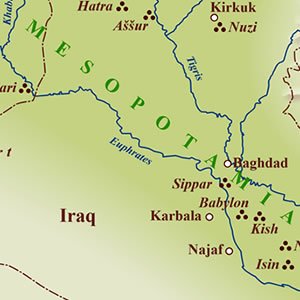 Where was Mesopotamia?
Mesopotamia is a historical region of West Asia situated within the Tigris-Euphrates river system, in the northern part of the Fertile Crescent. It corresponds roughly to the territory of modern Iraq and forms the eastern geographic boundary of the modern Middle East. Just beyond it lies southwestern Iran, where the region transitions into the Persian plateau, marking the shift from the Arab world to Iran. In the broader sense, the historical region of Mesopotamia also includes parts of present-day Iran (southwest), Turkey (southeast), Syria (northeast), and Kuwait. Mesopotamia is the site of the earliest developments of the Neolithic Revolution from around 10,000 BC. It has been identified as having "inspired some of the most important developments in human history, including the invention of the wheel, the planting of the first cereal crops, the development of cursive script, mathematics, astronomy, and agriculture". It is recognised as the cradle of some of the world's earliest civilizations.
 What is Myth?
Mythology refers to a collection of sacred, traditional tales from a specific culture that explain natural phenomena, world origins, and cultural values. This often featuring gods, goddesses, and heroes. It serves as a lens for interpreting shared human experiences through stories, rituals, and art. Myth is a genre of folklore consisting primarily of narratives that play a fundamental role in a society. For scholars, this is totally different from the ordinary sense of the term myth, meaning a belief that is not true, as the veracity of a piece of folklore is entirely irrelevant to determining whether it constitutes a myth. Myths are often endorsed by religious and secular authorities, and may be natural or supernatural in character. Many societies group their myths, legends, and history together, considering myths and legends to be factual accounts of their remote past. In particular, creation myths take place in a primordial age when the world had not achieved its later form. Origin myths explain how a society's customs, institutions, and taboos were established and sanctified. National myths are narratives about a nation's past that symbolize the nation's values. There is a complex relationship between recital of myths and the enactment of rituals.