Q Do Christian Science followers celebrate holidays like Christmas and Easter?
A Yes, Christian Scientists fully celebrate traditional Christian holidays like Christmas and Easter, but with a distinct spiritual focus. Rather than emphasizing the material aspects or secular traditions, they use these times to deeply contemplate the spiritual meaning of Christ Jesus’ birth, ministry, crucifixion, and resurrection. They do not hold special communion services with physical bread and wine, preferring silent, internal communion with God.
A Yes, Christian Scientists fully celebrate traditional Christian holidays like Christmas and Easter, but with a distinct spiritual focus. Rather than emphasizing the material aspects or secular traditions, they use these times to deeply contemplate the spiritual meaning of Christ Jesus’ birth, ministry, crucifixion, and resurrection. They do not hold special communion services with physical bread and wine, preferring silent, internal communion with God.
Explore More
Christian Science Christmas Science EasterSearch Google Search Explore Topics
 What is Christian Science?
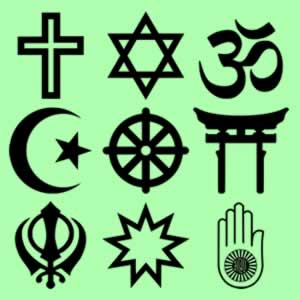
Christian Science is based on the teachings and interpretation of the Bible by Mary Baker Eddy, who provided the basis of these teachings in the book Science and Health with Key to the Scriptures in 1875. The underlying fundamentals of the Christian Science movement are that reality is not based on any physical or material notions, and that our existence is merely spiritual. Many who follow this interpretation are members of the Church of Christ, Scientist, and follow their religion through popular publications including the Christian Science Journal.
 What is Christmas?
Christmas is an annual festival commemorating the birth of Jesus Christ. It is observed primarily on December 25 as a religious and cultural celebration among billions of people around the world. Christmas Day is a public holiday in many of the world's nations, is celebrated religiously by a majority of Christians, as well as culturally by many non-Christians, and forms an integral part of the holiday season centered around it. Although the month and date of Jesus' birth are unknown, by the early-to-mid fourth century the Western Christian Church had placed Christmas on December 25, a date that was later adopted in the East. Today, most Christians celebrate on December 25 in the Gregorian calendar, which has been adopted almost universally in the civil calendars used in countries throughout the world.
 What is Science?
Science is a systematic enterprise that builds and organizes knowledge in the form of testable explanations and predictions about the universe. The earliest roots of science can be traced to the works of Ancient Egyptians and Mesopotamians, whose contributions entered and shaped Greek natural philosophy of classical antiquity. After the fall of the Western Roman Empire, knowledge of Greek science deteriorated in Western Europe during the Middle Ages but flourished in the Islamic Golden Age. Modern science is typically divided into three major branches that consist of the natural sciences (e.g. biology, chemistry, physics), which study nature in the broadest sense; the social sciences (e.g. psychology, sociology, economics), which study individuals and societies; and the formal sciences (e.g. mathematics, logic, theoretical computer science), which study abstract concepts.
 What is Easter?
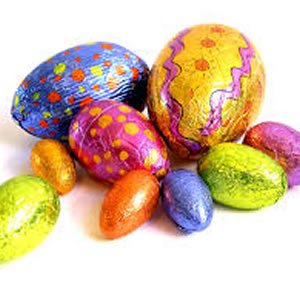
Easter, or Resurrection Sunday is a festival and holiday celebrating the resurrection of Jesus from the dead. This event is described in the New Testament as having occurred on the third day of his burial after his crucifixion by the Romans at Calvary c. 30 AD. It is the culmination of the Passion of Jesus, preceded by Lent (or Great Lent), a forty-day period of fasting, prayer, and penance. Easter customs vary across the Christian world, and include sunrise services, exclaiming the Paschal greeting, clipping the church, and decorating Easter eggs (symbols of the empty tomb). The Easter lily, a symbol of the resurrection, traditionally decorates the chancel area of churches on this day and for the rest of Eastertide. Additional customs that have become associated with Easter and are observed by both Christians and some non-Christians include egg hunting, the Easter Bunny, and Easter parades.