Q Do Chinese religions believe in God?
A Traditional Chinese religion does not center on a single creator God like Western monotheistic faiths, but it recognizes a supreme cosmic authority. This supreme power is referred to either as Tian (Heaven) - an impersonal, guiding cosmic force - or personified as the Jade Emperor (Yuhuang Dadi), who rules over a vast celestial bureaucracy of gods, immortals, and spirits.
A Traditional Chinese religion does not center on a single creator God like Western monotheistic faiths, but it recognizes a supreme cosmic authority. This supreme power is referred to either as Tian (Heaven) - an impersonal, guiding cosmic force - or personified as the Jade Emperor (Yuhuang Dadi), who rules over a vast celestial bureaucracy of gods, immortals, and spirits.
Explore More
Chinese Religion Religions GOD ONSSearch Google Search Explore Topics
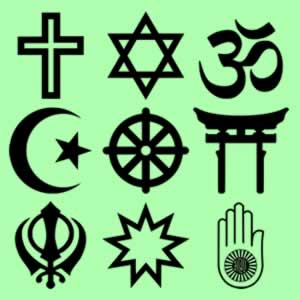 What is Chinese Religion?
There are many different religions that have influence over the people who reside in China. Buddhism is often considered the most prominent religion, with others including Taoism and Confucianism. Christianity has a place in China as well, with the rest of the nation being involved in more traditional Chinese folk religion. This folk religion is not necessarily an organized practice but more of a state of mind or way of life. The religion tends to combine practices from other religions and is based in concepts from Chinese mythology.
 What are Religions?
Religion is a range of social-cultural systems, including designated behaviors and practices, ethics, morals, beliefs, worldviews, texts, sanctified places, prophecies, or organizations, that generally relate humanity to supernatural, transcendental, and spiritual elements. There is no scholarly consensus over what precisely constitutes a religion. It is an essentially contested concept. Different religions may or may not contain various elements ranging from the divine, sacredness, faith, and a supernatural being or beings. The origin of religious belief is an open question, with possible explanations including awareness of individual death, a sense of community, and dreams. Religions have sacred histories, narratives, and mythologies, preserved in oral traditions, sacred texts, symbols, and holy places, that may attempt to explain the origin of life, the universe, and other phenomena. Religious practice may include rituals, sermons, commemoration or veneration (of deities or saints), sacrifices, festivals, feasts, trances, initiations, matrimonial and funerary services, meditation, prayer, music, art, dance, or public service. There are an estimated 10,000 distinct religions worldwide, though nearly all of them have regionally based, relatively small followings. Four religions: Christianity, Islam, Hinduism, and Buddhism account for over 77% of the world's population, and 92% of the world either follows one of those four religions or identifies as non-religious, meaning that the vast majority of remaining religions account for only 8% of the population combined.
Who is GOD?In monotheism and henotheism, God is conceived as the Supreme Being and principal object of faith. The concept of God as described by theologians commonly includes the attributes of omniscience (infinite knowledge), omnipotence (unlimited power), omnipresence (present everywhere), omnibenevolence (perfect goodness), divine simplicity, and eternal and necessary existence. In theism, God is the creator and sustainer of the universe In deism, God is the creator, but not the sustainer, of the universe Monotheism is the belief in the existence of one God or in the oneness of God In pantheism, God is the universe itself In atheism, God is purported not to exist, while deemed unknown or unknowable within the context of agnosticism.
 Who are ONS?
The Office for National Statistics (ONS) is the official national statistical institute of the United Kingdom.