Q What are the three main branches of Buddhism?
A Buddhism has evolved into several distinct traditions, primarily categorized into three major branches:
* Theravada ("School of the Elders"): The oldest surviving branch, prevalent in Sri Lanka, Thailand, Cambodia, and Myanmar; it emphasizes monastic life and the preservation of the early Pali Canon.
* Mahayana ("Great Vehicle"): Popular in China, Japan, Korea, and Vietnam; it emphasizes the ideal of the Bodhisattva, an enlightened being who vows to save all sentient creatures.
* Vajrayana ("Diamond Vehicle"): Prominent in Tibet, Bhutan, and Mongolia; it utilizes esoteric practices, mantras, and tantric meditation to accelerate the path to enlightenment.
A Buddhism has evolved into several distinct traditions, primarily categorized into three major branches:
* Theravada ("School of the Elders"): The oldest surviving branch, prevalent in Sri Lanka, Thailand, Cambodia, and Myanmar; it emphasizes monastic life and the preservation of the early Pali Canon.
* Mahayana ("Great Vehicle"): Popular in China, Japan, Korea, and Vietnam; it emphasizes the ideal of the Bodhisattva, an enlightened being who vows to save all sentient creatures.
* Vajrayana ("Diamond Vehicle"): Prominent in Tibet, Bhutan, and Mongolia; it utilizes esoteric practices, mantras, and tantric meditation to accelerate the path to enlightenment.
Explore More
BuddhismSearch Google Search Explore Topics
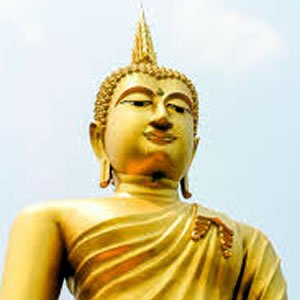 What is Buddhism?
Buddhism is the world's fourth-largest religion with over 520 million followers, or over 7% of the global population, known as Buddhists. An Indian religion, Buddhism encompasses a variety of traditions, beliefs and spiritual practices largely based on original teachings attributed to the Buddha and resulting interpreted philosophies. Buddhism originated in Ancient India as a Sramana tradition sometime between the 6th and 4th centuries BCE, spreading through much of Asia. All Buddhist traditions share the goal of overcoming suffering and the cycle of death & rebirth, either by the attainment of Nirvana or through the path of Buddhahood.