Q Is Taoism a religion or a philosophy?
A Historically and culturally, Taoism is both a philosophy and an organized religion, and the two are deeply intertwined.
* Philosophical Taoism (Daojia): Focuses heavily on the early texts like the Tao Te Ching and Zhuangzi, emphasizing meditation, mindfulness, nature and living effortlessly.
* Religious Taoism (Daojiao): Features an intricate pantheon of gods, ritual worship, ancestral veneration, shrines, and a priesthood dedicated to spiritual cultivation, community blessings and exorcisms.
0 views (57 years ago)
A Historically and culturally, Taoism is both a philosophy and an organized religion, and the two are deeply intertwined.
* Philosophical Taoism (Daojia): Focuses heavily on the early texts like the Tao Te Ching and Zhuangzi, emphasizing meditation, mindfulness, nature and living effortlessly.
* Religious Taoism (Daojiao): Features an intricate pantheon of gods, ritual worship, ancestral veneration, shrines, and a priesthood dedicated to spiritual cultivation, community blessings and exorcisms.
Explore More
Philosophy Taoism PhiloSearch Google Search Explore Topics
 What is Philosophy?
Philosophy is the study of general and fundamental problems concerning matters such as existence, knowledge, values, reason, mind, and language. The term was probably coined by Pythagoras (c. 570-495 BCE). Philosophical methods include questioning, critical discussion, rational argument, and systematic presentation. Classic philosophical questions include: Is it possible to know anything and to prove it? What is most real? Philosophers also pose more practical and concrete questions such as: Is there a best way to live? Is it better to be just or unjust (if one can get away with it)? Do humans have free will?
 What is Taoism?
In Taoism or Daoism, the Tao is translated into, "the path" or "way". The founder of the religion is said to be a peer of Confucius known as Lao-Tse. His teachings were written in his book, the Tao-te-Ching, although many also believe that he did not exist, but is instead fictional. The concepts and traditions of Taoism have influenced many Asian religions over 2,000 years, and has become a philosophical way of life for many today.
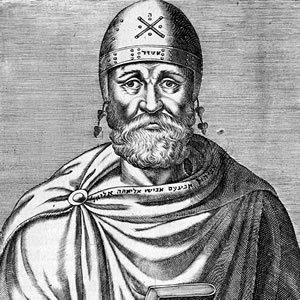 Who was Philo?
Philo of Alexandria (20 BC-50 AD) was a Hellenistic Jewish philosopher who lived in Alexandria, in the Roman province of Egypt. Philo used philosophical allegory to harmonize Jewish scripture, mainly the Torah, with Greek philosophy. His method followed the practices of both Jewish exegesis and Stoic philosophy. His allegorical exegesis was important for some Christian Church Fathers, but he had very little reception history within the Rabbinic Judaism. He adopted allegorical instead of literal interpretations of the Hebrew Bible. Some scholars hold that his concept of the Logos as God's creative principle influenced early Christology.