How was 25th December celebrated by pagans?
December 25th was the most important of Sun Festivals, the new
birth of the God, rising three days after 'dying' at the winter
solstice.
Today, the celebration continues and its many features
can be witnessed. A few of these include:
* Excessive eating, drinking and merry was commin in Saturnalia festival
* Father Christmas (Red Man) - who was originally Apollo, the Sun-God or Thor God depicted as an elderly man, jovial or friendly, of heavy build with a long white beard who drove a chariot through the sky
* Fireplace - the fireplace in pagan homes was sacred to Thor God which he would descend though the chimney
* Giving of gifts - a feature of Saturnalia festival
* Christmas card bearing the cheeky robin bird (with its chest bearing the flame symbol)
* Snowman - who melts when the Sun comes out (is defeated by the Sun)
* Fir-tree trinkets and decorations, symbolising life in the 'dead' parts of the world
* Holly - to deflect evil goblins in winter solstice
* Ivy - the female version of the 'male' holly
* Mistletoe - used by pagan druids in their worship
* Yule Log - sacred to the Thor God which is symbolised today as a chocolate cake
Explore More
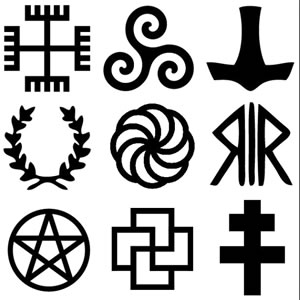 What is Pagan?
Paganism is a term first used in the fourth century by early Christians. It was applied on populations of the Roman Empire who practiced polytheism, either because they were increasingly rural and provincial relative to the Christian population or because they were not milites Christi (soldiers of
Christ). Alternate terms in Christian texts for the same group were hellene, gentile, and heathen. Pagan and paganism were pejorative terms for the same polytheistic group, implying its inferiority. Paganism has broadly connoted the "religion of the peasantry", and for much of its history was a derogatory term. Both during and after the Middle Ages, pagan was a pejorative term that was applied to any non-Abrahamic or unfamiliar religion, and the term presumed a belief in false god(s).