Q Is New Thought a religion or a philosophy?
A New Thought is generally considered a spiritual philosophy that is expressed through various religious denominations. While it operates as a loose network of ideas rather than a single, rigid church, it has birthed several organized religious organizations. The most prominent denominations under the New Thought umbrella include Unity (Unity Church), Religious Science (Science of Mind), and Divine Science.
0 views (57 years ago)
A New Thought is generally considered a spiritual philosophy that is expressed through various religious denominations. While it operates as a loose network of ideas rather than a single, rigid church, it has birthed several organized religious organizations. The most prominent denominations under the New Thought umbrella include Unity (Unity Church), Religious Science (Science of Mind), and Divine Science.
Explore More
New Thought Philosophy PhiloSearch Google Search Explore Topics
 What is New Thought?
Commonly confused with New Age, the New Thought movement is 100 years old, and consists of a theology that uses constructive thinking and meditation to realize the true presence of God. The groups associated with New Thought do not have a standard practice or creed, but instead hold idealistic philosophies and practices that are found in Christianity and other religions. Those involved with New Thought are allowed to have freedom of belief, which has evolved into a number of different groups and beliefs.
 What is Philosophy?
Philosophy is the study of general and fundamental problems concerning matters such as existence, knowledge, values, reason, mind, and language. The term was probably coined by Pythagoras (c. 570-495 BCE). Philosophical methods include questioning, critical discussion, rational argument, and systematic presentation. Classic philosophical questions include: Is it possible to know anything and to prove it? What is most real? Philosophers also pose more practical and concrete questions such as: Is there a best way to live? Is it better to be just or unjust (if one can get away with it)? Do humans have free will?
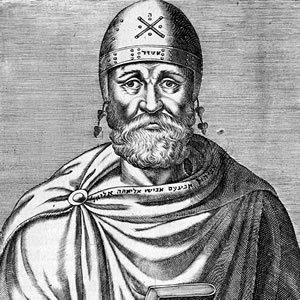 Who was Philo?
Philo of Alexandria (20 BC-50 AD) was a Hellenistic Jewish philosopher who lived in Alexandria, in the Roman province of Egypt. Philo used philosophical allegory to harmonize Jewish scripture, mainly the Torah, with Greek philosophy. His method followed the practices of both Jewish exegesis and Stoic philosophy. His allegorical exegesis was important for some Christian Church Fathers, but he had very little reception history within the Rabbinic Judaism. He adopted allegorical instead of literal interpretations of the Hebrew Bible. Some scholars hold that his concept of the Logos as God's creative principle influenced early Christology.