Q What is the difference between New Age and traditional religions?
A The primary difference lies in the source of spiritual authority and the concept of God:
* Traditional Religions: Typically rely on external authority, such as sacred texts (the Bible, Quran, Torah), historic dogmas, and a distinct, external Creator God.
* New Age Spirituality: Rejects external dogma and emphasizes personal, subjective experience. "God" is not viewed as a separate being judging humanity, but as an immanent cosmic energy or higher consciousness found within oneself.
0 views (57 years ago)
A The primary difference lies in the source of spiritual authority and the concept of God:
* Traditional Religions: Typically rely on external authority, such as sacred texts (the Bible, Quran, Torah), historic dogmas, and a distinct, external Creator God.
* New Age Spirituality: Rejects external dogma and emphasizes personal, subjective experience. "God" is not viewed as a separate being judging humanity, but as an immanent cosmic energy or higher consciousness found within oneself.
Explore More
Religions New Age ONSSearch Google Search Explore Topics
 What are Religions?
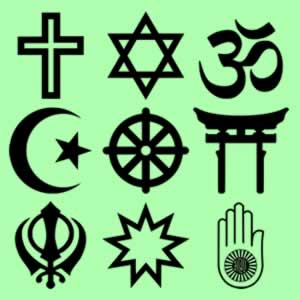
Religion is a range of social-cultural systems, including designated behaviors and practices, ethics, morals, beliefs, worldviews, texts, sanctified places, prophecies, or organizations, that generally relate humanity to supernatural, transcendental, and spiritual elements. There is no scholarly consensus over what precisely constitutes a religion. It is an essentially contested concept. Different religions may or may not contain various elements ranging from the divine, sacredness, faith, and a supernatural being or beings. The origin of religious belief is an open question, with possible explanations including awareness of individual death, a sense of community, and dreams. Religions have sacred histories, narratives, and mythologies, preserved in oral traditions, sacred texts, symbols, and holy places, that may attempt to explain the origin of life, the universe, and other phenomena. Religious practice may include rituals, sermons, commemoration or veneration (of deities or saints), sacrifices, festivals, feasts, trances, initiations, matrimonial and funerary services, meditation, prayer, music, art, dance, or public service. There are an estimated 10,000 distinct religions worldwide, though nearly all of them have regionally based, relatively small followings. Four religions: Christianity, Islam, Hinduism, and Buddhism account for over 77% of the world's population, and 92% of the world either follows one of those four religions or identifies as non-religious, meaning that the vast majority of remaining religions account for only 8% of the population combined.
 What is New Age?
There's really no specific description of what many sometimes refer to as New Age. The term generally is used to describe modern religious practices that are unique and separate from others, but usually draw upon different concepts of various religions. These religions could be offshoots of one religion or combinations from various religious principles. It can be argued that at some point, any religion in its origins could be regarded as "New Age," as it takes time and followers for a name for a religions to be coined.
 Who are ONS?
The Office for National Statistics (ONS) is the official national statistical institute of the United Kingdom.