147 views
·
Last viewed: 9 hrs ago
Uploaded: 16 May 2026 (5 months ago) · Shared: 02 Jul 2026
Duration: 2:30
Uploaded: 16 May 2026 (5 months ago) · Shared: 02 Jul 2026
Duration: 2:30
Youtube Description
The Bible — from Creation, the fall of mankind and the promises of God to the life of Jesus Christ and the message that still changes lives today. Ifyou enjoyed this video please share it with your friends and family! Every like, share and comment helps us bring more videos your way! ❤️
Want to learn how we create viral AI videos? Join our Skool community and get access to the tools, workflow, and strategies we use.
Join our Skool here: https://www.skool.com/ai-filmmaking-masterclass
Get premium AI-voices with Elevenlabs: https://try.elevenlabs.io/hppnlabp4gyz
Consider becoming a member here on Youtube to support our mission of making full length animated Bible movies. We are grateful for your support! ❤️ ✝️
TIMESTAMPS
00:00 Creation
01:16 Adam and Eve
03:23 Cain and Abel
04:28 Noah's Ark
07:30 Tower of Babel
08:32 Abraham and the Promise
09:14 Moses and the Plagues of Egypt
15:30 Samson
16:18 David and Goliath
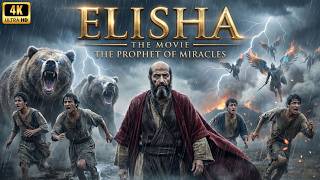
17:39 Elijah the Prophet
18:51 Jonah and the Great Fish
21:13 Daniel and the Lions' Den
22:23 Prophets and Prophecy
22:50 The Story of Jesus Christ
28:44 The Message of Christianity
29:41 Join AI Filmmaking Academy
Listen to the songs featured in our movies 🎧
https://www.youtube.com/@BibleNutshellsMusic
Listen to our music on Spotify
https://open.spotify.com/artist/2d4Pm0Zsusyh0gVRIC6KlH
SOCIAL MEDIA
Instagram: https://www.instagram.com/biblenutshells?igsh=MWl0d2NmcmJrdTV4cg%3D%3D&utm_source=qr
TikTok: https://www.tiktok.com/@biblenutshells?_t=8myHbs876BN&_r=1
Facebook: https://www.facebook.com/people/Bible-In-a-Nutshell/61561073485384/
Copyright © 2025 Bible in a Nutshell
#bible #biblestories #3d #3danimation #christian
Explore More
Bible In Nutshell The Bible Noahs Ark NOAH
NOAH
Search Google Search Explore Topics
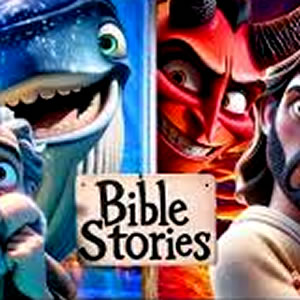 Who are Bible In Nutshell?
Welcome to Bible in a Nutshell! Our vision is to create full-length movies that bring the Bible to life. Imagine watching a beautifully animated film about the life of Jesus or the adventures of David and Goliath with your family. While mainstream media may never produce these movies, we are committed to making them a reality with the help of AI technology. You can watch all our content for free on YouTube.
 What is The Bible?
The Bible is a canonical collection of texts sacred in Judaism and Christianity. There is no single "Bible" and many Bibles with varying contents exist. The term Bible is shared between Judaism and Christianity, although the contents of each of their collections of canonical texts is not the same. Different religious groups include different books within their Biblical canons, in different orders, and sometimes divide or combine books, or incorporate additional material into canonical books. The Hebrew Bible, or Tanakh, contains 24 books. Christian Bibles range from the 66 books of the Protestant canon to the 81 books of the Ethiopian Orthodox Church canon. The first part of Christian Bibles is the Old Testament, which contains, at minimum, the 24 books of the Hebrew Bible divided into 39 books and ordered differently from the Hebrew Bible. The Catholic Church and Eastern Christian churches also hold certain deuterocanonical books and passages to be part of the Old Testament canon. The second part is the New Testament, containing 27 books: the 4 Canonical gospels, Acts of the Apostles, 21 Epistles or didactic letters, and the Book of Revelation.
Where is Noahs Ark?Noah's Ark is the boat in the Genesis flood narrative through which God spares Noah, his family, and pairs of each land animal in the world from a global deluge. The story in Genesis is based on earlier Mesopotamian flood myths. The myth of the global flood that destroys all life begins to appear in the Old Babylonian Empire period (20th-16th centuries BCE). The version closest to the biblical story of Noah, as well as its most likely source, is that of Utnapishtim in the Epic of Gilgamesh. Scholars note shared themes, dimensions, and language but different causes for the flood. Scholars also link its structure to the Jewish Temple.