Youtube Description:
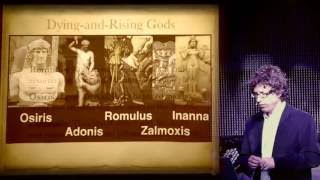
This is a lecture about a chapter of my world history book called:
'In Search of the Sublime - A world history of humanity's relentless pursuit of scientific truth, moral excellence, and enlightenment.'
Read the book for FREE at:
worldhistorybook.com
Or buy it on Amazon:
Kind regards,
Stephan P. Dinkgreve
MSc Theoretical Physics
Amsterdam
This is a lecture about a chapter of my world history book called:
'In Search of the Sublime - A world history of humanity's relentless pursuit of scientific truth, moral excellence, and enlightenment.'
Read the book for FREE at:
worldhistorybook.com
Or buy it on Amazon:
Kind regards,
Stephan P. Dinkgreve
MSc Theoretical Physics
Amsterdam
Explore More
 Who are Stephans History?
Stephan's History of the World. Reclaim the foundational thoughts and deeds of the great ancestors of humanity.
 What is Old Testament?
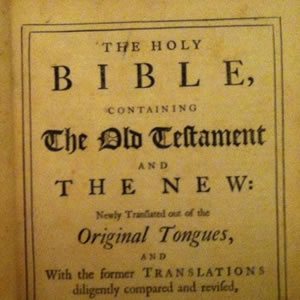
The Old Testament (OT) is the first part of Christian Bibles. This is based primarily upon the Hebrew Bible (or Tanakh), a collection of ancient religious writings by the Israelites believed by most Christians and religious Jews to be the sacred Word
of God. The second part of the Christian Bible is the New Testament.
The books that comprise the Old Testament canon, as well as their order and names, differ between Christian denominations. The Catholic canon comprises 46 books, and the canons of the Eastern Orthodox and Oriental Orthodox Churches comprise up to 51 books and the most common Protestant canon comprises 39 books.
 What is Monotheism?
Monotheism has been defined as the belief in the existence of only one god. A god that created the world, is all-powerful and intervenes in the world. A broader definition of monotheism is the belief in one god. A distinction may be made between
exclusive monotheism, and both inclusive monotheism and pluriform (panentheistic) monotheism which, while recognising various distinct gods, postulate some underlying unity.
 What is a Polytheism?
Polytheism is the belief in or worship of more than one deity, a type of theism. Polytheism contrasts with monotheism, the belief in only one deity that is, in most cases, transcendent. Oftentimes, polytheistic religions reflect belief in a pantheon
of deities that may themselves have religious sects and rituals dedicated to them. Polytheism was common in the time and place of the Abrahamic religions, namely Judaism, Christianity, and Islam. The Quran, central to Islam, quite explicitly denounces polytheism, though there is certainly evidence to suggest that the Hebrew Bible, which Judaism and Christianity are established upon, may have originally been polytheistic to some extent.
 What is Evolution?
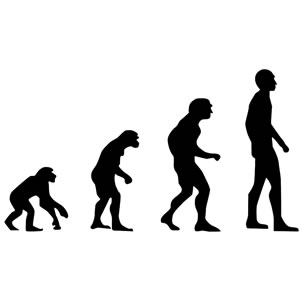
Evolution is change in the heritable characteristics of biological populations over successive generations. Evolutionary processes give rise to bio-diversity at every level of biological organisation, including the levels of species, individual
organisms, and molecules. In the mid-19th century, Charles Darwin formulated the scientific theory of evolution by natural selection, published in his book On the Origin of Species (1859). Evolution by natural selection is a process first demonstrated by the observation that often, more offspring are produced than can possibly survive.