Youtube Description:
I will try to avoid overly technical or academic language, and instead offer a broader, more accessible introduction to this extraordinary work.
Most of us today—Muslims and non-Muslims alike—are familiar with printed editions of the Qur’an, or with various translations of it available across the world. Young children today learn to read the Qur’an using these printed copies. This is what a modern printed Qur’an looks like—it's the format most of us grew up with and continue to use.
The most well-known calligrapher of this standard edition is ʿUthmān Ṭāhā, a Syrian master scribe. But if we go back just 150 years, we find Qur’anic manuscripts that were not printed, but written by hand—each one copied line by line by a human scribe using ink on paper or parchment. These manuscripts were not mass-produced. They were individually created—some beautifully illuminated, others written in a more ordinary hand. In Iran, for instance, we have many such examples from the Qajar period, about two centuries ago.
Let’s go back even further. In the time of the Ottoman Empire and the Safavid dynasty, we find Qur’anic manuscripts that look quite different from those of today. The decoration, the script, the size—all of it follows different conventions. Many of these Ottoman and Safavid manuscripts survive today in libraries and museums. Their script remains relatively legible, and some include stunning examples of Islamic illumination.
In India, China, Malysia, Indonesia, and Africa, we also find Qur’anic manuscripts in very different forms. Here are examples from Africa about 200 years ago, from India about 500 years ago, and from China about 400 years ago. In some parts of Africa, large wooden tablets were traditionally used for teaching Qur’an to students—a remarkable cultural practice in itself.
Now, let us take a step further back in history. Although Qur’an writing was widespread across the Islamic world—from Spain to Indonesia—the main centers of Qur’anic manuscript production 1,000 years ago were Iran, Iraq, and, to a lesser degree, Syria and Egypt. From these regions, we have some of the most beautiful examples of Qur’an manuscripts—some with Persian translations, others without—produced under dynasties such as the Seljuqs, Ilkhanids, Mamluks, and Timurids.
These manuscripts are not only artistic objects. They contain an enormous amount of information: architectural details, cultural and social references, and features relevant to Qur’anic sciences and textual transmission. Together, they help us trace the historical evolution of Qur’an writing across the Islamic world.
But this brings us to a critical question: Can we access manuscript evidence of the Qur’an from the first century of Islam—that is, from 1,400 years ago?
Some Western scholars in recent decades have suggested that the Qur’an, as we have it today, may not have existed in complete and final form at the very beginning of Islam. According to them, it may have taken up to two centuries for the full, standardized Qur’anic text to emerge.
That’s why, for Muslims—and also for many serious Western researchers—it is extremely important to find reliable evidence of Qur’anic transcription from the first Islamic century.
In the first century AH, the Qur’an was written in what is called ḥijāzī script—a very simple, early form of Arabic which were written on parchment. In the second century, kūfī script became more common, and Qur’anic writing began to follow more regular and decorative formats. Later on, in Iran and Khurāsān, kūfī evolved further into what we call Eastern kūfī or Iranian kūfī—a kind of stylized, ornamental script that many ordinary readers today would find difficult to decipher.
Now, let’s focus on the ḥijāzī script from the first century. While we have hundreds of kūfī manuscripts from the second, third, and fourth centuries, only around fifty manuscript fragments in ḥijāzī script have survived to the present day. Most of them contain just a few leaves.
Among all these, one manuscript stands out: a ḥijāzī Qur’an preserved in the library of the shrine of Imām Riḍā in Mashhad. It is the most complete surviving ḥijāzī manuscript from the first Islamic century.
...
Until recently, however, this first-century manuscript had never been formally introduced or studied. Its historical value had gone unrecognized.
About fifteen years ago, while I was researching early Qur’anic manuscripts at the Āstān-i Quds Library, I had the rare chance to discover its significance. I began to study it in depth, comparing it with other early kufic Qur’ans, and I realized its exceptional value. I then committed myself to publishing it as a high-quality academic facsimile.
Last year, that goal was achieved. The Codex Mashhad was published in facsimile and is now available to researchers around the world.
I also included a full introduction in Arabic and English, analyzing the codex’s internal characteristics and offering a historical overview of its journey.
I will try to avoid overly technical or academic language, and instead offer a broader, more accessible introduction to this extraordinary work.
Most of us today—Muslims and non-Muslims alike—are familiar with printed editions of the Qur’an, or with various translations of it available across the world. Young children today learn to read the Qur’an using these printed copies. This is what a modern printed Qur’an looks like—it's the format most of us grew up with and continue to use.
The most well-known calligrapher of this standard edition is ʿUthmān Ṭāhā, a Syrian master scribe. But if we go back just 150 years, we find Qur’anic manuscripts that were not printed, but written by hand—each one copied line by line by a human scribe using ink on paper or parchment. These manuscripts were not mass-produced. They were individually created—some beautifully illuminated, others written in a more ordinary hand. In Iran, for instance, we have many such examples from the Qajar period, about two centuries ago.
Let’s go back even further. In the time of the Ottoman Empire and the Safavid dynasty, we find Qur’anic manuscripts that look quite different from those of today. The decoration, the script, the size—all of it follows different conventions. Many of these Ottoman and Safavid manuscripts survive today in libraries and museums. Their script remains relatively legible, and some include stunning examples of Islamic illumination.
In India, China, Malysia, Indonesia, and Africa, we also find Qur’anic manuscripts in very different forms. Here are examples from Africa about 200 years ago, from India about 500 years ago, and from China about 400 years ago. In some parts of Africa, large wooden tablets were traditionally used for teaching Qur’an to students—a remarkable cultural practice in itself.
Now, let us take a step further back in history. Although Qur’an writing was widespread across the Islamic world—from Spain to Indonesia—the main centers of Qur’anic manuscript production 1,000 years ago were Iran, Iraq, and, to a lesser degree, Syria and Egypt. From these regions, we have some of the most beautiful examples of Qur’an manuscripts—some with Persian translations, others without—produced under dynasties such as the Seljuqs, Ilkhanids, Mamluks, and Timurids.
These manuscripts are not only artistic objects. They contain an enormous amount of information: architectural details, cultural and social references, and features relevant to Qur’anic sciences and textual transmission. Together, they help us trace the historical evolution of Qur’an writing across the Islamic world.
But this brings us to a critical question: Can we access manuscript evidence of the Qur’an from the first century of Islam—that is, from 1,400 years ago?
Some Western scholars in recent decades have suggested that the Qur’an, as we have it today, may not have existed in complete and final form at the very beginning of Islam. According to them, it may have taken up to two centuries for the full, standardized Qur’anic text to emerge.
That’s why, for Muslims—and also for many serious Western researchers—it is extremely important to find reliable evidence of Qur’anic transcription from the first Islamic century.
In the first century AH, the Qur’an was written in what is called ḥijāzī script—a very simple, early form of Arabic which were written on parchment. In the second century, kūfī script became more common, and Qur’anic writing began to follow more regular and decorative formats. Later on, in Iran and Khurāsān, kūfī evolved further into what we call Eastern kūfī or Iranian kūfī—a kind of stylized, ornamental script that many ordinary readers today would find difficult to decipher.
Now, let’s focus on the ḥijāzī script from the first century. While we have hundreds of kūfī manuscripts from the second, third, and fourth centuries, only around fifty manuscript fragments in ḥijāzī script have survived to the present day. Most of them contain just a few leaves.
Among all these, one manuscript stands out: a ḥijāzī Qur’an preserved in the library of the shrine of Imām Riḍā in Mashhad. It is the most complete surviving ḥijāzī manuscript from the first Islamic century.
...
Until recently, however, this first-century manuscript had never been formally introduced or studied. Its historical value had gone unrecognized.
About fifteen years ago, while I was researching early Qur’anic manuscripts at the Āstān-i Quds Library, I had the rare chance to discover its significance. I began to study it in depth, comparing it with other early kufic Qur’ans, and I realized its exceptional value. I then committed myself to publishing it as a high-quality academic facsimile.
Last year, that goal was achieved. The Codex Mashhad was published in facsimile and is now available to researchers around the world.
I also included a full introduction in Arabic and English, analyzing the codex’s internal characteristics and offering a historical overview of its journey.
Explore More
 What is Early Quran?
Early Quran refers to the initial transmission, oral recitation, and textual compilation of the Islamic holy text. This compilation was during the lifetime of the Prophet Muhammad and the immediate decades following his death in 632 AD.
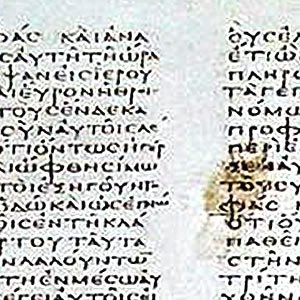 What is Codex?
A codex is a book constructed of a number of sheets of paper, vellum, papyrus, or similar materials. The term is now usually only used of manuscript books, with hand-written contents, but describes the format that is now near-universal for printed books in the Western world.
 Who are RTE?