Uploaded: 17 May 2024 (2 years ago) · Shared: 11 May 2026
Duration: 1:30
Video Description
How did a local pilgrimage transform into a global phenomenon? In this captivating episode of the Real Talk Podcast on Skepsislamica, renowned Oxford scholar James Howard-Johnston explores the early history and evolution of Hajj. By analyzing the Qur’an as a vital historical source alongside other Seventh-Century texts, Howard-Johnston offers a profound academic perspective on how early Islamic traditions developed within the broader milieu of Abrahamic faith, alongside Jewish and Christian traditions.
Discover how a chronological reading of foundational scriptures reveals the evolving role of the Prophet Prophet Muhammad as both a spiritual and political leader. This engaging discussion bridges history, theology, and faith, offering invaluable insights for audiences interested in comparative religion, early Islam, and the shared historical heritage of the Middle East. Tune in to deepen your understanding of how a localized sacred journey became a universal symbol of unity.
Explore More
James Howard-Johnston Skepsislamica Islam HajjSearch Google Search Explore Topics
 Who is James Howard-Johnston?
James Howard-Johnston (born 1942) is an English historian of the Byzantine Empire. He was University Lecturer in Byzantine studies at the University of Oxford. He is an emeritus fellow of Corpus Christi College, Oxford. His approach to Byzantium follows that of Edward Gibbon and concentrates on comparisons between the Byzantine state and its Western counterparts. Howard-Johnston has also done research on Late Antiquity, especially the Roman-Persian Wars and the early history of Islam.
 Who are Skepsislamica?
We spotlight perspectives in Islamic history that often go unnoticed, keeping you informed on the latest academic research and discussions. Our content is non-sectarian and grounded in rigorous academic approaches to Islamic studies, offering deep and thoughtful analysis.
 What is Islam?
One of the major religions of the world, Islam literally translates to "submission," as a follower of Islam (Muslims) devotes their life to that of their God. The religion began with the teachings of Muhammad in the 7th century. The theology of Islam is based on the Qur'an, which was given to Muhammad by God. Some of the major fundamental principles of Islam include the Five Pillars, which hope to unite all Muslims into a community. Two different factions of Muslims exist - the majority are known as Sunni, with a small percentage known as Shi'a - both predominantly reside throughout the Middle East. Muhammad died in 632 AD and the religion of Islam formally started after his death. The Quran was formally compiled and finalised in 650 AD, prior to which it was 'memorised' and written across many parchments.
 What is Hajj?
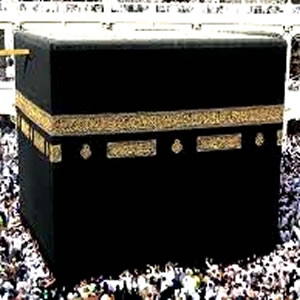
The Hajj is an annual Islamic pilgrimage to Mecca, Saudi Arabia, the holiest city for Muslims. It is a mandatory religious duty for Muslims that must be carried out at least once in their lifetime by all adult Muslims who are physically and financially capable of undertaking the journey, and can support their family during their absence. In Islamic terminology, Hajj is a pilgrimage made to Kaaba, the "House of God", in the sacred city of Mecca in Saudi Arabia. The rites of Hajj are performed over 5 or 6 days. It is a demonstration of the solidarity of the Muslim people, and their submission to God (Allah).