Uploaded: 09 May 2026 (5 months ago) · Shared: 10 May 2026
Duration: 11:27
Video Description
In this enlightening episode of MythVision, Derek Lambert engages in a profound discussion with renowned historian Paula Fredriksen on the evolution of God from Yahweh to the Christian Trinity. This comprehensive exploration delves into the origins of Yahweh, tracing his roots from a tribal storm or mountain deity in Canaanite religion to his integration with other Canaanite gods like El and Baal. The conversation then transitions to the transformation of the Jewish God within the context of Christianity, Greek philosophy, and the development of the Trinity. Topics such as the evolution of monotheism, the influence of Justin Martyr, and the role of ancient philosophy in shaping Christian theology are meticulously examined. This episode is a must-watch for anyone interested in the intricate history of religious beliefs and the ways in which myths and philosophical ideas have shaped the religious identity of Judaism, Christianity, and other faiths.
Explore More
Search Google Search Explore Topics Paula Fredriksen MythVision Evolution Trinity Yahweh GOD Who is Paula Fredriksen?
Paula Fredriksen (born 1951) is an American historian and scholar of early Christianity. She held the position of William Goodwin Aurelio Professor of Scripture at Boston University from 1990 to 2010. Now emerita, she has been a distinguished visiting professor in the Department of Comparative Religion at the Hebrew University of Jerusalem, since 2009. Fredriksen specializes in the history of Christianity, tracing its development from its roots in an apocalyptic, messianic sect within Second Temple Judaism to its evolution into an extension of the Late Roman imperial government and its strengthening in the post-Roman West, from the 1st to the 7th centuries CE. She works to reconstruct the many ways that various ancient Mediterranean peoples-pagans, Jews and Christians-interacted with the many special social agents (e.g., high Gods, apocalyptic forces, heavenly bodies, godlings, spirits, and divine humans) that populated both the ancient flat-disced Earth and geocentric universe.
 Who is MythVision?
MythVision Podcast (MVP) brings you some of the finest information surrounding Mythology. Knowledge from a variety of people in search of a better understanding of ancient text. We discuss mythology, syncretism, astrotheology, gematria, sacred geometry, secret societies, ancient languages, history, prophecy, scholarship, conspiracies, heretical ideas, myth interpretations and much more.
 What is Evolution?
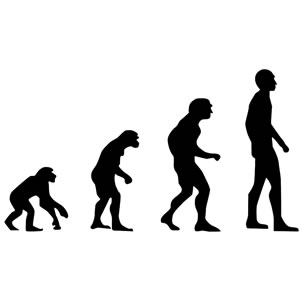
Evolution is change in the heritable characteristics of biological populations over successive generations. Evolutionary processes give rise to bio-diversity at every level of biological organisation, including the levels of species, individual organisms, and molecules. In the mid-19th century, Charles Darwin formulated the scientific theory of evolution by natural selection, published in his book On the Origin of Species (1859). Evolution by natural selection is a process first demonstrated by the observation that often, more offspring are produced than can possibly survive.
 What is Trinity?
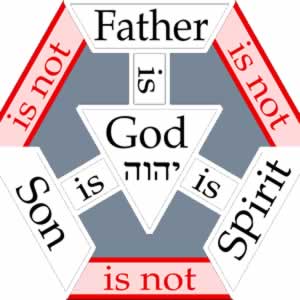
The Christian doctrine of the Trinity (Latin: trinus "threefold") holds that God is one God, but three coeternal consubstantial persons or hypostases. These being the Father, the Son (Jesus Christ), and the Holy Spirit - as "one God in three Divine Persons". The three Persons are distinct, yet are one "substance, essence or nature" (homoousios).
 Who is Yahweh?
Yahweh was the national god of the Iron Age kingdoms of Israel (Samaria) and Judah. His exact origins are disputed, although they reach back to the early Iron Age and even the Late Bronze: his name may have begun as an epithet of El, head of the Bronze Age Canaanite pantheon, but the earliest plausible mentions of Yahweh are in Egyptian texts that refer to a similar-sounding place name associated with the Shasu nomads of the southern Transjordan. In the oldest biblical literature, Yahweh is a typical ancient Near Eastern "divine warrior", who leads the heavenly army against Israel's enemies; he later became the main god of the Kingdom of Israel (Samaria) and of Judah, and over time the royal court and temple promoted Yahweh as the god of the entire cosmos, possessing all the positive qualities previously attributed to the other gods and goddesses.
Who is GOD?In monotheism and henotheism, God is conceived as the Supreme Being and principal object of faith. The concept of God as described by theologians commonly includes the attributes of omniscience (infinite knowledge), omnipotence (unlimited power), omnipresence (present everywhere), omnibenevolence (perfect goodness), divine simplicity, and eternal and necessary existence. In theism, God is the creator and sustainer of the universe In deism, God is the creator, but not the sustainer, of the universe Monotheism is the belief in the existence of one God or in the oneness of God In pantheism, God is the universe itself In atheism, God is purported not to exist, while deemed unknown or unknowable within the context of agnosticism.