287 views
·
Last viewed: 1 day ago
Uploaded: 04 Apr 2026 (6 months ago) · Shared: 29 Apr 2026
Duration: 13:33
Uploaded: 04 Apr 2026 (6 months ago) · Shared: 29 Apr 2026
Duration: 13:33
Youtube Description
What if the categories we use—“Jew,” “Christian,” “Pagan”—are completely misleading? In this fascinating MythVision interview, renowned historianPaula Fredriksen explains how deeply the Greco-Roman world influenced ancient religion. From shared gods and blended practices to flexible definitions of “divinity,” the ancient world was far more interconnected than most people realize.
Were Jews really isolated from pagan culture?
Did early Christians think in strictly “monotheistic” terms?
Or have modern labels distorted the reality of the first century?
This conversation challenges everything you thought you knew about religion in antiquity.
🔥 Topics covered:
- Hellenism’s impact on Judaism & Christianity
- Why “God” was a flexible concept in antiquity
- Pagan influence on biblical thought
- The myth of “pure” religious identities
- Why modern categories don’t fit ancient reality
If you’re interested in biblical history, early Christianity, or ancient religion—this will change your perspective.
#MythVision #Christianity #Jesus #Mythical #JesusMythTheory #HistoricalJesus #JesusDebate #BiblicalCriticism #ReligiousHistory #JesusMyth #ChristMythTheory #Skepticism #SecularScholarship #CriticalThinking #AtheistPerspective #FaithVsFact #BeliefQuestions #HistoricalJesus #ApocalypticProphet #Eschatology #BiblicalStudies #NewTestament #MythVision #MythVision
#Mítico #JesusHistórico #DebateSobreJesus
============================
CONTACT ME
Website: 👉 https://mythvisionpodcast.com/
Email MythVision: 👉 mythvisionpodcast@gmail.com
Facebook Page: 👉 / mythvision
Facebook Group: 👉 / thewaterboyzradio
Twitter X: 👉 https://x.com/DerekPodcast - - @DerekPodcast
TikTok: 👉 / mythvision
Instagram: 👉 / dereklambert_7
Discord: 👉 / discord
===========================
Join this channel to get access to perks:
https://www.youtube.com/channel/UCgLZ5SDuR1W_xO8y3A_4VVw/join
Explore More
Search Google Search Explore Topics Paula Fredriksen Early Christian MythVision The Gods Jews Who is Paula Fredriksen?
Paula Fredriksen (born 1951) is an American historian and scholar of early Christianity. She held the position of William Goodwin Aurelio Professor of Scripture at Boston University from 1990 to 2010. Now emerita, she has been a distinguished visiting professor in the Department of Comparative Religion at the Hebrew University of Jerusalem, since 2009. Fredriksen specializes in the history of Christianity, tracing its development from its roots in an apocalyptic, messianic sect within Second Temple Judaism to its evolution into an extension of the Late Roman imperial government and its strengthening in the post-Roman West, from the 1st to the 7th centuries CE. She works to reconstruct the many ways that various ancient Mediterranean peoples-pagans, Jews and Christians-interacted with the many special social agents (e.g., high Gods, apocalyptic forces, heavenly bodies, godlings, spirits, and divine humans) that populated both the ancient flat-disced Earth and geocentric universe.
 What is Early Christian?
Early Christianity, the period of Christianity preceding the First Council of Nicaea in 325 AD. This typically divides historically into the Apostolic Age and the Ante-Nicene Period (from the Apostolic Age until Nicea). The first Christians, as described in the first chapters of the Book of Acts, were all Jews either by birth or conversion and historians refer to them as Jewish Christians. The early Gospel message spread orally, probably originally in Aramaic, and later in Greek. The New Testament's Acts of the Apostles and Epistle to the Galatians record that the first Christian community centered on Jerusalem and that its leaders included Peter, James, the brother of Jesus, and John the Apostle.
 Who is MythVision?
MythVision Podcast (MVP) brings you some of the finest information surrounding Mythology. Knowledge from a variety of people in search of a better understanding of ancient text. We discuss mythology, syncretism, astrotheology, gematria, sacred geometry, secret societies, ancient languages, history, prophecy, scholarship, conspiracies, heretical ideas, myth interpretations and much more.
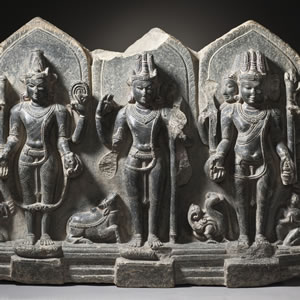 What is The Gods?
Polytheism is the worship of or belief in multiple deities, usually as a pantheon of gods and goddesses. In most religions which accept polytheism, the different gods and goddesses are representations of forces of nature or ancestral principles, and can be viewed either as autonomous or as aspects or emanations of a creator deity or transcendental absolute principle (monistic theologies), which manifests immanently in nature (panentheistic and pantheistic theologies). Most of the polytheistic deities of ancient religions, with the notable exceptions of the Ancient Egyptian and Hindu deities, were conceived as having physical bodies. Polytheism is a type of theism. Within theism, it contrasts with monotheism, the belief in a singular God, in most cases transcendent. Important polytheistic religions practiced today include Chinese traditional religion, Hinduism, Japanese Shinto, and various neopagan faiths.
 What is Jews?
Judaism encompasses the religion, philosophy, culture and way of life of the Jewish people. Judaism is a monotheistic religion, with the Torah as its foundational text (part of the larger text known as the Tanakh or Hebrew Bible), and supplemental oral tradition represented by later texts such as the Midrash and the Talmud. Judaism is considered by religious Jews to be the expression of the covenantal relationship that God established with the Children of Israel. Judaism includes a wide corpus of texts, practices, theological positions, and forms of organization. Within Judaism there are a variety of movements, most of which emerged from Rabbinic Judaism, which holds that God revealed his laws and commandments to Moses on Mount Sinai in the form of both the Written and Oral Torah. The Jews are an ethnoreligious group and include those born Jewish and converts to Judaism. In 2012, the world Jewish population was estimated at about 14 million, or roughly 0.2% of the total world population. About 42% of all Jews reside in Israel and about 42% reside in the United States and Canada, with most of the remainder living in Europe.