Uploaded: 11 Apr 2026 (6 months ago) · Shared: 14 Apr 2026
Duration: 25:26
Video Description
In this enlightening video, Dr. Yasir Qadhi delves into the foundational narratives of the Judeo-Christian tradition and contrasts them with the teachings of Prophet Prophet Abraham , as understood in Islam. Exploring the early history and core beliefs of Judaism, Christianity, and Islam, Dr. Qadhi provides a nuanced perspective that highlights the commonalities and differences between these Abrahamic faiths. This discussion offers valuable insights into the Quranic and Biblical narratives, offering spiritual reminders and Islamic guidance for those seeking a deeper understanding of their shared roots and the unique paths each religion charts. Whether you are a follower of Judaism, Christianity, or Islam, this video is a must-watch for anyone interested in the rich tapestry of religious thought and practice.
Explore More
Search Google Search Explore Topics Judeo-Christian Yasir Qadhi Myth What is Judeo-Christian?
Judeo-Christian is used to group Christianity and Judaism together. This is either in reference to a shared history before Christianity split from Judaism, Christianity's recognition of Jewish scripture (constituting the Old Testament of the Christian Bible), or values supposed to be shared between them. The term Judeo-Christian first appeared in the 19th century as a word for Jewish converts to Christianity. In the United States, the term was widely used during the Cold War in an attempt to invoke a unified American identity that stood opposed to communism. The term has received criticism, largely from Jewish thinkers, as relying on supersessionism, which is not a tenet of Judaism, as well as glossing over fundamental differences between Jewish and Christian thought, theology, culture and practice. Even using the more inclusive term "Abrahamic religions" to refer to the common grouping of faiths which are attributed to Abraham - Islam, the Bahai Faith, Samaritanism, Druzism, and other faiths (in addition to Judaism and Christianity) is sometimes seen as problematic.
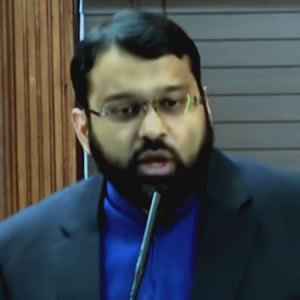 Who is Yasir Qadhi?
Yasir Qadhi is an American Muslim scholar and writer of Pakistani descent. Since 2001, he has served as Dean of Academic Affairs at the Al-Maghrib Institute, an international Islamic educational institution with a center in Houston, Texas. He also teaches in the Religious Studies department at Rhodes College in Memphis, Tennessee, where he resides. Qadhi has written numerous books and lectured widely on Islam and contemporary Muslim issues. A 2011 The New York Times Magazine essay by Andea Elliott described Qadhi as "one of the most influential conservative clerics in American Islam."
What is Myth?Mythology refers to a collection of sacred, traditional tales from a specific culture that explain natural phenomena, world origins, and cultural values. This often featuring gods, goddesses, and heroes. It serves as a lens for interpreting shared human experiences through stories, rituals, and art. Myth is a genre of folklore consisting primarily of narratives that play a fundamental role in a society. For scholars, this is totally different from the ordinary sense of the term myth, meaning a belief that is not true, as the veracity of a piece of folklore is entirely irrelevant to determining whether it constitutes a myth. Myths are often endorsed by religious and secular authorities, and may be natural or supernatural in character. Many societies group their myths, legends, and history together, considering myths and legends to be factual accounts of their remote past. In particular, creation myths take place in a primordial age when the world had not achieved its later form. Origin myths explain how a society's customs, institutions, and taboos were established and sanctified. National myths are narratives about a nation's past that symbolize the nation's values. There is a complex relationship between recital of myths and the enactment of rituals.