Uploaded: 28 Mar 2026 (7 months ago) · Shared: 29 Mar 2026
Duration: 5:25
Video Description
Explore the fascinating early history of pre-Islamic Arabia in this insightful MythVision episode featuring world-renowned epigrapher Dr. Ahmad Al-Jallad. For over a century, mysterious ancient inscriptions hidden within desert caves remained an undeciphered puzzle. Dr. Al-Jallad details the incredible academic breakthrough in cracking the ancient Dhofari script, unlocking lost languages, forgotten writing systems, and the complex spiritual beliefs of ancient Arabian civilizations.
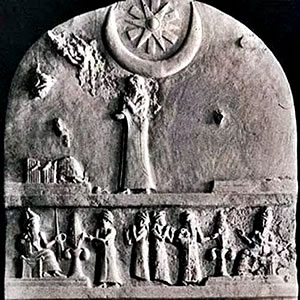
This ground-breaking discovery sheds light on how pre-Islamic Arabs worshipped ancient deities like Shams, the Sun God, offering critical context for scholars studying the evolution of faith in the region. By examining these historical inscriptions, the discussion investigates ancient religious traditions and their cultural context alongside monotheistic developments in early Islam. Whether you are passionate about archaeology, comparative religion, or the broader history of ancient faith systems, this captivating interview provides essential insights into Arabia's rich heritage.
Explore More
Ahmad Al-Jallad Derek Lambert Pre-Islam Sun God Arabs Islam Myth GODSearch Google Search Explore Topics
 Who is Ahmad Al-Jallad?
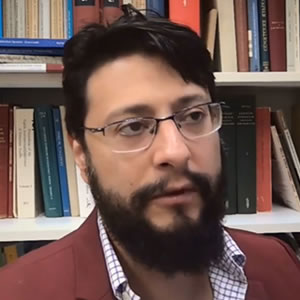
Ahmad Al-Jallad is a Jordanian-American philologist, epigraphist, and a historian of language. Some of the areas he has contributed to include Quranic studies and the history of Arabic, including recent work he has done on pre-Islamic Arabian inscriptions written in Safaitic and Paleo-Arabic.
 Who is Derek Lambert?
MythVision Podcast (MVP) brings you some of the finest information surrounding Mythology. Knowledge from a variety of people in search of a better understanding of ancient text. We discuss mythology, syncretism, astrotheology, gematria, sacred geometry, secret societies, ancient languages, history, prophecy, scholarship, conspiracies, heretical ideas, myth interpretations and much more.
 What is Pre-Islam?
Pre-Islam refers to the period in history before the emergence and widespread adoption of Islam. It specifically denotes the time before the Prophet Muhammad's revelations and the establishment of Islamic faith, culture, and civilization.
 What is Sun God?
A solar deity (also sun god or sun goddess) is a sky deity. The diety represents the Sun, or an aspect of it, usually by its perceived power and strength. Solar deities and sun worship can be found throughout most of recorded history in various forms. The Sun is sometimes referred to by its Latin name Sol or by its Greek name Helios.
 Who are Arabs?
Arabs are an ethnic group mainly inhabiting the Arab world in West Asia and North Africa. A significant Arab diaspora is present in various parts of the world. Arabs from Morocco to Iraq share a common bond based on ethnicity, language, culture, history, identity, ancestry, nationalism, geography, unity, and politics which give the region a distinct identity and distinguish it from other parts of the Muslim world. They also have their own customs, literature, music, dance, media, food, clothing, society, sports, architecture, art and, mythology. Arabs have significantly influenced and contributed to human progress in many fields, including science, technology, philosophy, ethics, literature, politics, business, art, music, comedy, theatre, cinema, architecture, food, medicine, and religion. Before Islam, most Arabs followed polytheistic Semitic religion, while some tribes adopted Judaism or Christianity and a few individuals, known as the hanifs, followed a form of monotheism.
 What is Islam?
One of the major religions of the world, Islam literally translates to "submission," as a follower of Islam (Muslims) devotes their life to that of their God. The religion began with the teachings of Muhammad in the 7th century. The theology of Islam is based on the Qur'an, which was given to Muhammad by God. Some of the major fundamental principles of Islam include the Five Pillars, which hope to unite all Muslims into a community. Two different factions of Muslims exist - the majority are known as Sunni, with a small percentage known as Shi'a - both predominantly reside throughout the Middle East. Muhammad died in 632 AD and the religion of Islam formally started after his death. The Quran was formally compiled and finalised in 650 AD, prior to which it was 'memorised' and written across many parchments.
 What is Myth?
Mythology refers to a collection of sacred, traditional tales from a specific culture that explain natural phenomena, world origins, and cultural values. This often featuring gods, goddesses, and heroes. It serves as a lens for interpreting shared human experiences through stories, rituals, and art. Myth is a genre of folklore consisting primarily of narratives that play a fundamental role in a society. For scholars, this is totally different from the ordinary sense of the term myth, meaning a belief that is not true, as the veracity of a piece of folklore is entirely irrelevant to determining whether it constitutes a myth. Myths are often endorsed by religious and secular authorities, and may be natural or supernatural in character. Many societies group their myths, legends, and history together, considering myths and legends to be factual accounts of their remote past. In particular, creation myths take place in a primordial age when the world had not achieved its later form. Origin myths explain how a society's customs, institutions, and taboos were established and sanctified. National myths are narratives about a nation's past that symbolize the nation's values. There is a complex relationship between recital of myths and the enactment of rituals.
Who is GOD?In monotheism and henotheism, God is conceived as the Supreme Being and principal object of faith. The concept of God as described by theologians commonly includes the attributes of omniscience (infinite knowledge), omnipotence (unlimited power), omnipresence (present everywhere), omnibenevolence (perfect goodness), divine simplicity, and eternal and necessary existence. In theism, God is the creator and sustainer of the universe In deism, God is the creator, but not the sustainer, of the universe Monotheism is the belief in the existence of one God or in the oneness of God In pantheism, God is the universe itself In atheism, God is purported not to exist, while deemed unknown or unknowable within the context of agnosticism.