213 views
·
Last viewed: 2 days ago
Uploaded: 28 Feb 2026 (8 months ago) · Shared: 03 Mar 2026
Duration: 1:06:46
Uploaded: 28 Feb 2026 (8 months ago) · Shared: 03 Mar 2026
Duration: 1:06:46
Youtube Description
Friday, 27 February 2026 @ 1:00 PM ET, Dr. Khaled Abou El Fadl will deliver the Friday Sermon at The Usuli Institute. Instagram ~@usuliinstitute
Twitter ~ @usuliinstitute
Facebook ~ https://www.facebook.com/usuliinstitute/
SUBSCRIBE TO OUR WEEKLY NEWSLETTER (scroll to the bottom)
https://www.usuli.org/
📚 Usuli Press - Check out our publications on the current state of the Muslim world
The Prophet's Pulpit Trilogy ~ https://amzn.to/40PBtnt
The Palestine Sermons ~ https://amzn.to/3AOxXiu
Substack ~ https://substack.com/@theprophetspulpit
~ Spotify & Supercast ~
https://usuli.supercast.com!
🎥 Full list of our recorded khutbahs and their transcripts ~ https://bit.ly/usulikhutbahs
📰 The full list of articles referenced in this Khutbah can be found at http://www.usulinews.org/
Explore More
Khaled Abou El Fadl Palestine GenocideSearch Google Search Explore Topics
 Who is Khaled Abou El Fadl?
Building upon the foundations of the rich and nuanced Islamic jurisprudential tradition, we apply God's timeless moral imperatives to our current world to advance human knowledge, challenge the status quo, and set a new standard for beauty, reasonableness and goodness in the world. Under the guidance of Islamic scholar and jurist, Dr. Khaled Abou El Fadl, we are a team of dedicated academics, professionals and volunteers that are passionate about the beauty of the Islamic tradition. The Islamic tradition once inspired Muslims to be at the forefront of human discovery and knowledge. Today, Muslims have been left behind in virtually all global conversations and play no role in the moral leadership of our times. By returning to the foundational virtues of the Islamic tradition, we seek to rekindle the spirit of exploration, renew the commitment to knowledge, and represent a moral message that inspires the world.
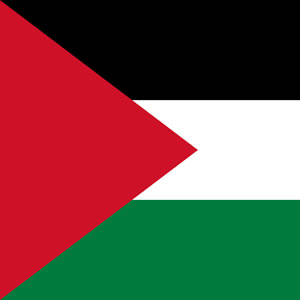 Where is Palestine?
Palestine is a geographic region in Western Asia. It is usually considered to include the Gaza Strip, the West Bank, Israel, and in some definitions, some parts of western Jordan. The name was used by ancient Greek writers, and it was later used for the Roman province Syria Palaestina, the Byzantine Palaestina Prima, and the Islamic provincial district of Jund Filastin. The region comprises most of the territory claimed for the biblical regions known as the Land of Israel, the Holy Land or Promised Land. Historically, it has been known as the southern portion of wider regional designations such as Canaan, Syria, ash-Sham, and the Levant. Situated at a strategic location between Egypt, Syria and Arabia, and the birthplace of Judaism and Christianity, the region has a long and tumultuous history as a crossroads for religion, culture, commerce, and politics.
 What is a Genocide?
Genocide is intentional action to destroy a people. People are defined as an ethnic, national, racial, or religious group in whole or in part. The hybrid word "genocide" is a combination of the Greek word genos ("race, people") and the Latin suffix -cide ("act of killing"). The United Nations Genocide Convention, which was established in 1948, defines genocide as "acts committed with intent to destroy, in whole or in part, a national, ethnic, racial or religious group". The Political Instability Task Force estimated that, between 1956 and 2016, a total of forty-three genocides took place, causing the death of about 50 million people. The UNHCR estimated that a further 50 million had been displaced by such episodes of violence up to 2008. The Holocaust is a specific instance of genocide. It refers specifically to the systematic, bureaucratic, state-sponsored persecution and murder of approximately six million Jewish people by the Nazi regime and its collaborators.