434 views
·
Last viewed: 12 hrs ago
Uploaded: 28 Dec 2024 (2 years ago) · Shared: 23 Sep 2025
Duration: 38:40
Uploaded: 28 Dec 2024 (2 years ago) · Shared: 23 Sep 2025
Duration: 38:40
Youtube Description
This is a lecture about a chapter of my world history book called: 'In Search of the Sublime - A world history of humanity's relentless pursuit ofscientific truth, moral excellence, and enlightenment.'
Read the book for FREE at:
worldhistorybook.com
Or buy it on Amazon:
https://www.amazon.com/Search-Sublime-relentless-scientific-enlightenment/dp/B0D28FVM8T
Kind regards,
Stephan P. Dinkgreve
MSc Theoretical Physics
Amsterdam
SOURCES:
A. George, The Epic of Gilgamesh, Penguin Books, 1999.
N. Sandars, The Epic of Gilgamesh, Penguin Books, 1960.
J. Jaynes, The Origin of Consciousness in the Breakdown of the Bicameral Mind, Houghton Mifflin Company, 1990 (about the subjective expression in the versions of Gilgamesh).
Explore More
Stephans History Gilgamesh Flood NOAH
NOAH
Search Google Search Explore Topics
 Who are Stephans History?
Stephan's History of the World. Reclaim the foundational thoughts and deeds of the great ancestors of humanity.
 Who was Gilgamesh?
The Epic of Gilgamesh is an epic from ancient Mesopotamia. The literary history of Gilgamesh begins with five Sumerian poems about Gilgamesh. It is held that the Biblical Genesis flood narrative matches that in Gilgamesh so closely that "few doubt" that it derives from a Mesopotamian account. What is particularly noticeable is the way the Genesis flood story follows the Gilgamesh flood tale "point by point and in the same order", even when the story permits other alternatives. In a 2001 Torah commentary released on behalf of the Conservative Movement of Judaism, rabbinic scholar Robert Wexler stated: "The most likely assumption we can make is that both Genesis and Gilgamesh drew their material from a common tradition about the flood that existed in Mesopotamia. These stories then diverged in the retelling. Noah is the respective hero of the biblical flood legend of the ancient Near East.
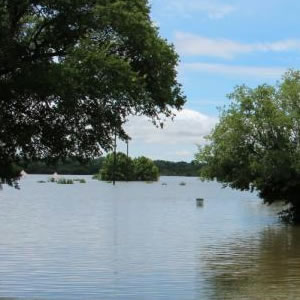 What is Flood?
A flood is a myth in which a great flood, usually sent by a deity or deities, destroys civilization, often in an act of divine retribution. Parallels are often drawn between the flood waters of these myths and the primeval cosmic ocean which appear in certain creation myths, as the flood waters are described as a measure for the cleansing of humanity, for example in preparation for rebirth. Most flood myths also contain a culture hero, who "represents the human craving for life". The oldest known narrative of a divinely initiated flood originates from the Sumerian culture in Mesopotamia, among others expressed in the Akkadian Atra-Hasis epic, which dates to the 18th century BCE. Comparable flood narratives appear in many other cultures, including the biblical Genesis flood narrative, manvantara-sandhya in Hinduism, Deucalion and Pyrrha in Greek mythology, also the Cheyenne, Blackfeet and Puebloan traditions.