463 views
·
Last viewed: 1 day ago
Uploaded: 01 Jul 2025 (1 year ago) · Shared: 23 Sep 2025
Duration: 12:41
Uploaded: 01 Jul 2025 (1 year ago) · Shared: 23 Sep 2025
Duration: 12:41
Youtube Description
This is a lecture from my book about the discovery of the Constellations by the Sumerians / Mesopotamians and their naming of the twelve zodiacconstellations we still recognize today.
This is a lecture about a chapter of my world history book called:
'In Search of the Sublime - A world history of humanity's relentless pursuit of scientific truth, moral excellence, and enlightenment.'
Read the book for FREE at:
worldhistorybook.com
Or buy it on Amazon:
https://www.amazon.com/Search-Sublime-relentless-scientific-enlightenment/dp/B0D28FVM8T
Kind regards,
Stephan P. Dinkgreve
MSc Theoretical Physics
Amsterdam
Explore More
Stephans History Mesopotamia Astrology ZodiacSearch Google Search Explore Topics
 Who are Stephans History?
Stephan's History of the World. Reclaim the foundational thoughts and deeds of the great ancestors of humanity.
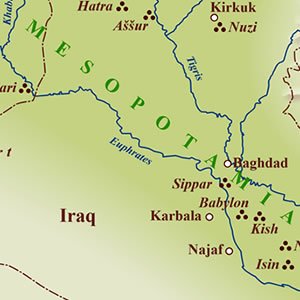 Where was Mesopotamia?
Mesopotamia is a historical region of West Asia situated within the Tigris-Euphrates river system, in the northern part of the Fertile Crescent. It corresponds roughly to the territory of modern Iraq and forms the eastern geographic boundary of the modern Middle East. Just beyond it lies southwestern Iran, where the region transitions into the Persian plateau, marking the shift from the Arab world to Iran. In the broader sense, the historical region of Mesopotamia also includes parts of present-day Iran (southwest), Turkey (southeast), Syria (northeast), and Kuwait. Mesopotamia is the site of the earliest developments of the Neolithic Revolution from around 10,000 BC. It has been identified as having "inspired some of the most important developments in human history, including the invention of the wheel, the planting of the first cereal crops, the development of cursive script, mathematics, astronomy, and agriculture". It is recognised as the cradle of some of the world's earliest civilizations.
 What is Astrology?
Astrology is the study of the movements and relative positions of celestial objects as a means for divining information about human affairs and terrestrial events. Astrology has been dated to at least the 2nd millennium BCE, and has its roots in calendrical systems used to predict seasonal shifts and to interpret celestial cycles as signs of divine communications. Many cultures have attached importance to astronomical events, and some - such as the Indians, Chinese, and Maya - developed elaborate systems for predicting terrestrial events from celestial observations. Western astrology, one of the oldest astrological systems still in use, can trace its roots to 19th-17th century BCE Mesopotamia, from which it spread to Ancient Greece, Rome, the Arab world and eventually Central and Western Europe. Contemporary Western astrology is often associated with systems of horoscopes that purport to explain aspects of a person's personality and predict significant events in their lives based on the positions of celestial objects; the majority of professional astrologers rely on such systems.
What is the Zodiac?In Western astrology, and formerly astronomy, the zodiac is divided into 12 signs. Each sign occupying 30 degrees of celestial longitude and roughly corresponding to the constellations Aries, Taurus, Gemini, Cancer, Leo, Virgo, Libra, Scorpio, Sagittarius, Capricorn, Aquarius and Pisces. The twelve astrological signs form a celestial coordinate system, or more specifically an ecliptic coordinate system, which takes the ecliptic as the origin of latitude and the Sun's position at vernal equinox as the origin of longitude.