5:36
925 views
·
Last viewed: 20 hrs ago
Uploaded: 09 Aug 2025 (1 year ago) · Shared: 03 Sep 2025
Video Description (from Youtube)
Israel & Zionism get debunked historically, legally, politically, ethically and philosophically in this mammoth episode of OnGuard with Abdullah Andalusi joining our host Hamza AndreasTzortzis.
Become a Guardian TODAY by visiting https://www.islam21c.com/guardians/
Chapters:
0:00 Intro
03:15 Crash course in 5000 years of history
19:51 DNA studies surprises
24:53 International Law after the Age of Empires
30:35 They argued against democracy
39:08 The Invention of the Anti-Semitism smear
48:59 The Safest Place on Earth for Jews
52:52 Islamic Rule
01:01:22 Why is Israeli occupation illegal?
01:11:04 A shocking counterargument
01:17:59 Peace without Justice
01:27:10 'Palestinians don't want peace'
01:29:46 Palestinians blamed for the Holocaust!?
01:37:12 The Mufti of Jerusalem - a shocking revelation
01:39:32 A home for Jews after the Holocaust
01:47:37 But Israeli Arabs!
02:01:56 Demystifying October 7th
02:08:30 If France invaded London
02:14:26 Does H*mas want to k*ll Jews?
02:23:35 Isn't Israel justified in exterminating H*mas?
02:29:21 What's the Islamic solution?
02:41:08 Military is NOT the solution?
02:45:10 End with one final shocker
02:48:04 Palestine Advocacy course coming soon
Palestinians have inhabited their land for millennia, with genetic studies confirming 70-90% correspondence between modern Palestinians and ancient Canaanites from 4,000 years ago. This scientific evidence directly contradicts the Zionist narrative that portrays Palestinians as newcomers to the region.
• Genetic research shows Palestinians have preserved more ancient Canaanite DNA than European Jews who have approximately 40-50% correspondence
• Ben-Gurion himself acknowledged Palestinians descended from Jewish farmers who lived in the region 2,000 years ago
• The land was called 'Palestine' for over two millennia, named after the Philistines encountered by Herodotus around 500 BCE
• Lord Balfour admitted Britain 'deliberately declined to accept the principle of self-determination' in Palestine
• Einstein opposed Zionist political control, advocating instead for a 'secured bi-national status in Palestine'
• Anti-Zionism is not anti-Semitism – Ben-Gurion understood Palestinian opposition was to foreign occupation, not Judaism
• The occupation of West Bank and Gaza violates the UN Charter principle that territory cannot be acquired through conquest
• Israel's security arguments parallel those used to justify slavery and other historical oppressions
• Under Islamic governance, Jews historically enjoyed protections and rights denied them in Christian Europe
Our history shows Muslims, Christians, and Jews can coexist peacefully under a system that respects religious differences while ensuring equal rights. We must challenge false narratives and work toward justice based on historical truth.
🌟 Support Our Mission 🌟
To extend the reach of our impactful content, kindly consider making a contribution (https://islam21c.com/guardians). Your support helps us make a difference.
👇 Stay Connected & Never Miss an Update 👇
1️⃣ Subscribe: Hit the 'Subscribe' button and don't forget to ring the 🔔 bell, ensuring you'll be the first to know when we upload fresh content.
2️⃣ Social Media: Stay up-to-date and join the conversation on our social media platforms:
📸 Instagram https://instagram.com/islam21c
👍 Facebook https://facebook.com/islam21c
𝕏 X https://twitter.com/islam21c
🗨️ Telegram https://t.me/islam21c
Thank you for your continued support and engagement.
DISCLAIMER
All videos are shared for educational and information purposes only. All videos are hosted and viewable on Youtube servers. Video titles are generated using the original video title; overall content theme including actual dialogue and speech (Transcript); and A.I-based recommendations with a focus on SEO, keyword density, and internal search functions. The video title does not represent the views held by the Youtube video uploader, or any individual, organisation or business.
If you spot any mistake, omission or give feedback, kindly Contact Us with details
EXPLORE TOPICS :
ISRAEL |
724
IDF |
15
ABDULLAH ANDALUSI |
11
ZIONISM |
46
ZIONIST |
60
GREATER ISRAEL |
17
ISLAM21C |
15
JEWISH |
224
JEWS |
140
JUDAISM |
74
ISLAM |
448
EARLY ISLAM |
16
MUSLIM |
305
Overview & Key Concepts
Who is Abdullah Andalusi?
 Abdullah al Andalusi is an international speaker, thinker and intellectual activist for Islam and Muslim affairs. His work involves explaining and
demonstrating, by rational argument, the intellectual proofs for the Islamic belief system, and promoting the Islamic way of life and Islamic solutions for contemporary problems. In 2009, Al-Andalusi co-founded The Muslim Debate Initiative, a forum that promotes open dialogue and critical debate between thinkers, academics, politicians and public speakers of all backgrounds.
Who are Islam21c?
 We educate and inspire Muslims with divine guidance and solutions through transformational digital content.
Islam21c has, since 2006, been inspiring
We educate and inspire Muslims with divine guidance and solutions through transformational digital content.
Islam21c has, since 2006, been inspiring
Muslims to be confident in Islam and impact-driven by providing them with guidance, building their ability to articulate and actualise correct Islamic principles, in a modern context and address the unique situations and challenges faced by Muslims in the West.
What is Zionist?
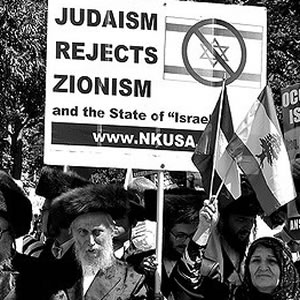 Zionism is a political movement that supports the self-determination and homeland for Jewish people in Israel. Zionists advocate for the existence and
continuation of Israel, but is used by Israel's settler movement to justify expansion and occupation into internationally recognized Palestinian lands.
<br><br>
Christian Zionists and Muslim Zionists are those Christians and Muslims who support Israel in its objectives in the 'Greater Israel' project.
<br><br>
The 'Greater Israel' project is a frequently contentious, right-wing Zionist project linked to settlement expansion and greater land annexation concepts for a Jewish state. The project may include the Jordan River to the Mediterranean Sea (including the West Bank and Gaza) to biblical, larger borders stretching from the River Nile to the Euphrates.
What is Israel?
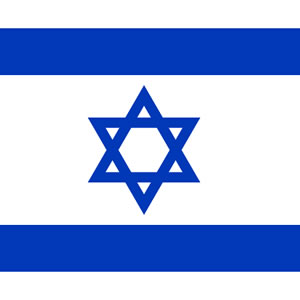 Israel, officially the State of Israel, is a country in the Middle East. Located on the southeastern shore of the Mediterranean Sea and the northern
shore of the Red Sea. It has land borders with Lebanon to the north, Syria to the northeast, Jordan on the east, the Palestinian territories of the West Bank and Gaza Strip to the east and west, respectively, and Egypt to the southwest.
What is Jews?
 Judaism is an Abrahamic, monotheistic, ethnic religion that comprises the collective spiritual, cultural, and legal traditions of the Jewish people
Religious Jews regard Judaism as their means of observing the Mosaic covenant, which they believe was established between God and the Jewish people. The religion is considered one of the earliest monotheistic religions. Jewish religious doctrine encompasses a wide body of texts, practices, theological positions, and forms of organization. Among Judaism's core texts is the Torah - the first five books of the Hebrew Bible - and a collection of ancient Hebrew scriptures. The Tanakh, known in English as the Hebrew Bible, has the same books as Protestant Christianity's Old Testament, with some differences in order and content.
Frequently Asked Questions
1.How did the Early Jewish-Christians practise their religion?
2.Did Jesus claim to be 'King of the Jews'?
3.How was Jesus Jewish?
4.What did early Jewish-Christians think of Apostle Paul?
5.Were the early Christians Jews?
6.Did Saul kill the early Jewish-Christians?
7.How did the Jews view Apostle Paul?
8.According to Apostle Paul, why did God give Jews the Torah?
9.How did Apostle Paul differ with the Jewish Rabbis?
10.How did the early Jewish-Christians view Jesus' resurrection?
11.Who seperated Christianity from Judaism?
12.Why Jews do not accept Jesus as the Messiah?
13.What does the Quran say about Jews and Christians?
14.How was Apostle Paul viewed by the Jews?
15.Does the Quran tell Jews and Christians to refer to their Scriptures (Torah and Bible)?
16.In the time of Jesus, what qualities would identify the Messiah, to the Jews?
17.How did the 1st century Jews view the Holy Spirit?
18.Jesus claimed to be God. The Jews must have understood this, as they accused him of blasphemy and were ready to stone him?
19.Why do Jews let the hair grow on the sides of there head?
20.How did Jews view the Greek Bible (Septuagint)?
21.In the time of Jesus, how were the Jews viewed by the Greeks?
Snippet Video
This is a Youtube Video Clip. To view full video click here.
This is a Youtube Video Clip. To view full video click here.
Videos on Abdullah Andalusi (11)
 1:10:32
219
1452384000
1787315704
How Jesus and Muhammed are Brothers in Faith - Abdullah Andalusi
004232
1
 2:48:51
769
1756919900
1787245334
Exposing Israel's Misinformation | Abdullah Andalusi | Islam21c
010131
2
36:30
988
1756919625
1787329215
Palestinian DNA matches 4000-year 'Ancient Canaanite' DNA discovered in Israel | Abdullah Andalusi | Islam21c
002190
3
9:20
844
1756919784
1787269609
Is Anti-Zionism the same as Antisemitism? | Abdullah Andalusi | Islam21c
000560
4
5:36
925
1756919602
1787288469
Does the Israeli Zionist project protect the Jews? | Abdullah Andalusi | Islam21c
000336
5
7:10
926
1756919662
1787305109
Israel had a choice: Territorial Zionism or Political Zionism | Abdullah Andalusi | Islam21c
000430
6
16:00
695
1756919619
1787268362
How did Israel legalize occupation of 'stolen' lands? | Abdullah Andalusi | Islam21c
000960
7
11:32
940
1756919542
1787334426
Did Israel offer Palestinians their own State? | Abdullah Andalusi | Islam21c
000692
8
18:14
775
1756919464
1787263071
Palestinians are responsible for the Holocaust? | Abdullah Andalusi | Islam21c
001094
9
27:45
881
1756919399
1787267868
Are Palestinians a threat to Israel's existence? | Abdullah Andalusi | Islam21c
001665
10
19:10
921
1756919253
1787272591
Palestine-Israel War - The solution is all religions live together in peace | Abdullah Andalusi | Islam21c
001150
11
EXPLORE TOPICS :
ISRAEL |
724
IDF |
15
ABDULLAH ANDALUSI |
11
ZIONISM |
46
ZIONIST |
60
GREATER ISRAEL |
17
ISLAM21C |
15
JEWISH |
224
JEWS |
140
JUDAISM |
74
ISLAM |
448
EARLY ISLAM |
16
MUSLIM |
305