664 views
·
Last viewed: 20 hrs ago
Uploaded: 22 Jul 2021 (5 years ago) · Shared: 24 Sep 2024
Duration: 19:39
Uploaded: 22 Jul 2021 (5 years ago) · Shared: 24 Sep 2024
Duration: 19:39
Youtube Description
Patreon: https://www.patreon.com/OceanKeltoi Twitter:https://twitter.com/OceanKeltoi
Twitch: https://www.twitch.tv/oceankeltoi
Instagram: https://www.instagram.com/oceankeltoi/
Intro Assets by: https://twitter.com/SYNJE_Grafx
Discord: https://discord.gg/JknKpxB
Merch: https://www.redbubble.com/people/OceanKeltoi/shop
Video by Wolf: https://youtu.be/QkTviwp8iBc
Video by Ari: https://youtu.be/HREFfvJacaI
Eco-Friendly Witchy Guide by Ari the Oak Witch: https://docs.google.com/document/d/1OvQiTwLrU7VWks_nZ7tdYFGy_xWdUEwAWZ2riTTfGDM
Offerings Playlist: https://www.youtube.com/playlist?list=PLax7iUZLpeuYmkx1sGvqDCFaylpGTH8nD
Further Reading
- Practical Heathen's Guide to Asatru - Patricia Lafayllve
- Ibn Fadlan and the Land of Darkness - Various Authors (Ibn Fadlans record is useful here)
- History of the ArchBishops of Hamburg - Adam of Bremen (Only a few pages of information)
- Leechdoms, Wortcunning, and Starcraft of Early England - Rev. Cocayne (3 volumes, sample here is from volume 3)
music by Karl Casey @ White Bat Audio
00:00 - Intro
00:21 - Where Do I Begin?
01:27 - Offerings & The Gifting Cycle
03:37 - Reconstructing Sacrifice from the Past
05:03 - Animal Sacrifice, Context, and Records
06:48 - Blood and Sacrifice
07:57 - A Reconstructed Offering in the Modern Home
08:27 - Incense Offerings
09:31 - Libation Offerings - Adam of Bremen
10:57 - Leechbooks, Offerings, & Christian Witchcraft
12:14 - Anglo-Saxon Law and Offerings
13:14 - Rituals from the Land of Darkness (Ibn Fadlan)
16:43 - Disposing of Offerings & the Environment
18:34 - Offering Playlist and Closing
Explore More
Animal Sacrifice Polytheism Sacrifice GODSearch Google Search Explore Topics
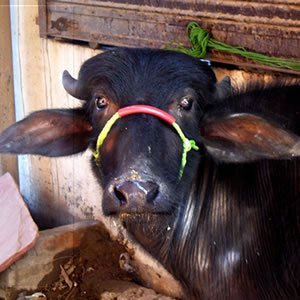 What is Animal Sacrifice?
Animal sacrifice is the ritual killing and offering of animals, usually as part of a religious ritual or to appease or maintain favour with a deity. Animal sacrifices were common throughout Europe and the Ancient Near East until the spread of Christianity in Late Antiquity, and continue in some cultures or religions today. Human sacrifice, where it existed, was always much rarer.
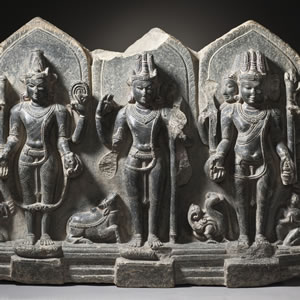 What is Polytheism?
Polytheism is the worship of or belief in multiple deities, usually as a pantheon of gods and goddesses. In most religions which accept polytheism, the different gods and goddesses are representations of forces of nature or ancestral principles, and can be viewed either as autonomous or as aspects or emanations of a creator deity or transcendental absolute principle (monistic theologies), which manifests immanently in nature (panentheistic and pantheistic theologies). Most of the polytheistic deities of ancient religions, with the notable exceptions of the Ancient Egyptian and Hindu deities, were conceived as having physical bodies. Polytheism is a type of theism. Within theism, it contrasts with monotheism, the belief in a singular God, in most cases transcendent. Important polytheistic religions practiced today include Chinese traditional religion, Hinduism, Japanese Shinto, and various neopagan faiths.
 What is Sacrifice?
Sacrifice is the offering of food, objects or the lives of animals to a higher purpose, in particular divine beings, as an act of propitiation or worship. While sacrifice often implies the ritual killing of an animal, the term offering can be used for bloodless sacrifices of food or artifacts.
 Who is GOD?
In monotheism and henotheism, God is conceived as the Supreme Being and principal object of faith. The concept of God as described by theologians commonly includes the attributes of omniscience (infinite knowledge), omnipotence (unlimited power), omnipresence (present everywhere), omnibenevolence (perfect goodness), divine simplicity, and eternal and necessary existence. In theism, God is the creator and sustainer of the universe In deism, God is the creator, but not the sustainer, of the universe Monotheism is the belief in the existence of one God or in the oneness of God In pantheism, God is the universe itself In atheism, God is purported not to exist, while deemed unknown or unknowable within the context of agnosticism.