1445 views
·
Last viewed: 2 days ago
Uploaded: 02 Oct 2011 (15 years ago) · Shared: 29 Dec 2017
Duration: 1:27:51
Uploaded: 02 Oct 2011 (15 years ago) · Shared: 29 Dec 2017
Duration: 1:27:51
Youtube Description
Click here to download the Study Guide for thislecture.
http://pdf.amazingdiscoveries.org/Study_Guides/TO/TO211-The_Secret_Behind_Secret_Societies.pdf
http://amazingdiscoveries.tv/media/123/211-the-secret-behind-secret-societies/
http://amazingdiscoveries.org/
Much has been written on secret societies and there are numerous speculations as to which powers control them. The nature of secrecy is such that the real power behind the power should remain exactly that-Secret. In this lecture, clear evidence is provided to show who really stands behind the throne of Earthly power.
Explore More
Walter Veith Idolatory Catholic Church Pagan Roman PopeSearch Google Search Explore Topics
 Who is Walter Veith?
Walter Julius Veith (born 1949) is a South African zoologist. He is a Seventh-day Adventist author and speaker known for his work in nutrition, creationism and Biblical exegesis with the Amazing Discoveries media ministry. As a creationist he speaks internationally on this and other topics. His lectures, videos, and books promote creationist and Adventist beliefs and doctrines. These include an evangelical understanding of the Bible with a very strong commitment to the Textus Receptus and the King James Version of the Bible.
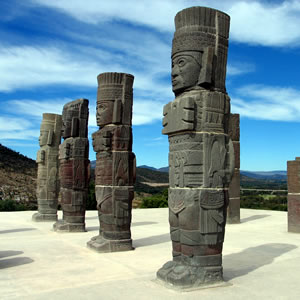 What is Idolatory?
Idolatry literally means the worship of an "idol" such as a statue or icon. In Abrahamic religions, namely Christianity, Islam and Judaism, idolatry connotes the worship of something or someone other than God as if it were God. In these and several other monotheistic religions, idolatry has been considered as the "worship of false gods" and is forbidden. In the traditional religions of ancient Egypt, Greece, Rome, Africa, Asia, the Americas and elsewhere, the reverence of an image or statue has been a common practice, and cult images have carried different meanings and significance. The definition of idolatry has been a contested topic within Abrahamic religions, with some Muslims considering the worship of Jesus Christ; the Christian use of the cross as a symbol of Christ; and of Madonna (Mary) in some churches, as forms of idolatry.
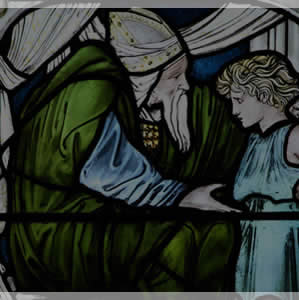 What is Catholic?
The Catholic Church, also known as the Roman Catholic Church. This is the largest Christian church, with approximately 1.3 billion baptised Catholics worldwide, as of 2016. As one of the oldest religious institutions in the world, it has played a prominent role in the history and development of Western civilisation. The church is headed by the Bishop of Rome, known as the Pope. Its central administration, the Holy See, is in the Vatican City, an enclave within Rome, Italy. Catholic theology is based on the Nicene Creed.
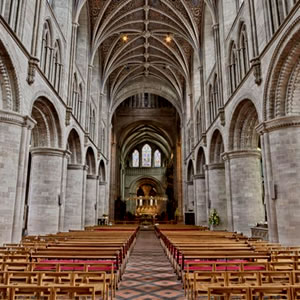 What is the Church?
A church is a building used for Christian worship services and Christian activities. The earliest identified Christian church is a house church founded between 233 AD and 256 AD. The word church also describes a body or assembly of Christian believers, while "the Church" refers to the worldwide Christian religious community.
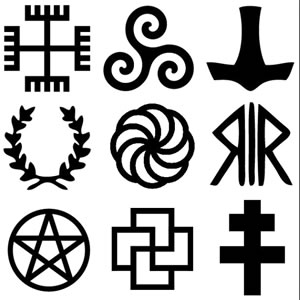 What is Pagan?
Paganism is a term first used in the fourth century by early Christians. It was applied on populations of the Roman Empire who practiced polytheism, either because they were increasingly rural and provincial relative to the Christian population or because they were not milites Christi (soldiers of Christ). Alternate terms in Christian texts for the same group were hellene, gentile, and heathen. Pagan and paganism were pejorative terms for the same polytheistic group, implying its inferiority. Paganism has broadly connoted the "religion of the peasantry", and for much of its history was a derogatory term. Both during and after the Middle Ages, pagan was a pejorative term that was applied to any non-Abrahamic or unfamiliar religion, and the term presumed a belief in false god(s).
 What is Roman?
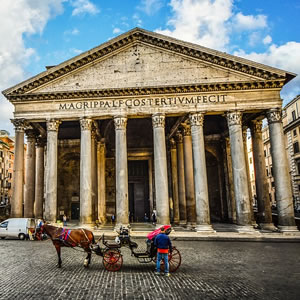
In historiography, ancient Rome is Roman civilization. From the founding of the city of Rome in the 8th century BC to the collapse of the Western Roman Empire in the 5th century AD, encompassing the Roman Kingdom, Roman Republic and Roman Empire until the fall of the western empire. The civilization began as an Italic settlement in the Italian peninsula, dating from the 8th century BC, that grew into the city of Rome and which subsequently gave its name to the empire over which it ruled and to the widespread civilisation the empire developed. The Roman empire expanded to become one of the largest empires in the ancient world, though still ruled from the city, with an estimated 50 to 90 million inhabitants (roughly 20% of the world's population) and covering 5.0 million square kilometres at its height in AD 117.
 Who is the Pope?
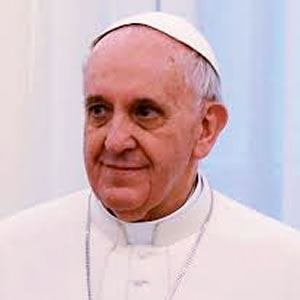
The pope, or supreme pontiff is the Bishop of Rome and therefore ex officio the leader of the worldwide Catholic Church. The primacy of the Roman bishop is largely derived from his role as the apostolic successor to Saint Peter, to whom Jesus is said to have given the Keys of Heaven and the powers of "binding and loosing", naming him as the "rock" upon which the church would be built. Since the 1860s, the pope has also been head of state of Vatican City, a city-state entirely enclaved within Rome, Italy. The current pope is Pope Francis, who was elected on 13 March 2013, succeeding Benedict XVI.