687 views
·
Last viewed: 12 hrs ago
Uploaded: 20 Oct 2019 (7 years ago) · Shared: 23 Oct 2019
Duration: 26:39
Uploaded: 20 Oct 2019 (7 years ago) · Shared: 23 Oct 2019
Duration: 26:39
Youtube Description
Today we are going to go over 4 more sources that don't prove that Jesus existed. Even worse, this guy uses the Talmud which talks about Jesus benStada who has a similar story to Jesus but is set more than 100 years prior to the Jesus of Christianity. He claims that Celsus is a historical reference to Jesus which is absurd. For one thing, he places Celsus in the first century when he actually was writing at the end of the second century. He also uses Mara bar Serapion who I have covered before. He can't be used to prove Jesus existed because of when he wrote and what he said.
All in all, this guy claims to give us 9 sources for Jesus within a hundred years of his life but that isn't what he gives us. he gives us a handful of second-century references to common Christian beliefs of the second century.
Download CHRESTUS: https://chrest.us
Original Video: https://www.youtube.com/watch?v=vQKxoBpV2NE
Subscribe to this channel: http://SubToGE.com
Join the Skeptic Mafia: http://JoinSkepticMafia.com
Discord Server: http://bit.ly/JoinGodlessDiscord
Intro by 'Gonna Go For it': https://goo.gl/1Ay1Q3
Explore More
Godless Engineer Josephus Celsus Talmud GOD JESUS
JESUS
Search Google Search Explore Topics
 Who are Godless Engineer?
Godless, Independent thinking Southerner living in North Alabama surviving in the Christian 'wasteland' one day at a time. Born and raised in North Alabama, John Gleason has a Bachelor's Degree in Computer Engineering and a Master's Degree in Software Engineering.
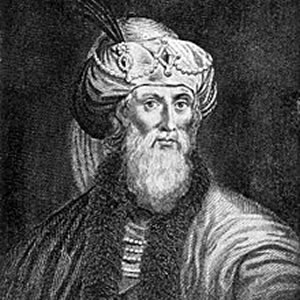 Who was Josephus?
Titus Flavius Josephus (37-100 AD), known as 'Josephus' was a first-century Romano-Jewish scholar. He was a historian and hagiographer, who was born in Jerusalem, then part of Roman Judea, to a father of priestly descent and a mother who claimed royal ancestry. He initially fought against the Romans during the First Jewish-Roman War as head of Jewish forces in Galilee, until surrendering in 67 CE to Roman forces led by Vespasian after the six-week siege of Jotapata. Josephus claimed the Jewish Messianic prophecies that initiated the First Roman-Jewish War made reference to Vespasian becoming Emperor of Rome. In response Vespasian decided to keep Josephus as a slave and presumably interpreter. After Vespasian became Emperor in 69 CE, he granted Josephus his freedom, at which time Josephus assumed the emperor's family name of Flavius. Flavius Josephus fully defected to the Roman side and was granted Roman citizenship. He became an advisor and friend of Vespasian's son Titus, serving as his translator when Titus led the Siege of Jerusalem.
 Who was Celsus?
Celsus was a 2nd-century Greek philosopher and opponent of early Christianity. He is known for his literary work, On The True Doctrine (or Discourse, Account), which survives exclusively in quotations from it in Contra Celsum, a refutation written in 248 by Origen of Alexandria. On The True Doctrine is the earliest known comprehensive criticism of Christianity. It was written c. 175 to 177, shortly after the death of Justin Martyr (who was possibly the first Christian apologist), and was probably a response to his work.
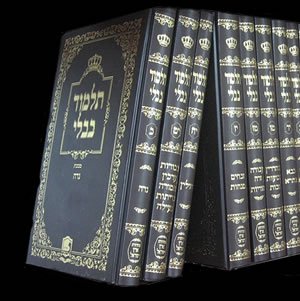 What is the Talmud?
The Talmud is the central text of Rabbinic Judaism and the primary source of Jewish religious law (halakha) and Jewish theology. Until the advent of modernity, in nearly all Jewish communities, the Talmud was the centerpiece of Jewish cultural life and was foundational to "all Jewish thought and aspirations", serving also as "the guide for the daily life" of Jews. The entire Talmud consists of 63 tractates, and in standard print is 2,711 double-sided folios. It is written in Mishnaic Hebrew and Jewish Babylonian Aramaic and contains the teachings and opinions of thousands of rabbis (dating from before the Common Era to the 5th century) on a variety of subjects, including halakha, Jewish ethics, philosophy, customs, history, and folklore, and many other topics. The Talmud is the basis for all codes of Jewish law, and is widely quoted in rabbinic literature.
Who is GOD?In monotheism and henotheism, God is conceived as the Supreme Being and principal object of faith. The concept of God as described by theologians commonly includes the attributes of omniscience (infinite knowledge), omnipotence (unlimited power), omnipresence (present everywhere), omnibenevolence (perfect goodness), divine simplicity, and eternal and necessary existence. In theism, God is the creator and sustainer of the universe In deism, God is the creator, but not the sustainer, of the universe Monotheism is the belief in the existence of one God or in the oneness of God In pantheism, God is the universe itself In atheism, God is purported not to exist, while deemed unknown or unknowable within the context of agnosticism.