Youtube Description:
Robert W. Sullivan IV delves into the astrological understandings of the Bible and other Myths.
All of Robert's books are here at his website
SHOW LUTHER AND I SOME LOVE HERE!! (Dr. Luther G. Williams)
( Derek Lambert)
(Dr. Luther G. Williams)
. (Derek Lambert)
Robert W. Sullivan IV delves into the astrological understandings of the Bible and other Myths.
All of Robert's books are here at his website
SHOW LUTHER AND I SOME LOVE HERE!! (Dr. Luther G. Williams)
( Derek Lambert)
(Dr. Luther G. Williams)
. (Derek Lambert)
Explore More
 Who is Robert Sullivan IV?
Robert Sullivan IV is a philosopher, historian, antiquarian, jurist, mystic, lay theologian, radio-TV personality, writer and lawyer. He is the best-selling author of the books "The Royal Arch of Enoch: The Impact of Masonic Ritual, Philosophy, and
Symbolism" and "Cinema Symbolism: A Guide to Esoteric Imagery in Popular Movies".
What is Gnostic?Gnosticism (from Ancient Greek: gnostikos, "having knowledge") is a modern name for a variety of ancient religious ideas and systems. Originating in Jewish-Christian milieus in the first and second century AD. These systems believed that the material
world is created by an emanation of the highest God, trapping the divine spark within the human body.Gnosticism is also defined as the belief in, dualism of good and bad and special knowledge for salvation.
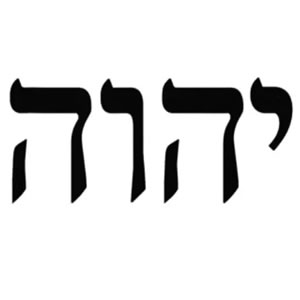 Who is Yahweh?
Yahweh was the national god of the Iron Age kingdoms of Israel (Samaria) and Judah. His exact origins are disputed, although they reach back to the early Iron Age and even the Late Bronze: his name may have begun as an epithet of El, head of the
Bronze Age Canaanite pantheon, but the earliest plausible mentions of Yahweh are in Egyptian texts that refer to a similar-sounding place name associated with the Shasu nomads of the southern Transjordan. In the oldest biblical literature, Yahweh is a typical ancient Near Eastern "divine warrior", who leads the heavenly army against Israel's enemies; he later became the main god of the Kingdom of Israel (Samaria) and of Judah, and over time the royal court and temple promoted Yahweh as the god of the entire cosmos, possessing all the positive qualities previously attributed to the other gods and goddesses.
Who is GOD?In monotheism and henotheism, God is conceived as the Supreme Being and principal object of faith. The concept of God as described by theologians commonly includes the attributes of omniscience (infinite knowledge), omnipotence (unlimited power)
omnipresence (present everywhere), omnibenevolence (perfect goodness), divine simplicity, and eternal and necessary existence.
In theism, God is the creator and sustainer of the universe
In deism, God is the creator, but not the sustainer, of the universe
Monotheism is the belief in the existence of one God or in the oneness of God
In pantheism, God is the universe itself
In atheism, God is purported not to exist, while deemed unknown or unknowable within the context of agnosticism.