Youtube Description:
Lorence Yufa is a lead writer of Milwaukee Atheists (milwaukeeatheists.com) and official video editor. Yufa interests include biblical scholarship and religious history. He is currently studying for a degree in religious studies at UW-Milwaukee.
Link to Lorence Yufa videos:
Link to the original video:
DISCLAIMER
We do NOT own the video materials and all credits belong to the respectful owners. In case of copyright issues, please contact us immediately for further credits or clip delete.
COPYRIGHT
Under Section 107 of the Copyright Act 1976, allowance is made for 'fair use' for purposes such as criticism, comment, news reporting, teaching, scholarship and research. Fair use is a use permitted by copyright statute that might otherwise be infringing. Non-profit, educational or personal use tips the balance in favour of fair use.
Lorence Yufa is a lead writer of Milwaukee Atheists (milwaukeeatheists.com) and official video editor. Yufa interests include biblical scholarship and religious history. He is currently studying for a degree in religious studies at UW-Milwaukee.
Link to Lorence Yufa videos:
Link to the original video:
DISCLAIMER
We do NOT own the video materials and all credits belong to the respectful owners. In case of copyright issues, please contact us immediately for further credits or clip delete.
COPYRIGHT
Under Section 107 of the Copyright Act 1976, allowance is made for 'fair use' for purposes such as criticism, comment, news reporting, teaching, scholarship and research. Fair use is a use permitted by copyright statute that might otherwise be infringing. Non-profit, educational or personal use tips the balance in favour of fair use.
Explore More
 Who is Lorence Yufa?
Lorence Yufa is a lead writer of thr Milwaukee Atheists website. Also, he is the official video editor. Yufa's interests include biblical scholarship and religious history. He is currently studying for a degree in religious studies at UW-Milwaukee.
 What is Atheist?
Atheism is, in the broadest sense, the absence of belief in the existence of deities. Less broadly, atheism is the rejection of belief that any deities exist. In an even narrower sense, atheism is specifically the position that there are no deities
Atheism is contrasted with theism, which, in its most general form, is the belief that at least one deity exists.
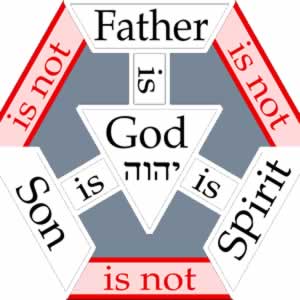 What is Trinity?
The Christian doctrine of the Trinity (Latin: trinus "threefold") holds that God is one God, but three coeternal consubstantial persons or hypostases. These being the Father, the Son (Jesus Christ), and the Holy Spirit - as "one God in three Divine
Persons". The three Persons are distinct, yet are one "substance, essence or nature" (homoousios).