1004 views
·
Last viewed: 7 hrs ago
Uploaded: 14 Oct 2017 (9 years ago) · Shared: 06 Feb 2019
Duration: 5:06
Uploaded: 14 Oct 2017 (9 years ago) · Shared: 06 Feb 2019
Duration: 5:06
Youtube Description
The origin of the 'Christian' Trinity is blatantly pagan. There have been many witnesses throughout history that have told us so. Dr. Arnold was awonderful scholar who went all over the world to dig into historical facts that uncovered a pagan trinity. Hislop's 'Two Babylons' is a work of art that exposes pagan trinities throughout the world.
Explore More
approvedofGod Justin Martyr Apostasy Catholic Ignatius Polycarp Roman GODSearch Google Search Explore Topics
 Who are approvedofGod?
I am here to teach all people, but especially the "body of Christ" (the Church), that the bible is sufficient for what we believe. Throughout the centuries, men have brought many doctrines into the church that have caused confusion and separation. My desire and goal is to clarify some of these errors and bring all Christians back to the basics of the Bible.
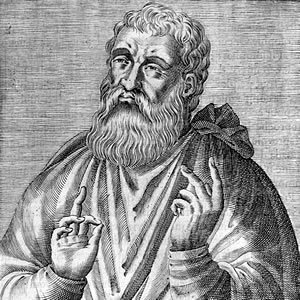 Who was Justin Martyr?
Justin Martyr was an early Christian apologist, and is regarded as the foremost interpreter of the theory of the Logos in the 2nd century. He was martyred, alongside some of his students, and is considered a saint by the Roman Catholic Church, the Anglican Church, the Eastern Orthodox Church, and the Oriental Orthodox Churches.
 What is Apostasy?
Apostasy (Greek: apostasia, 'a defection or revolt') is the formal disaffiliation from, or abandonment or renunciation of a religion by a person. It can also be defined within the broader context of embracing an opinion contrary to one's previous beliefs. One who undertakes apostasy is known as an apostate. The term apostasy is used by sociologists to mean renunciation and criticism of, or opposition to, a person's former religion, in a technical sense and without pejorative connotation.
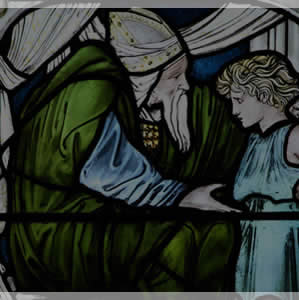 What is Catholic?
The Catholic Church, also known as the Roman Catholic Church. This is the largest Christian church, with approximately 1.3 billion baptised Catholics worldwide, as of 2016. As one of the oldest religious institutions in the world, it has played a prominent role in the history and development of Western civilisation. The church is headed by the Bishop of Rome, known as the Pope. Its central administration, the Holy See, is in the Vatican City, an enclave within Rome, Italy. Catholic theology is based on the Nicene Creed.
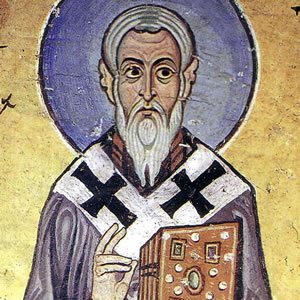 Who was Ignatius?
Ignatius of Antioch (35-107 AD) was an early Christian writer and bishop of Antioch. En route to Rome, where he met his martyrdom, Ignatius wrote a series of letters. This correspondence now forms a central part of the later collection known as the Apostolic Fathers, of which he is considered one of the three chief ones together with Pope Clement I and Polycarp.
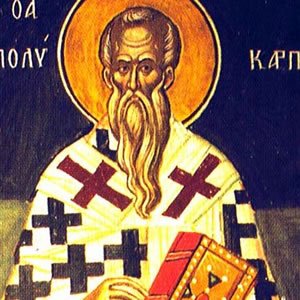 Who was Polycarp?
Polycarp (69-155 AD) was a 2nd-century Christian bishop of Smyrna. According to the Martyrdom of Polycarp he died a martyr, bound and burned at the stake, then stabbed when the fire failed to touch him. Polycarp is regarded as a saint and Church Father in the Eastern Orthodox, Oriental Orthodox, Catholic, Anglican, and Lutheran churches.
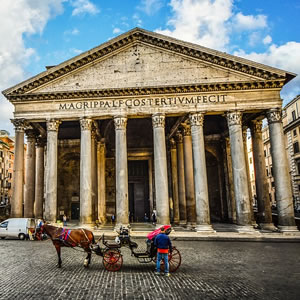 What is Roman?
In historiography, ancient Rome is Roman civilization. From the founding of the city of Rome in the 8th century BC to the collapse of the Western Roman Empire in the 5th century AD, encompassing the Roman Kingdom, Roman Republic and Roman Empire until the fall of the western empire. The civilization began as an Italic settlement in the Italian peninsula, dating from the 8th century BC, that grew into the city of Rome and which subsequently gave its name to the empire over which it ruled and to the widespread civilisation the empire developed. The Roman empire expanded to become one of the largest empires in the ancient world, though still ruled from the city, with an estimated 50 to 90 million inhabitants (roughly 20% of the world's population) and covering 5.0 million square kilometres at its height in AD 117.
Who is GOD?In monotheism and henotheism, God is conceived as the Supreme Being and principal object of faith. The concept of God as described by theologians commonly includes the attributes of omniscience (infinite knowledge), omnipotence (unlimited power), omnipresence (present everywhere), omnibenevolence (perfect goodness), divine simplicity, and eternal and necessary existence. In theism, God is the creator and sustainer of the universe In deism, God is the creator, but not the sustainer, of the universe Monotheism is the belief in the existence of one God or in the oneness of God In pantheism, God is the universe itself In atheism, God is purported not to exist, while deemed unknown or unknowable within the context of agnosticism.