847 views
·
Last viewed: 1 hr ago
Uploaded: 26 Jan 2019 (8 years ago) · Shared: 30 Jan 2019
Duration: 21:12
Uploaded: 26 Jan 2019 (8 years ago) · Shared: 30 Jan 2019
Duration: 21:12
Youtube Description
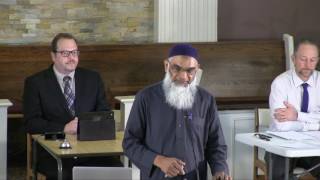
Brother Muhammad Hijab is asked about the laws of Islam and if they are valid but as he points out first lets look at the laws of liberalism*Request to all to please not abuse or swear in comments, Dawah is to invite not to insult. Jazak Allah Khair
Disclaimer: The views and opinions of partakers in these debates and videos in no way represent the views of SCDawah but are a representation of what takes place at speakers Corner.
Explore More
Search Google Search Explore Topics Mohammed Hijab Blasphemy Apostasy British Who is Mohammed Hijab?
A Speakers' Corner is an area where open-air public speaking, debate, and discussion are allowed. The original and most noted is in the north-east corner of Hyde Park in London, England. Speakers here may talk on any subject, as long as the police consider their speeches lawful, although this right is not restricted to Speakers' Corner only. Contrary to popular belief, there is no immunity from the law, nor are any subjects proscribed, but in practice the police intervene only when they receive a complaint. Speakers' Corner is often held up to demonstrate freedom of speech, as anyone can turn up unannounced and talk on almost any subject, although always at the risk of being heckled by regulars.
 What is Blasphemy?
Blasphemy is the act of insulting or showing contempt or lack of reverence to a deity, or sacred things. Some religions consider blasphemy to be a religious crime. As of 2012, anti-blasphemy laws existed in 32 countries, while 87 nations had hate speech laws that covered defamation of religion and public expression of hate against a religious group. Anti-blasphemy laws are particularly common in Muslim-majority nations, such as those in the Middle East and North Africa, although they are also present in some Asian and European countries.
 What is Apostasy?
Apostasy (Greek: apostasia, 'a defection or revolt') is the formal disaffiliation from, or abandonment or renunciation of a religion by a person. It can also be defined within the broader context of embracing an opinion contrary to one's previous beliefs. One who undertakes apostasy is known as an apostate. The term apostasy is used by sociologists to mean renunciation and criticism of, or opposition to, a person's former religion, in a technical sense and without pejorative connotation.
 What is British?
British people or Britons, also known colloquially as Brits, are the citizens and diaspora of the United Kingdom, the British Overseas Territories, and the Crown dependencies. British nationality law governs modern British citizenship and nationality, which can be acquired, for instance, by descent from British nationals. The British are a diverse, multinational, multicultural and multilingual people, with "strong regional accents, expressions and identities". The social structure of the United Kingdom has changed radically since the 19th century, with a decline in religious observance, enlargement of the middle class, and increased ethnic diversity, particularly since the 1950s, when citizens of the British Empire were encouraged to immigrate to Britain to work as part of the recovery from World War II. The population of the UK stands at around 67 million, with around 50 million being White British. This includes 44.4 million in England and Wales as of 2021, and 4.2 million in Scotland as of 2022. 1.8 million identify as White in Northern Ireland, including White British and other White ethnicities, as of 2021.